
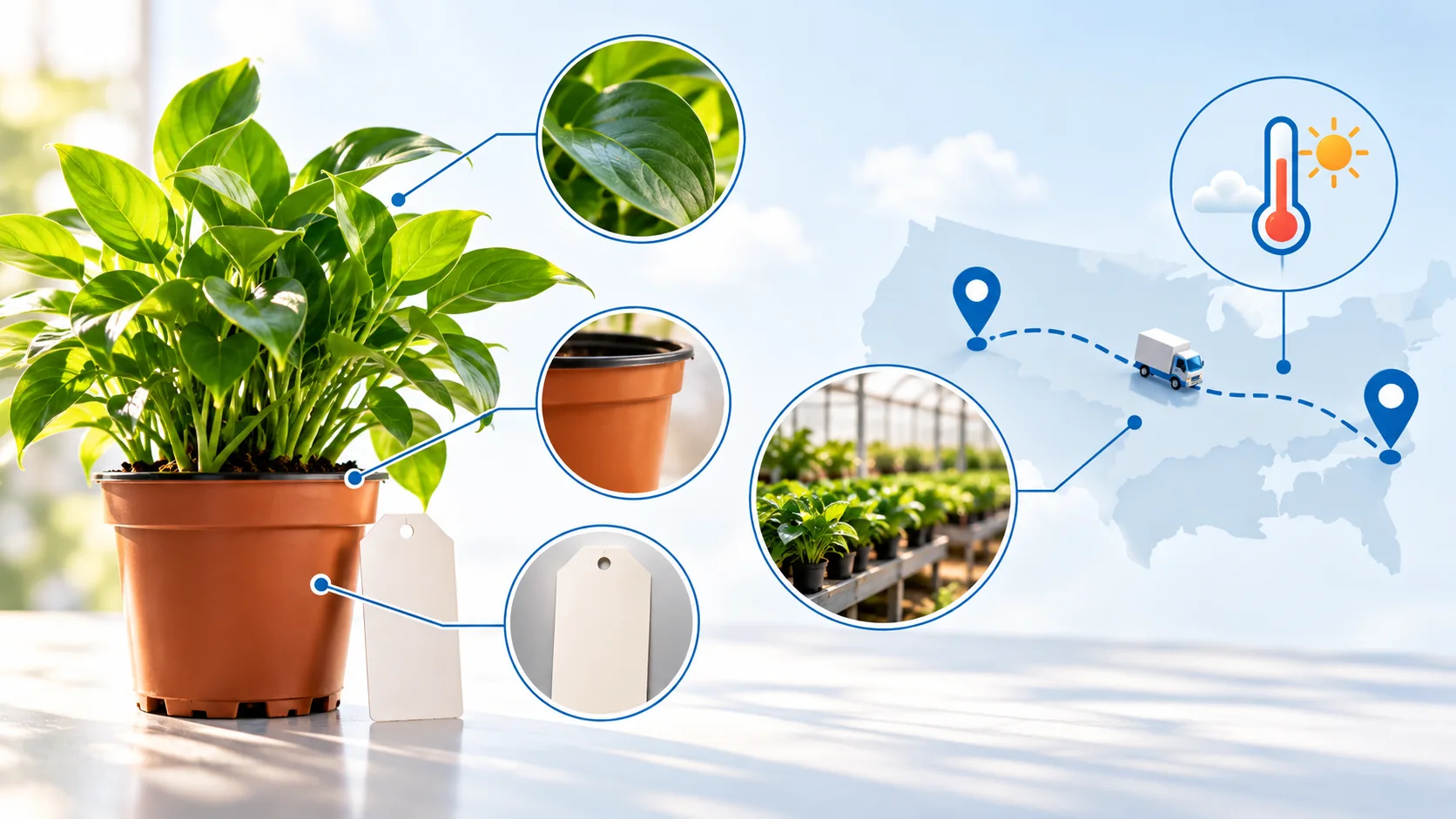
Yes, you can dropship live plants in the United States. Several nurseries and plant-fulfillment companies offer one-order direct shipping, so your store can take an order and the supplier can send the plant to the buyer. But a plant is a living parcel. The exact species, nursery origin, destination and shipping week decide whether that order is possible and what the customer may receive. A catalog page saying “ships nationwide” does not settle every one of those questions.
Start with one houseplant in a specific pot size. Before adding it to your store, find out where it grows, which addresses that supplier will accept, how the plant is held in the box and what happens if it reaches the buyer damaged. If those answers are vague, keep the listing closed until they are clear.
01
Choose a real per-order plant route
A dropship partner should let your store sell the plant, then send each paid order to a grower or fulfillment site without requiring you to buy a tray first. Plantboy describes that model: customers buy on a retailer’s own website, the order moves into Plantboy’s system, and it ships from greenhouses. Live Good Logistics says it fulfills plants one at a time with no pre-buying or minimum. These are public program descriptions, not evidence your business has been approved or a particular plant is available.
Include the actual membership cost
Another route may charge for access. House Plant Dropship currently lists a $30 monthly membership and says it has no per-order minimum; it describes blank-packaged shipments from California and Florida greenhouses. That subscription is a supplier-specific cost, not a fee every plant seller pays. Confirm the account terms and current plant cost before using any public price in your margin plan.
A bulk nursery order is a different route
A wholesale nursery can still be useful, but ask who ships the buyer’s single plant. A trade marketplace may connect you to growers for a bulk order without offering blind packaging, an end-customer tracking number or an arrival remedy. Those gaps turn “we sell plants wholesale” into a different operating model from dropshipping.
- Does this supplier accept one paid plant order?: Otherwise you may need to buy and hold stock.
- Which greenhouse dispatches this SKU?: The origin changes route rules, weather exposure and transit distance.
- Can the buyer’s state and ZIP receive this species?: A supplier’s overall coverage does not clear every plant.
- Who handles the arrival complaint?: The customer bought from your store and needs one clear contact.
Do not import an entire live catalog on day one. A small set of species and pot sizes lets you test whether the inventory feed, route filter and customer descriptions agree.
02
Identify the plant the buyer will actually open
“Small tropical plant” is not enough to describe a live order. Record the botanical species or the supplier’s exact cultivar name (a named cultivated variety), the nursery pot size, approximate height range, whether a decorative pot is included, and whether the image shows a mature display plant or the size that ships. A product photo can set an expectation that a young plant in a nursery sleeve cannot meet.
Ask how the supplier grades an acceptable plant: leaf condition, root/pot stability, acceptable natural variation and any substitutions. A living plant will not look identical to a product photo, but the buyer should still get the species, pot size and general condition promised. If one pictured planter is not included, say so directly. This nonliving garden-supplies guide covers pots and other hard goods; their simpler shipping assumptions should not be borrowed for the plant itself.
Inspect the shipped plant size and packing
A sample order is worth more than fifty catalog thumbnails. If the supplier accepts it, buy the same size and destination type you plan to sell. Note the pot, soil containment, foliage protection, actual dispatch-to-arrival time and how the plant looks after unpacking. One healthy sample cannot prove every future order will survive heat, cold or delays, but it can expose an exaggerated image or loose packaging before a customer has to complain.
03
Check the species and origin-to-destination route
A supplier may say it serves the 48 contiguous states yet still block particular plants. Live Good’s program page expressly says some species are restricted from particular states and says its fulfillment system blocks them. That is the important distinction: general delivery territory is not a species-specific permission. Ask the supplier to confirm the exact plant, greenhouse origin, buyer state and ZIP before you make it available at checkout.
Origin matters as well as destination. For plants shipped from Florida, the Florida Department of Agriculture and Consumer Services says nursery inspection tags are required on out-of-state and common-carrier nursery-stock shipments. Its shipping requirements sheet adds that out-of-state stock must satisfy the applicable state and federal quarantines and sometimes needs special certification. That is a Florida-source example, not a claim that every state uses the same tag.
Citrus has its own controlled route
Some plant families are much more controlled than ordinary foliage houseplants. USDA APHIS’s citrus nursery-stock FAQ describes interstate conditions for citrus stock from specified quarantine settings, including certificates or destination-limited permits. Do not read that citrus protocol as permission or a permit recipe for a different species. Use it to see why “all plants ship anywhere” is too broad.
Block an unconfirmed destination
For your product record, get the nursery’s written allowed-destination list or checkout restrictions for this SKU, the ship-from location, and confirmation it holds the registrations or tags its route requires. If you cannot get a definite answer for a state, block that destination rather than guessing from a carrier map. Regulatory details can change by species, pest status and locality; refresh them when you change supplier or plant line.
Verify the plant restrictions in your store
Use one actual nursery-confirmed SKU and pot size. PLANT-A below is a fictional record label; the species, eligible destination and rejected destination must come from the nursery’s current instructions.
Permitted address
With the supported testing method, check that the approved SKU/pot, real origin, destination and delivery charge remain correct through checkout. Then follow one authorized sample through payment, supplier acceptance, tracking and arrival. Do not claim a sample happened because the catalog imported.
Restricted address
Check a destination the nursery actually rejects for that species. The store should block that plant/route or explain why it cannot be ordered. A generic nationwide shipping zone should not silently override the SKU restriction.
Weather-held order
Confirm where the hold appears, who decides release and who contacts the buyer. Keep the order paid but unshipped until the actual nursery accepts dispatch. A label generated early does not prove safe shipment, and retrying an unclear order can buy a duplicate plant.
After any correction, repeat the failed path. Keep the store order, accepted supplier reference, actual species/pot and parcel linked; update the allowed route when the greenhouse changes.
04
Plan around the weather the parcel will meet
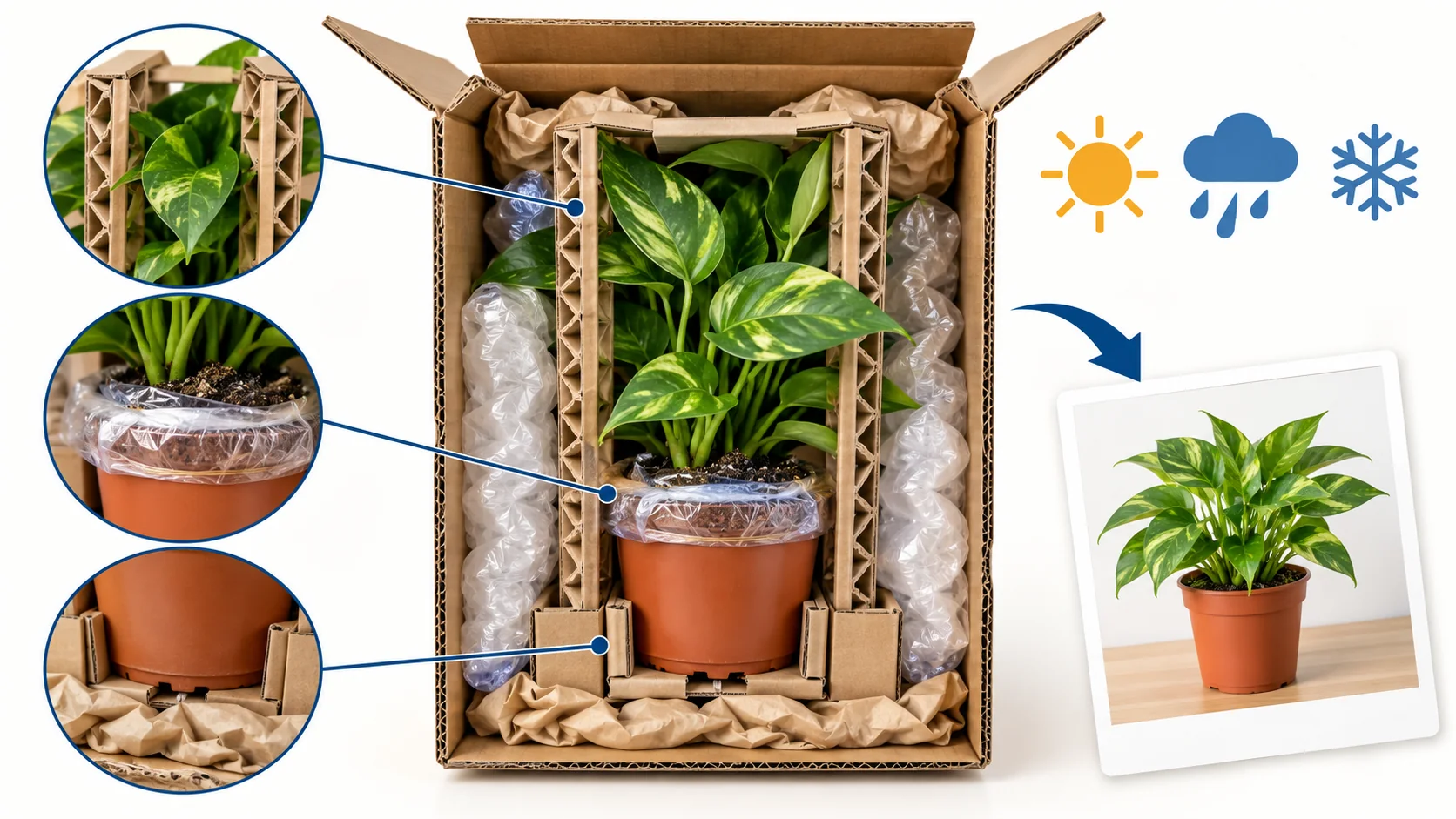
A planter can wait on a porch; a live plant may not. Heat, cold, a missed delivery and a box sitting over a weekend all affect the customer experience. Ask the supplier how it selects a dispatch day, keeps soil in the pot, limits foliage movement and changes materials when a route becomes cold or hot. Get the answer for the plant size you sell, not just a greenhouse photo.
Use this supplier’s weather rule
House Plant Dropship asks customers to add its winter shipping protection when average daytime temperatures drop below 50°F. That is its own product and threshold. It is not a universal botanical line or proof another supplier’s heat pack will protect every species. Its parent, PPC, describes climate-aware materials, including heat packs when needed, as part of its own operation. Live Good describes season-aware packing that stabilizes soil and foliage. Each statement is a useful question to take to a supplier, not a transferable guarantee.
Before opening a cold-season listing, ask: “For this species and pot size, what temperature or route conditions stop shipment, when do you hold an order, what protection do you use, and does the live-arrival remedy still apply?”
Add preparation time to transit
Set a realistic customer message. House Plant Dropship says it dispatches in 1–4 business days and aims for 2–4 business days in transit through its own network. Those are the vendor’s published ranges, not your guaranteed arrival date or another program’s SLA. Your page should explain how you update the buyer if the nursery holds an order for weather rather than silently showing “label created” for days.
05
Quote the plant, the box and the problem order
Plant cost is only one line. The actual charge may depend on pot size, number of plants, destination and protective packaging. House Plant Dropship says its shipping cost follows order weight and plant count. Plantboy says each plant has its own cost and shipping follows the items ordered. Request an address-level order quote for the SKU, pot and weather option, then decide what shipping charge your customer sees.
Protected shipment can reduce contribution
Here is a fictional calculation to show why the route matters. A plant sells for $42. The supplier price is $16, ordinary packing and shipment is $11, payment fees are $2, and you reserve $3 for customer service and damaged arrivals. The planning contribution is $42 − $16 − $11 − $2 − $3 = $10, before ads, tax and overhead. If a required protected route costs $17 rather than $11, the contribution falls to $4. These are illustrative amounts, not supplier quotes or a measured failure rate.
Write the actual arrival remedy
Agree on what “arrived healthy” means in the supplier relationship. A snapped main stem is different from one bruised leaf; a buyer who never opens the box for three days may create another question. Plantboy’s page says it reships transit-damaged plants at its cost, and House Plant Dropship asks for a photo when a plant arrives dead or damaged. Those are the vendors’ own public practices. Your account terms should say the evidence window, photo requirements, who pays any replacement shipping, and who communicates with the buyer. Do not copy a vendor’s headline guarantee into your store without checking its conditions.
Give the customer a simple arrival note: bring the box indoors promptly, photograph the outside and plant if something is wrong, retain the packing, and contact your store. That instruction helps a legitimate claim without making a medical or cultivation promise.
06
Test a route before you open the listing
Thursday pickup and a cold weekend need a decision
Imagine a fictional 4-inch potted foliage plant at a Florida nursery, bound for a northern US ZIP during a cold week. A Thursday dispatch on a multi-day route might leave it in a depot or vehicle over the weekend; a Monday pickup may reduce that waiting time, but it does not make an unknown species safe in an unknown forecast. The nursery must decide from the actual plant, weather, service and destination whether to ship, add an approved protective pack, hold the order or decline the route. The example has no real species, address, forecast or approved account, so it does not assert a temperature threshold or promise that a heat pack solves the risk.
Tracking does not show plant health
If the plant arrives limp or damaged, the buyer needs an arrival-photo and contact path that matches the nursery’s actual claim terms. A transit scan proves movement, not plant condition. Record who authorizes a replacement or refund before publishing a “healthy arrival” promise.
Exact plant and pot
Known: Supplier gives a named SKU and 4-inch nursery pot.
Next step: Match your photo and product description to the shipped size.
Origin and destination
Known: Florida origin, northern buyer state; no SKU-specific route confirmation.
Next step: Hold until nursery confirms state/ZIP eligibility and required tags.
Weather and service
Known: Cold week; no hold rule, pack method or actual carrier option.
Next step: Hold until supplier states weather decision and realistic dispatch window.
Arrival remedy
Known: Generic “healthy delivery” line, no account-level photo window or replacement cost.
Next step: Hold until remedy and customer instructions are written.
Resolve the missing route before opening checkout
This order is not ready. A price and stock count cannot fix unknown route eligibility. Send the nursery the species/SKU, origin, intended destination states, pot size, shipping period and questions above. If it confirms the route, weather plan and remedy, test a sample on a suitable route before opening sales. If it declines, narrow the states, choose a species with a confirmed compliant route or postpone the listing until conditions change.
For a small store, the useful first output is a short route sheet for each plant, not a hundred imported products. Keep the supplier’s allowed states, current pack choice, hold rules, transit expectation, cost and complaint path together. Review it when the season or nursery origin changes.
07
Ask for the scope you need
AIDrop Agent coordinates China-side sourcing and operations only for agreed product and fulfillment scopes. Live US nursery plants involve seller, plant-health and greenhouse capabilities that this article does not establish for AIDrop. If you are evaluating a related pot, packaging component or other product range, send the exact product and route brief and ask whether that custom scope can be supported. For live plants, begin with a qualified nursery’s species-and-route confirmation rather than assuming a general fulfillment agent can replace it.
Questions before opening a live-plant listing
Can I ship the same houseplant to all 48 states?
Not merely because a program covers those states. Live Good expressly describes species restrictions. Obtain the exact plant’s allowed destinations, origin and required nursery documents, then keep checkout consistent with them.
Can I use this domestic nursery process for plants from China?
No automatic permission follows. APHIS’s online-purchase guidance requires checking the actual foreign species and import conditions, including a permit or confirmed exemption and the required plant-health documents. Some plants have special restrictions. This article’s US greenhouse examples do not approve an international route.
Does a heat pack make a winter order safe?
Ask the actual nursery which conditions require protection, a hold or a declined route. House Plant Dropship’s 50°F message is its own rule, not a universal limit for every species. Pack choice, forecast, transit and delays still matter.
What should I tell the buyer if the plant is held or arrives damaged?
For a hold, give the genuine reason and revised information supported by the nursery. On arrival, provide one store contact and the actual photo/report procedure. Agree who authorizes and pays a replacement or refund before promising a healthy-arrival remedy.

Furniture Dropshipping: Product Data, Delivery Scope and Damage Recovery
Furniture dropshipping needs more than a supplier quote. Verify the exact piece, cartons, drop-off service and damage

Home Decor Dropshipping: Fragility, Dimensions and Presentation
A decor listing needs more than a room photo. Compare appearance, packed dimensions and the recovery path
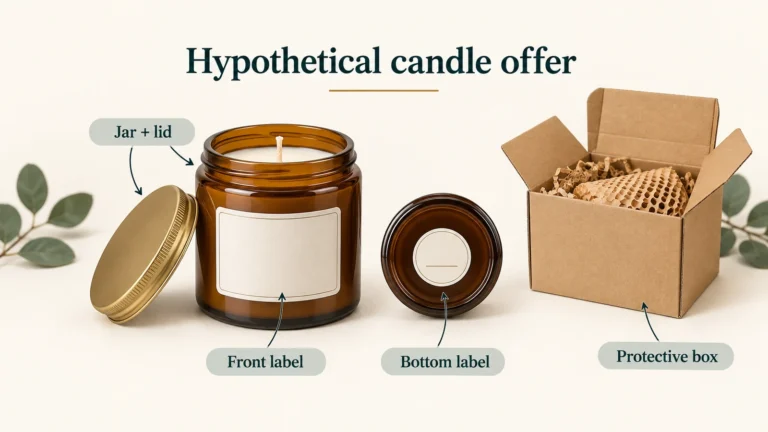
Candle Dropshipping: Choose the Jar, Scent and Shipping Plan
Build a small candle offer, compare individual dispatch with wholesale batches, price a complete order, and plan
