
Home / Why AIDrop Agent
Test demand before committing to large inventory and fixed operations.
Dropshipping can reduce the stock, warehouse, staffing, and supplier-management commitments required to test an offer. AIDrop Agent adds a China-side operating layer for sourcing, quality, packing, order handling, shipping, and exceptions, while your store keeps control of product, price, marketing, and the customer promise.
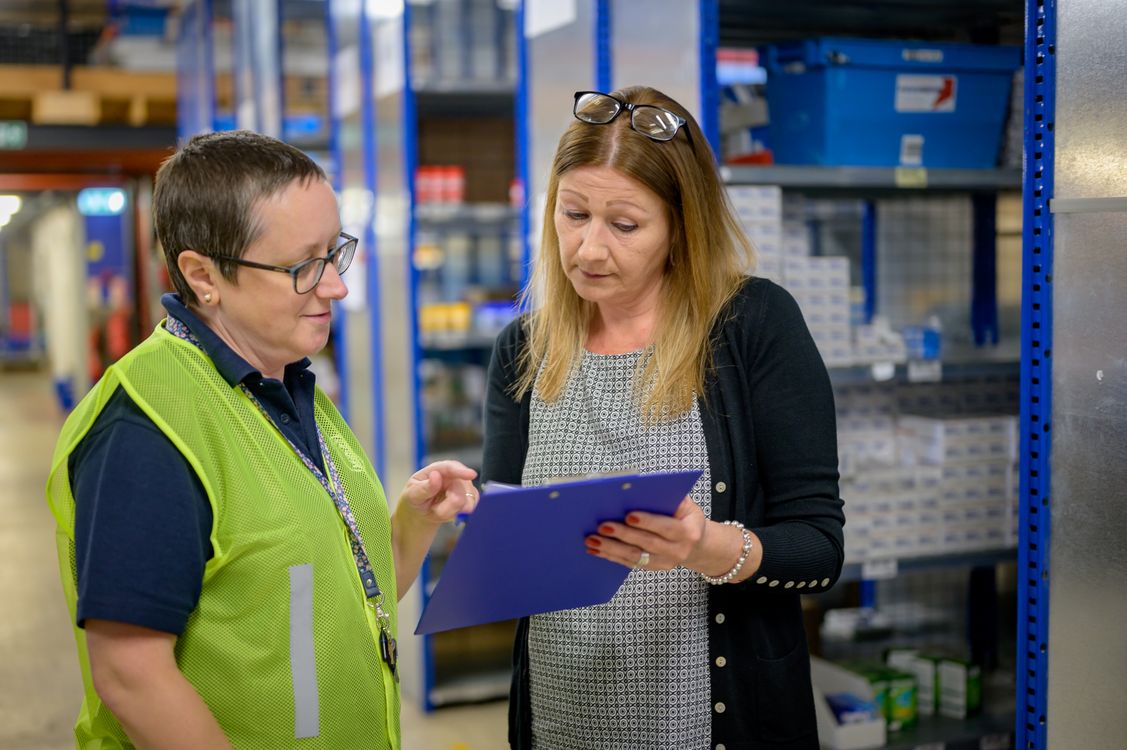
Reduce early commitments while you learn what customers will actually buy.
The business value is not a promise of easy profit. It is the ability to learn with less stock, fewer fixed operations, and a smaller China-side management burden—then add inventory or infrastructure only when evidence supports it.
Working capital
Buy less inventory before demand is proven; commit more only when repeat sales justify it.
Fixed overhead
Avoid building a warehouse, hiring a full fulfillment team, or managing multiple China vendors too early.
Product learning
Test product, offer, destination, packaging, and delivery assumptions with smaller reversible steps.
Management attention
Replace scattered supplier, QC, packing, and shipping follow-up with one accountable China-side operating layer.
Look for less cash tied up, less coordination, and clearer ownership.
The advantage should be visible in a real decision or handoff: less stock committed too early, fewer vendors to chase, fewer routine statuses to manage, or earlier detection of a preventable problem. If none of those change, the operating model is not creating useful leverage.
Working capital
Start with direct fulfillment. Add a small China-side reserve only after repeat demand and supplier lead-time evidence justify it; use destination stock only when local service requirements outweigh carrying and replenishment exposure.
Fixed overhead
Use receiving, checking, storage, packing, and shipping capacity as the current order profile requires it. This can delay a facility, payroll, systems, and supervision commitment; stable local volume may later justify fixed infrastructure.
Coordination time
Keep supplier questions, samples, QC evidence, packing changes, stock status, and carrier options close to execution. The store spends less time repeating the same request across vendors, while still approving commercial trade-offs.
Management attention
Let approved normal orders move through a known rule and send only stopped orders into a visible exception queue. The store reviews decisions instead of chasing routine status, but cash, quality, stock, and customer issues still escalate.
Failure exposure
Check the approved product reference, labels, address, packing, route, and tracking handoff before release. This can catch avoidable mismatches earlier; it does not remove supplier, carrier, customs, or demand risk.
The right structure depends on where cost, control, and service must sit.
Compare the same product, order range, delivery promise, fulfillment scope, and exception basis. The goal is not to force every store into the same footprint.
Destination self-management
Cost sits in: facility, payroll, systems, receiving, inventory carrying, supervision, returns, and direct carrier contracts.
Best when: local order density or service requirements justify fixed infrastructure.
Watch: cash and management capacity committed before volume stabilizes.
China-side on-demand operation
Cost sits in: variable coordination, checking, packing, and international fulfillment close to suppliers.
Best when: the store needs flexibility while product and demand are still changing.
Watch: delivery-window and route-exception exposure.
Staged hybrid operation
Structure: direct fulfillment for uncertain demand, a small China-side buffer for repeat sellers, and destination stock only where service evidence justifies it.
Best when: different products need different inventory commitments.
Watch: replenishment ownership and the boundary between China-side and destination operations.
Commit stock only when service gains justify it.
The staircase starts with maximum flexibility, then exchanges some cash for faster release, and finally accepts destination inventory only when local service or marketplace requirements make the commitment defensible.
1 — Direct fulfill
Move up when: repeat demand is visible and supplier lead time is creating avoidable variation.
Cash protected: no reserve beyond live demand.
Trade-off accepted: broader delivery window and higher per-order international handling.
2 — China-side reserve
Move up when: local delivery, returns, or marketplace rules justify destination inventory.
Cash committed: a small repeat-seller buffer and monitored replenishment rule.
Benefit purchased: faster release and less supplier stock-gap exposure.
3 — Destination stock
Stay here when: local service value exceeds facility, handling, replenishment, and unsold-stock exposure.
Cash committed: destination inventory plus another operating boundary.
Benefit purchased: faster local delivery and stronger return control.
Choose routes by service and recovery—not price alone.
Compare chargeable weight, destination, delivery window, tracking standard, customs, surcharges, and who owns recovery on the same basis.
Economy — protect contribution
Use when: price matters most and the customer promise accepts a broader window.
Compare: consolidation, tracking quality, customs, surcharges, and reship exposure.
Fallback: the recovery route if scans or delivery exceed the accepted window.
Balanced — protect cost and visibility
Use when: the store needs a practical balance between landed cost and observable service.
Compare: scan events, expected timing, support burden, and delay ownership.
Fallback: when the normal route loses visibility.
Priority — protect a strict promise
Use when: delivery promise or product risk justifies a higher cost.
Compare: cutoff, customs exposure, tracking coverage, capacity, and route acceptance.
Fallback: the approved alternative before the primary route fails.
Know who decides, who executes, and where the model stops.
What does AIDrop Agent own?
The scoped China-side operating work: organizing requirements, coordinating suppliers, collecting evidence, mapping order and fulfillment handoffs, comparing route options, and making exceptions visible with a next action.
What remains the store’s decision?
The store approves product and quality expectations, brand promise, selling price, inventory commitment, customer-facing delivery promise, and any commercial trade-off that changes cost or risk.
Does dropshipping mean I never hold inventory?
No. Direct fulfillment is the lowest-commitment starting point. A China-side buffer or destination warehouse becomes useful when repeat demand, replenishment risk, delivery expectations, returns, or marketplace rules justify the additional cash and fixed cost.
Why can operating from China be less expensive than self-managing in the U.S.?
The work stays close to suppliers and can use lower-cost coordination, handling, and storage while avoiding an early U.S. facility, payroll, supervision, and systems layer. The exact advantage depends on product, volume, service window, destination, and route—not a universal percentage.
How are shipping savings evaluated?
By comparing landed cost rather than the label alone: chargeable weight, packaging, consolidation, customs, tracking, delivery window, surcharges, exception ownership, reshipment exposure, and customer-support impact.
When is AIDrop Agent not the right fit?
When the store wants fully autonomous purchasing without approvals, requires an unverified performance guarantee, has no willingness to define product or service expectations, or already has a stable operating layer whose only need is unrelated software development.