
Home / Dropshipping Hub / Dropshipping Guides / Branded Dropshipping: From Product Test to Brand System
Branded dropshipping turns a tested offer into a controlled experience.
Branded dropshipping is not a logo placed on an unproven product. It begins when demand, specifications, quality limits, packaging, delivery communication, support, and returns are repeatable enough to become a recognizable customer experience. AIDrop Agent coordinates those controls close to Chinese suppliers, letting the store move from direct fulfillment to small China-side batches and then destination inventory only when demand and service requirements justify more working capital.
Commit only after the previous layer is observable.
Increase brand commitment only when the operating evidence supports the next step.
Every layer adds cash exposure, supplier dependency, quality controls, and management work. Advance only when the current layer is repeatable and the next investment solves a visible constraint.
Explore the broader topic: Build a dropshipping marketing plan.
Build a recognizable store experience
Test demand
Evidence to advance: Demand repeats and contribution survives landed fulfillment plus observed post-sale cost.
Commitment unlocked: Continue testing without fixed inventory or brand cost.
Standardize the product
Evidence to advance: Approved sample, locked specification, stable supplier option, QC points, and change triggers.
Commitment unlocked: Repeat orders or a small China-side reserve near suppliers.
Standardize the experience
Evidence to advance: Stable product, sufficient margin, and repeatable packing, delivery, support, returns, and recovery.
Commitment unlocked: Branded packaging, inserts, labels, and one customer experience across operators.
Position inventory deliberately
Evidence to advance: Stable demand by market, known replenishment time, working-capital tolerance, and a service reason to hold stock.
Commitment unlocked: China-side reserve or selected destination 3PL inventory only where justified.
Brand is the promise customers experience across every handoff.
Packaging can make the promise visible, but product truth and operating consistency make it believable.
Product truth
The product description, materials, dimensions, function, compatibility, and expected use match the delivered item.
Quality consistency
An approved reference and inspectable standard reduce drift across suppliers, batches, and repeat orders.
Delivery clarity
Processing, route, tracking, delay communication, and returns align with the customer-facing promise.
Recognizable experience
Naming, packaging, inserts, support, content, and post-purchase communication feel like one company.
Stabilize the product before branding.
Brand investment should follow operating evidence. Confirm the product and supplier first, prove that the economics still work after packaging and delivery, standardize QC and support expectations, then decide whether direct fulfillment, a small China-side reserve, or destination inventory best protects the promise without creating unnecessary working-capital pressure.
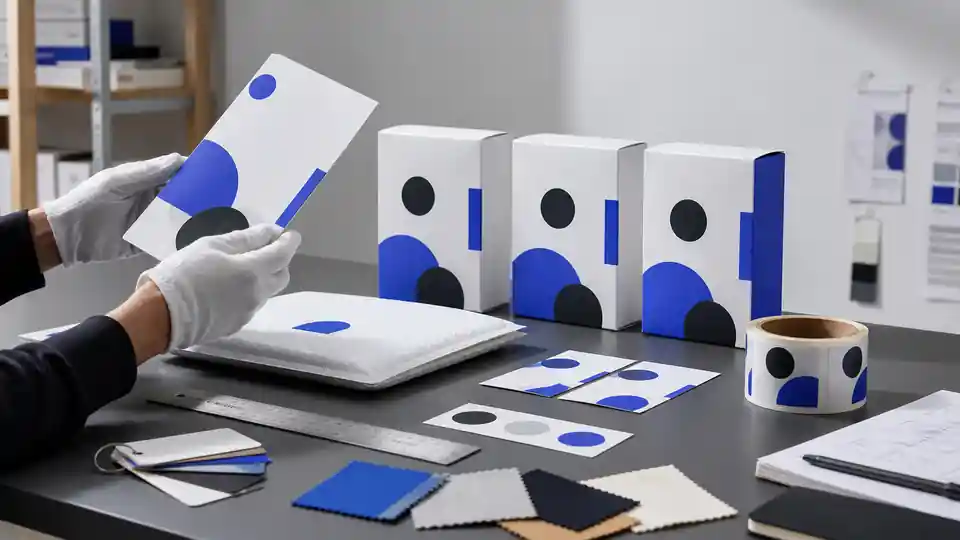
Product gate
Approved specification, sample reference, and acceptable variation are explicit enough that another batch can be judged without relying on memory.
Supplier gate
Capacity, MOQ, lead time, change control, and backup options are understood well enough to protect the customer promise when demand changes.
Economics gate
Product, packaging, fulfillment, delivery, acquisition, and post-sale exposure still leave a viable contribution margin under the expected order mix.
Experience gate
QC, packing, tracking, support, returns, and exception ownership can reproduce the intended experience across suppliers and operators.
Inventory gate
Observed demand and service requirements justify reserved stock, a production batch, or destination inventory—without creating unnecessary working-capital pressure.
Protect the parts customers can recognize and competitors cannot copy easily.
A defensible brand is not the logo on a generic parcel. It is the repeatable combination of product truth, recognizable packaging, reliable delivery, clear support, and retained operating knowledge. Standardize the visible promise only after the underlying workflow can reproduce it.
Product layer
Lock the approved specification, supplier option, sample reference, QC tolerance, bundle, instructions, and packaging so the same promise can be produced without guesswork.
Experience layer
Design packaging, unboxing, tracking updates, delivery communication, support, returns, and recovery as one recognizable customer journey.
Knowledge layer
Build promise pages, comparison criteria, FAQs, care or use guidance, and expectation-setting content from the same verified operating facts.
Operating layer
Keep source, quote, approval, inventory, QC, fulfillment, route, exception, and improvement records so the team does not rebuild the brand from memory.
Use the operating evidence to choose the next brand investment.
The next action depends on whether product, experience, economics, or inventory is the current constraint.
Stabilize the product
Compare suppliers, samples, specifications, and change triggers.
Design packaging and labels
Review feasibility, MOQ, proofs, approval gates, and fulfillment handling.
Protect quality
Connect the approved reference to inspection evidence and release decisions.
Position inventory
Evaluate storage and 3PL only when the service and economic case is clear.
Brand only what the operation can repeat.
A logo, insert, or custom box adds commitment before it adds defensible brand value. The next brand layer should be released only when the product reference, fulfillment method, customer-facing promise, and evidence can survive repetition.
Customer promise
Define the product truth, recognizable experience, delivery expectation, support boundary, and return promise the buyer should receive every time—not only in the approved sample.
Operating control
Lock the version, supplier instruction, QC reference, packing method, label or insert file, and release owner. Change one input and the approval must be reviewed again.
Visible evidence
Return the approved reference, file version, sample or QC result, packing record, and exception disposition. Upgrade the brand layer only when this evidence remains usable across repeat orders.
Questions about Branded Dropshipping: From Product Test to Brand System
What is branded dropshipping?
Branded dropshipping is an operating model in which the store builds a recognizable product and customer experience while a supplier, agent, or fulfillment partner performs some or all storage and shipping work.
Do I need custom packaging to start?
No. Begin by validating the product, requirement, supplier, quality, economics, and customer promise. Packaging is most useful when the underlying product and fulfillment experience are stable enough to repeat.
When should I move from testing to private label?
Consider the move when demand is observed, the product specification and supplier path are stable, quality controls are workable, the complete unit economics support the investment, and the brand improvement solves a real customer or competitive need.
Can branded dropshipping work without inventory?
It can, depending on supplier capability, packaging MOQ, processing time, and fulfillment setup. Some brand elements may require reserved materials or small batches even when the store does not hold finished-goods inventory itself.
What should be standardized first?
Standardize the customer-facing product truth and the approved product reference first, then QC, packing, order data, tracking, support, returns, and the brand assets built on top of those controls.
Invest in the brand only as fast as the evidence supports.
Share the product, its current sales evidence, and the part of the experience customers notice most. We will identify whether the next investment belongs in specification control, packaging, quality evidence, delivery communication, support, or inventory positioning.