
Home / TikTok Shop Dropshipping Integration
Test TikTok Shop demand without committing to large inventory first.
Dropshipping lets a TikTok Shop test products while inventory commitments remain small. AIDrop Agent coordinates the China-side product, packing, order release, shipping, tracking, and stop rules needed when campaign demand moves faster than normal operations.
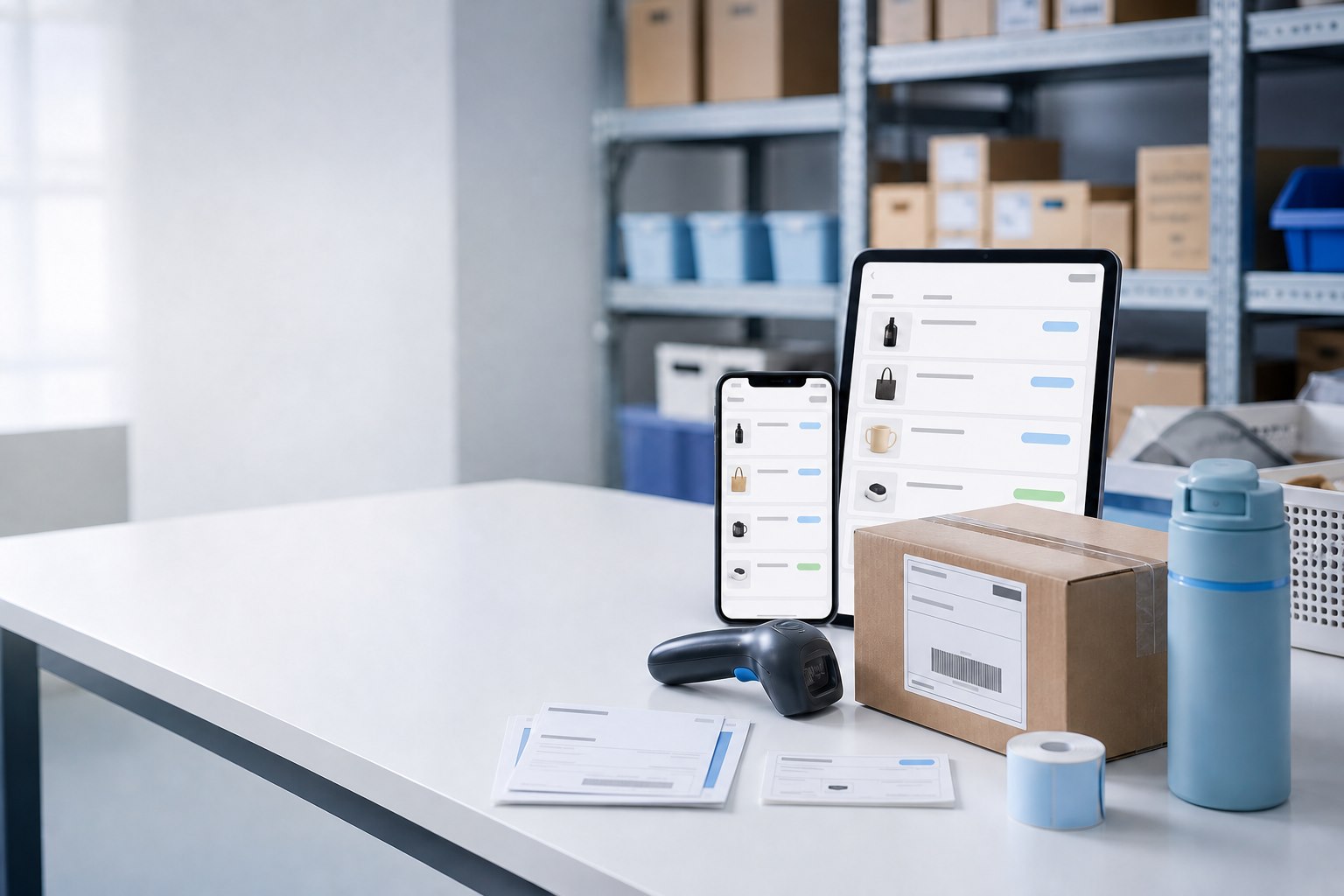
Scene visual: a generic TikTok Shop operations view. It illustrates campaign coordination and is not live account or order-volume evidence.
Use TikTok to test demand—without letting demand outrun the delivery promise.
Dropshipping keeps early inventory commitments smaller while a product is being tested. TikTok can accelerate that test, which makes supplier capacity, packing speed, route limits, and stop conditions part of the campaign decision—not an afterthought.
Test an offer with less stock committed upfront.
Learn whether the product, creative, price, and destination can generate paid demand before building a larger inventory position.
Know when new orders must slow, pause, or change promise.
AIDrop Agent checks product availability, release capacity, packed profile, route, and exception state so campaign decisions reflect what the supply side can actually fulfill.
Start with: one promoted product, destination, expected campaign window, and current supplier or stock position.
Do not release TikTok Shop traffic before the supply chain is ready.
A product can be publishable before it is operationally ready. Tie the campaign start to an approved product, order-to-SKU map, available capacity window, delivery promise, and stop rule—then increase spend only while those signals remain inside the agreed range.
Product approval
Evidence: approved specification, sample or QC reference, variant list, packing instruction, and any restricted-market check.
Order-to-SKU map
Evidence: TikTok listing option mapped to the correct supplier SKU, bundle, customization, and fallback rule.
Capacity window
Decision: confirm available stock or production path, packing capacity, carrier cutoff, and the signal that pauses or narrows promotion.
Run paid demand through a controlled release queue.
Fast intake is useful only when stock, mapping, and dispatch evidence remain visible. The normal path moves quickly; spillover and exceptions stop with context.
Intake and validate
Accept eligible orders, verify variant and destination data, and separate incomplete orders before physical work begins.
Reserve and release
Reserve the correct supply path, release within the current capacity window, and hold spillover instead of hiding it.
Return the operating state
Return dispatch and tracking, or an exception state with the next action and owner before the customer promise drifts.
Define when the delivery promise must change.
The promise should respond to operating signals rather than wishful averages. AIDrop links current route, stock or production state, and exception ownership to the customer-facing message.
Set the initial promise
Base it on the current product path, dispatch window, destination, and available carrier route.
Watch the change signal
Stock depletion, production delay, cutoff pressure, routing change, or tracking failure can invalidate the original promise.
Intervene visibly
Pause or narrow promotion, hold affected orders, update the message, and assign the operational correction.
Match campaign decisions to operating signals.
A campaign plan needs a pre-launch decision and a live-demand decision. Neither requires a fabricated forecast; both require observable inputs and an owner.
Before launch
Document approved variants, available supply path, packing instruction, route, cutoff, and which demand signal triggers review.
During demand
Reconfirm stock or production, queue age, packing workload, dispatch performance, and whether the offer or promise must change.
Protect the order queue before chasing more volume.
Promotion can increase demand faster than a supply path can absorb it. The control response is to expose the constraint, protect confirmed orders, and change the commercial input when required.
Four checks before the campaign keeps running.
Supply: can the approved product path continue?
Queue: are orders aging beyond the release window?
Route: does the current carrier path still support the promise?
Action: continue, narrow, pause, or change the offer—with an owner.
Tie the campaign promise to an operating stop rule.
Supply limit
Promise + route
Spike + exception decision
Questions about TikTok Shop Dropshipping Integration
Does AIDrop Agent guarantee TikTok Shop policy compliance?
No. Sellers remain responsible for current platform, legal, product, shipping, returns, and market-specific obligations. The workflow can help make operational requirements and exceptions visible.
Is there a direct TikTok Shop API connection?
No direct connection should be assumed from this page. The available method and supported fields are confirmed during onboarding for the relevant account and market.
What should be tested before launch?
Test product/variant mapping, required order fields, inventory and release logic, label/dispatch steps, tracking/status return, cancellation, and representative exception cases.