
Add brand value without overcommitting inventory.
Private label dropshipping should grow with demand. Start with product fit, then add inserts, labels, or custom packaging only when the extra commitment is justified. AIDrop Agent coordinates specifications, suppliers, proofs, quality checks, packing versions, and inventory timing so branding does not break fulfillment or absorb cash too early.
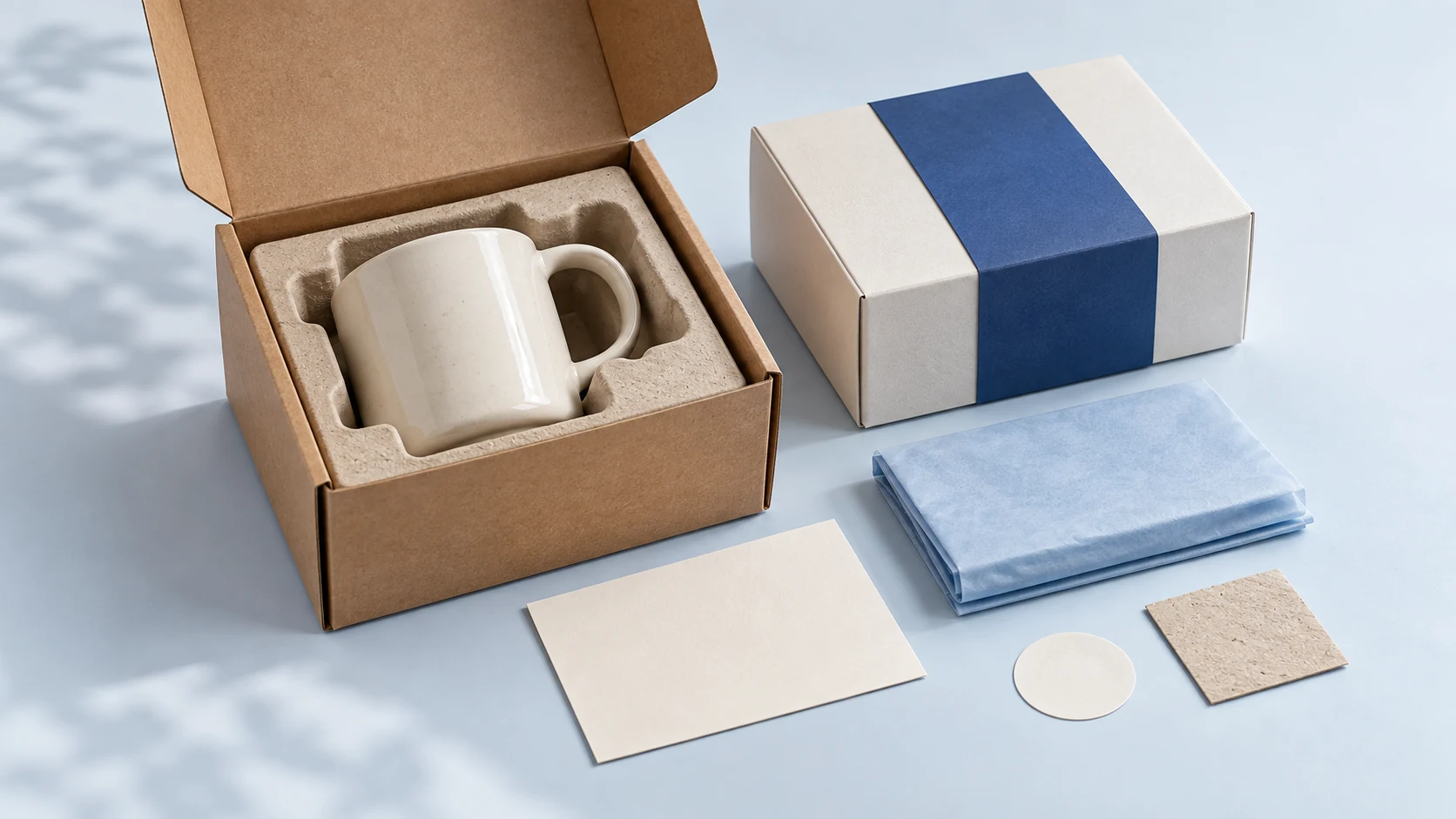
Earn the next brand layer before buying more complexity.
Each step adds customer value, but it also adds files, minimums, approvals, stock exposure, and change control. The right starting point depends on product proof and repeat demand—not on how branded the box looks.
Prove the product
Use standard product and packing where possible. Confirm product fit, supplier consistency, shipping feasibility, and repeat demand before adding inventory obligations.
Add visible brand cues
Introduce an insert, label, sleeve, or standardized packing instruction. Approve files and samples, then keep the correct version attached to every SKU and order.
Build a repeatable branded system
Use custom packaging, bundled components, or stocked brand materials only when volume and contribution can support minimums, replenishment, obsolete-version risk, and quality control.
Not sure which layer is justified? Send the current product, expected order pattern, and desired brand touchpoint. We will map the lightest workable route and the decisions it requires.
Define what customers see, what operations protect, and what investment is justified.
Customer-facing layer
Customer promise: visible logo use, color, material feel, unboxing order, protection, inserts, and claims that must remain consistent.
Operations layer
Controlled version: artwork files, dimensions, SKU applicability, component list, packing order, proof status, and named approver.
Constraint layer
Decision constraints: setup/tooling, MOQ, component lead time, storage, assembly labor, dimensional weight, destination rules, and change deadline.
Approve the method first.
Method
Method choice: printed box, mailer, label, insert, sleeve, dust bag, bundle, or mixed pack.
Compare: setup, appearance, protection, assembly, storage, and shipping dimensions.
Minimums
Commitment: MOQ by component, production batch, leftover stock, replenishment lead time, and the cash tied to branded materials.
Variation
Variation: color, print, material, cut, placement, finish, and acceptable tolerance.
Decision: simplify, sample, approve, or delay.
Approve files, proof, and packing instructions before stock or orders move.
File check
Input: final artwork, dimensions, color reference, bleed/safe area, component material, and SKU map.
Output: production-ready file set with version owner.
Proof or sample
Input: digital proof or physical sample.
Decision: approved, approved with recorded tolerance, or revision required before production.
Packing specification
Input: approved component set and order of operations.
Output: packaging BOM, packing instruction, QC points, storage rule, and effective date.
Release the same approved asset into quality, inventory, and shipping controls.
Quality Control
Receives: approved sample, file/version register, BOM, tolerance, and inspection points.
Returns: evidence and hold/fix/release decision.
Warehousing & 3PL
Receives: component SKU, quantity, storage condition, replenishment rule, and obsolete-version policy.
Returns: stock visibility and reorder trigger.
Global Shipping
Receives: final packed dimensions, weight, material restrictions, destination, and delivery promise.
Returns: route trade-offs and landed-cost assumptions.
Start with the lightest brand layer—and upgrade only when demand earns it.
Packaging should earn the right to consume cash and storage. AidropAgent can start with low-commitment brand components, then move toward China-side batches or inventory-tied packaging only when repeat demand and handling needs justify the added control.
On-order brand layer
Best when: demand, artwork, or offer positioning is still changing.
AidropAgent returns: version-controlled artwork, an application instruction, and the approved label, insert, sleeve, or simple outer-pack reference.
Trade-off: low commitment protects working capital, but the result remains a brand layer rather than a fully custom product.
Small China-side packaging batch
Best when: the presentation is stable enough to stage a limited quantity near suppliers and fulfillment.
AidropAgent returns: quote basis and MOQ, approved proof or sample, packaging count, storage owner, and an obsolete-version rule.
Trade-off: closer supply-chain coordination saves repeated management work, while storage and artwork changes become real operating exposures.
Inventory-tied custom packaging
Best when: repeat demand, packed-dimension economics, protection, or destination service requirements justify a committed format.
AidropAgent returns: packaging BOM, packed dimensions, QC checkpoints, replenishment trigger, and retirement plan.
Trade-off: stronger consistency and handling control come with fixed setup, cash tied in stock, and obsolescence risk.
Boundary: Packaging can strengthen presentation and handling, but it does not turn a standard product into a custom-engineered product. Product, labeling, and destination-market requirements still need separate approval.
Questions about Private Label Dropshipping and Packaging
Can I add a logo without a high MOQ?
Possibility and minimums depend on the product, supplier, method, material, setup, and packaging choice. A feasibility review should confirm the actual option before a promise is made.
What files do I need?
Requirements vary by method. Common needs include correct dimensions, resolution, color information, outlined fonts or packaged assets, bleed/safe area, and a controlled final version.
Does custom packaging affect shipping?
Yes. Materials, protection, dimensions, weight, assembly, labels, and destination requirements can change fulfillment and route assumptions.