

A dropshipping commercial invoice tells customs what is in this parcel and records the required transaction details. It is different from the buyer’s receipt. Match its contents, quantity, parties, verified origin and approved value/currency with the actual package before carrier handoff.
Use the document required by the actual route
The dropshipping-invoice guide focuses on which invoice or packing paper the customer sees. This article concerns the shipment-facing commercial invoice and its data handoff. Requirements vary by destination, product, carrier and the real sale/shipper arrangement. Use the carrier, customs authority and a qualified broker for the specific transaction; do not replace actual valuation or classification advice with a generic dropshipping template.
Explore the broader topic: Is Dropshipping Legal? What Your Store Is Responsible For.
01
Start with who is actually shipping and importing
Name the exporter, consignee and importer
Suppose a US customer buys a ceramic lamp from your store and a supplier in China sends it directly. The store has a buyer order. The supplier has a product and may create the carrier label. A freight forwarder or operating agent might submit the export and shipping data. The carrier may transmit documents electronically. Someone still has to name the correct shipper/exporter, consignee and importer under the actual route. The phrase “the supplier handles customs” is too vague to audit.
Assign responsibility for each fact
Write down the parties and responsibilities before listing that route: who is the seller to the buyer, who hands the goods to the carrier, who supplies product descriptions and country-of-origin evidence, who determines the customs value and classification with the appropriate advice, who pays duties and taxes under the agreed terms, and who answers a carrier query. The DDP dropshipping guide covers what a delivered-duty-paid promise means for charges; the invoice must still reflect the real goods and transaction.
Keep the label and invoice consistent
FedEx’s customs-document guidance says the exporter is responsible for preparing its commercial invoice in the FedEx flow and that other international shipping documents, including the label, should be consistent with it. DHL similarly distinguishes the transport label from a customs invoice. Use those guides to understand the handoff, then verify the required fields for your carrier service and destination.
Keep the packer and document owner in one handoff
Before the first live order, make the handoff visible: the merchant supplies the buyer order and commercial arrangement; the supplier supplies exact physical contents, origin evidence and packed details; the party named as shipper/exporter prepares or approves the carrier submission under the real route; the importer or broker confirms destination-specific requirements where needed. One company can perform several roles, but every role needs a named owner. If the store changes the product bundle and the supplier still exports the old contents, neither a correct retail receipt nor a good carrier label repairs that mismatch.
02
Describe the item a customs officer could identify
Describe recognizable goods
“Gift,” “accessory” or “sample” does not tell a reviewer what is in the box. For the illustrative ceramic lamp, an accurate product line would identify the type of lamp, material or significant component, quantity and other details the selected service requires. If the carton contains a separate plug adapter, two different products or a replacement part, the document should not pretend it contains a single undifferentiated lamp. FedEx’s description guidance asks what the item is, how many there are, what it is made from and its intended use, with separate descriptions for different commodities.
Create a shipment record from the approved supplier item, not from the marketing headline. The store may call it “Aurora Glow Desk Lamp,” while the shipment record needs a plain physical description. This prevents a supplier’s product-title abbreviation from becoming a customs declaration. Check the actual product version and any included components against the sample or approved specification. The supplier-data guide explains which product fields to request upstream; customs documentation is one reason those fields cannot be guessed later.
Turn the lamp’s marketing name into two physical lines
For fictional parcel P-L1042, suppose the verified carton contains one ceramic desk lamp and one separate plug adapter. The following is a preparation worksheet, not a finished invoice or a classification/valuation recommendation.
Lamp line
Item: ceramic-base desk lamp for indoor desk lighting; quantity: 1. Record the actual electrical/product specification, verified origin evidence, approved unit/line value and currency, and route-required classification. Use the confirmed version, not “Aurora Glow accessory.”
Adapter line
Item: [verified type/material/function] plug adapter; quantity: 1. Confirm whether it is actually included, its origin and the approved value/classification treatment. If those facts are missing, mark the worksheet HOLD and ask the responsible supplier/broker; do not invent them to finish the PDF.
Check both lines against the packing record, store order and submitted label reference. Verified origin is not simply the country of the dispatch warehouse. Carrier-specific requirements may add fields; the example deliberately leaves unverified legal facts unresolved.
| Cross-check | Buyer order | Supplier/packing record | Shipment document |
|---|---|---|---|
| Exact item | White desk lamp variant | Approved supplier item and current version | Physical description of that lamp |
| Quantity | One lamp | One picked and packed unit | One unit, plus separate lines for distinct goods if present |
| Origin evidence | Usually not in the storefront order | Supplier production/origin record | Declared country of origin after verification |
| Value and currency | Customer paid a retail amount | Supplier transaction and other relevant records | Appropriate value basis for the route, verified with broker/carrier rules |
| Parcel link | Store order #L-1042 | Carton/parcel ID | Same shipment reference and matching label data |
Confirm the value basis before declaration
This table matches records; it does not authorize picking the lowest price as customs value. FedEx’s valuation guidance explains transaction value and the need for declared values to agree across documents. Where several dropshipping sales exist, ask the responsible broker which transaction and adjustments the destination requires. Preserve the genuine invoices and value basis.
Keep this approval record beside the actual parcel. Each entry must point to its source; a supplier SKU or marketing name alone does not prove what was packed.
- Order and parcel: Store order, supplier order and parcel ID.
- Contents: Physical line description and quantity, checked against the approved specification or packing evidence.
- Origin: Verified country-of-origin evidence reference.
- Approved value basis: Declared value and currency, with the basis confirmed for the real transaction and route.
- Parties: Shipper/exporter and consignee/importer.
- Service: The actual carrier service used for this parcel.
- Submission: Document version and named approver.
- Result: Carrier acceptance or the outstanding correction request.

Match each parcel’s own contents
If the same buyer orders a lamp and a separate adapter but the supplier sends two parcels, make two shipment records. A single store order number does not prove one customs invoice covers both boxes. Match each parcel’s contents and value allocation to its own carrier submission. That prevents a customs query on the adapter parcel from being answered with the lamp’s document. Ask the carrier or broker how it expects multi-parcel shipments and related invoices to be presented for the chosen route.
03
Check the high-risk fields before carrier handoff
Review origin, value and classification evidence
On a real shipment, review the carrier’s required fields and documents, which can include product description, item quantity, unit and total values with currency, country of origin, shipper and consignee, classification information, weight and references. Other product documents may be needed for specific categories. Do not copy a guessed HS code, origin or certification from a competitor listing. A similar-looking product can have a different material, function or regulatory treatment.
Inspect the box before changing the document
For the lamp example, suppose the supplier’s packing list says two units but the store order and commercial invoice say one. The correct response is to inspect the carton and order records before dispatch, not to change the PDF to match whichever number is easiest. If the physical carton contains one lamp and one adapter, identify them accurately rather than hiding the adapter in the lamp description. If the carrier requires a particular electronic submission, confirm that the file was actually accepted, not only saved on someone’s desktop.
FedEx offers paper and electronic trade-document routes in supported situations. Those are transmission methods, not exemptions from accurate content. The exact availability and required documents depend on the service and countries. Save the submitted version and confirmation beside the parcel ID so that a later customs query can be answered without recreating the document from memory.
Submit the version that matches the sealed parcel
For a FedEx shipment, use the current document-submission options. Confirm this route supports the chosen method and any additional documents before handing over the box.
Create or attach
Create the invoice while making the label in FedEx Ship Manager, or complete the required form and attach it according to the route instructions. Compare item lines and the label’s customs value/currency before release; a saved draft is not a submitted document.
Upload when supported
To upload a manually prepared invoice during label creation, enable Electronic Trade Documents in Ship Manager preferences and use the supported route. Save the submitted version, parcel reference and acceptance/error record. An upload confirmation does not guarantee customs clearance.
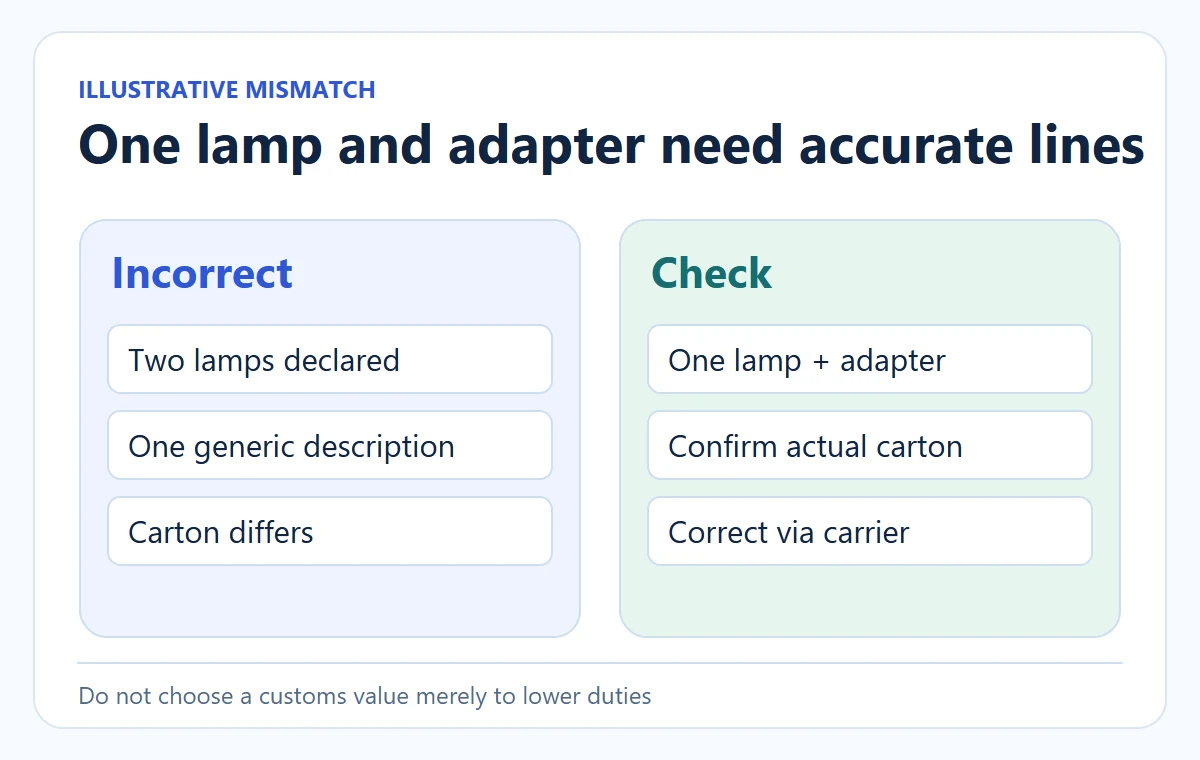
If the draft says two lamps but the sealed box has a lamp and adapter, stop and confirm the pack. Correct through the authorized carrier process, preserve the old version, and verify which version the carrier now holds. Do not fix a mismatch by hiding the adapter.
04
Run one realistic order before promising a cross-border route
Test the complete document handoff
Use one product, destination and shipping service that represent real orders. Build the store order, supplier pick/pack record, commercial invoice and label as separate artifacts. Check them line by line. Ask the carrier or broker to confirm the required fields and valuation/classification approach before you make a public delivery promise. A test checkout proves the store took payment; it does not prove that the parcel’s customs documents are acceptable.
Rehearse a real contents change
An incident drill is useful too. Change one fact in the test: two units instead of one, a different material, or a returned replacement. Who notices the difference? Which source document is corrected? Who approves the revised submission? Who tells the buyer if the dispatch estimate moves? The process should prevent an unapproved alteration rather than rely on a supplier to “fix customs” invisibly.
Keep the exact query and submitted version
If a carrier flags a real parcel, capture the exact query and the submitted document version. Verify the physical goods and transaction facts, supply the requested correction through the authorized channel, and keep the before/after record. Do not ask the supplier to declare the shipment as a gift or understate its value to move it faster. A customs delay can create a separate customer-service decision, but changing the declaration to a fiction is not a remedy.
Imagine the carrier asks why the submission lists two lamps but the packing evidence shows one lamp and one adapter. Confirm the sealed contents and any second parcel with the packer. Have the authorized document owner correct the line descriptions, quantities and other affected fields with the required classification/value advice. Save the original, revision and carrier acknowledgement under the parcel ID.
Tell the buyer promptly if this query threatens the promised dispatch or delivery estimate; do not wait until clearance finishes. Say what is being checked and when you will update them. Once the carrier provides reliable movement information, revise the estimate. Do not invent a guaranteed clearance date.
05
Keep the customer message separate from the customs declaration
Separate buyer receipt and carrier declaration
The customer needs to know what they bought, what shipping and duties arrangement was promised, and what happens if clearance delays the parcel. They normally do not need an internal supplier invoice in the package. At the same time, avoiding a supplier-branded paper does not justify withholding or falsifying a required customs document. Coordinate both streams: the customer-facing record should support the sale; the carrier-facing record should describe the real shipment under the actual route.
If AIDrop Agent would coordinate China-side sourcing, packing or shipping for your store, send the product specification, destination, sale/shipper arrangement, proposed carrier route and current documents through the review form. We can help identify missing data and the handoff owner before dispatch. Classification, valuation and destination-specific requirements still need confirmation for the actual transaction.
06
Frequently asked questions
Is the customer’s store receipt the commercial invoice for customs?
Not automatically. The receipt and customs invoice have different purposes and may need different fields and parties. Ask the carrier or broker what document the actual shipment requires, then make its facts consistent with the goods and transaction.
Can the supplier put a lower price on the customs invoice than the buyer paid?
Do not choose a value merely to lower duties. Dropshipping can involve more than one sale, so the appropriate value basis is route- and transaction-specific. Keep the real records and have the responsible broker or customs adviser determine the correct declaration.
Does DDP mean I do not need a commercial invoice?
No. DDP concerns who takes responsibility for delivery duties and related charges under the agreed arrangement. A cross-border goods shipment still needs the documents required by its carrier and customs route.
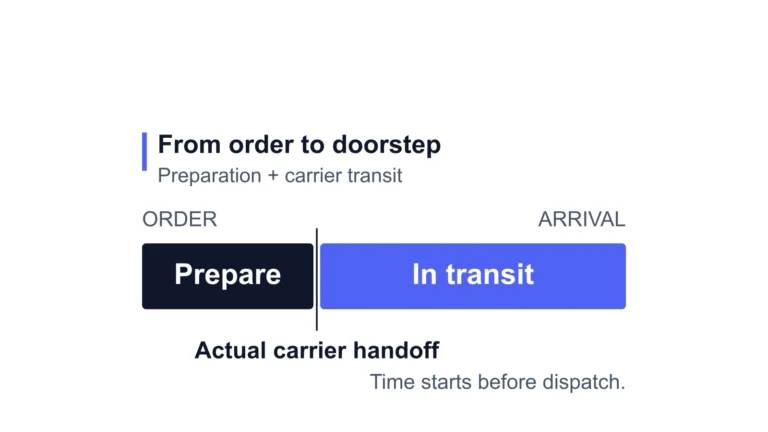
Dropshipping Shipping Times: What to Promise Your Customers
Use product-specific processing and transit estimates to set a delivery promise. Named route examples and a worked
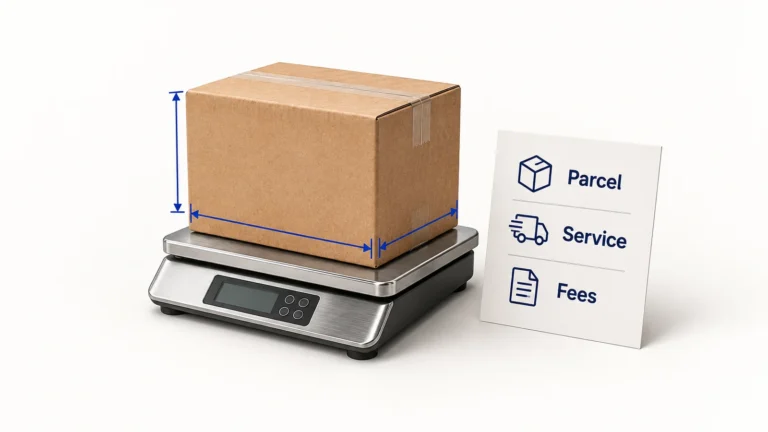
Dropshipping Shipping Costs: Compare the Whole Parcel Quote
Calculate dropshipping shipping costs from packed dimensions, billed weight and fees. Compare a worked parcel quote, import
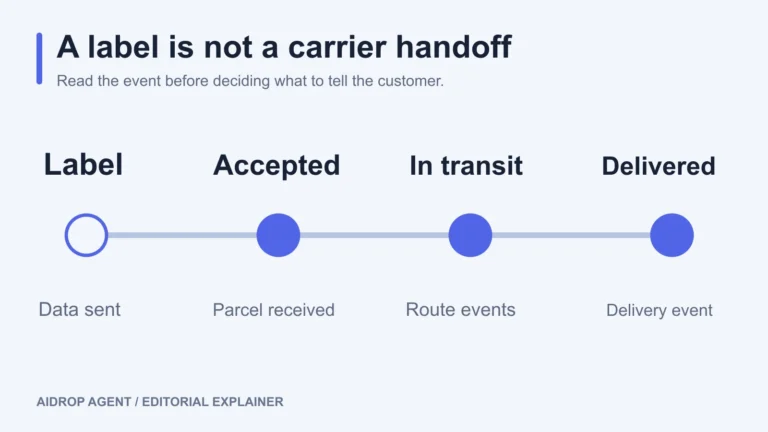
Dropshipping Tracking: Set It Up and Handle Missing Updates
Set up parcel-level tracking, interpret carrier events, and investigate missing updates without mistaking a shipping label for
