
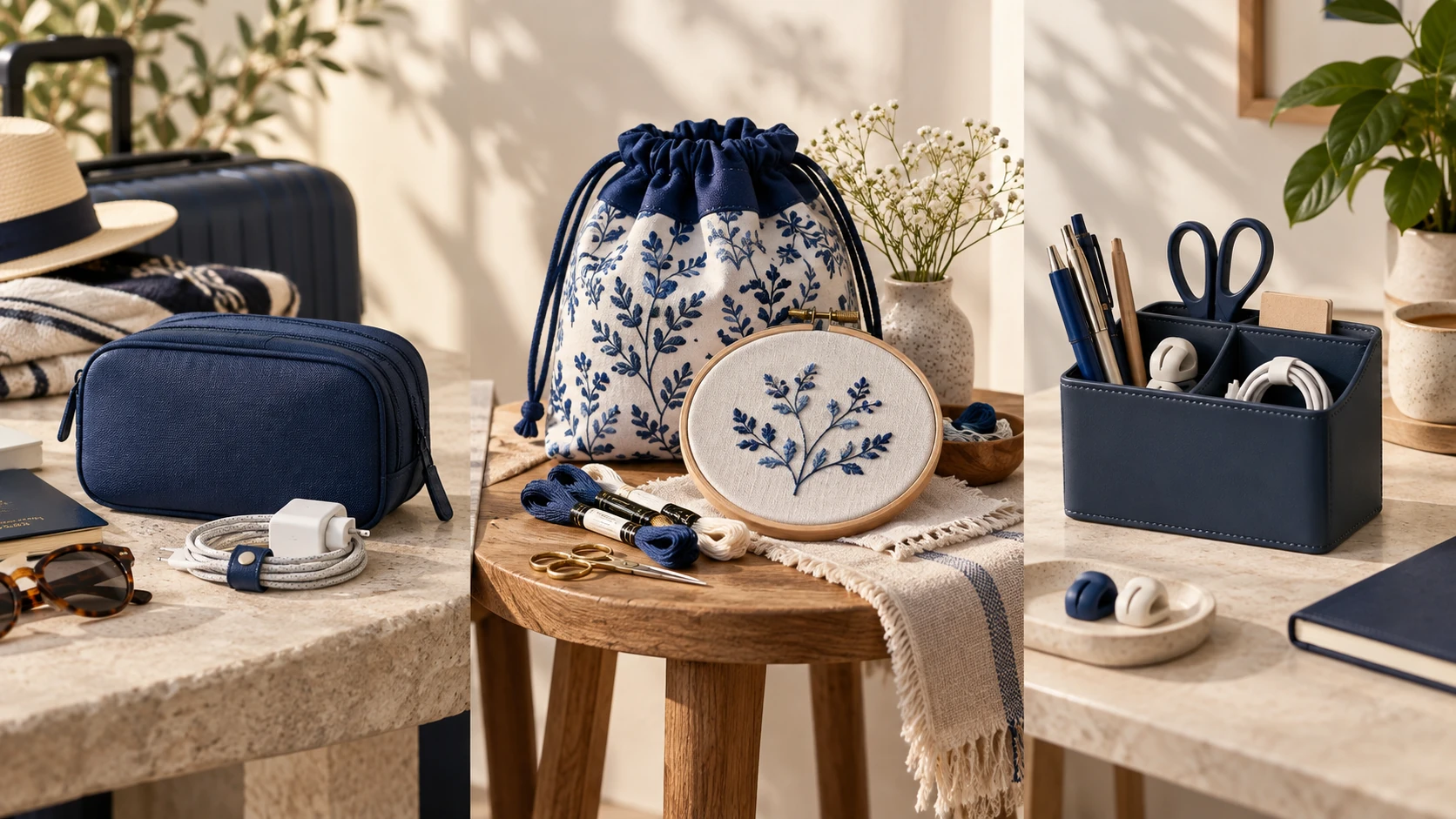
Small-space organization, adult craft supplies, pet-owner cleanup, travel organization, desk organization, plant-care accessories and hobby storage are useful dropshipping niches to investigate. Each gives you a recognizable customer problem and several related products to explain together. None is automatically profitable, and this is an editorial shortlist rather than a ranking based on sales data.
The strongest starting point is usually narrower than a department. “Home products” leaves you competing with almost every retailer. “Storage for renters with one narrow bathroom cabinet” gives you a customer, a set of dimensions and a reason to make useful product comparisons.
Choose a niche you can describe in one customer sentence, then check the actual products. A sensible category can still contain bulky, unreliable or difficult-to-explain items that make poor first offers.
01
Seven niches worth investigating
The examples below are product candidates, not recommendations for a particular supplier. Start with a few items that serve the same buyer rather than importing an entire supplier catalog.
| Niche | Focused product examples | Useful selling angle | Main tradeoff |
|---|---|---|---|
| Small-space organization | Drawer dividers, narrow storage pouches, fold-flat organizers | Show what fits in a specific space | Dimensions and usable capacity must be clear |
| Adult craft supplies | Thread storage, embroidery accessories, project bags | Help someone complete or organize a project | Compatibility and missing pieces can spoil the offer |
| Pet-owner cleanup | Hair-removal brushes for furniture, washable cleanup cloths, storage bags | Demonstrate a repeated household task | Results depend on fabric and cleaning method |
| Travel organization | Packing cubes, cable pouches, laundry bags | Organize a particular trip or luggage type | Common products face strong price comparison |
| Desk organization | Cable clips, document trays, small accessory holders | Show a practical desk arrangement | Fit, adhesive behavior and device compatibility matter |
| Plant-care accessories | Plant labels, potting mats, simple supports | Make a specific indoor gardening task easier | Size, stability and material quality vary |
| Hobby storage | Bead organizers, model-part trays, tool rolls | Keep a particular hobby’s small items usable | Compartments and closures must suit the contents |
Small-space organization
This suits someone who can photograph products in realistic rooms and explain measurements clearly. A renter arranging a tiny bathroom has different needs from a homeowner fitting out a garage. The narrower situation makes it easier to choose products and write descriptions that answer real questions.
Start with compact items that are economical to pack. A divider that ships flat may be more practical than a large rigid basket, even if the basket looks more impressive in a photograph. Ask for both packed dimensions and internal usable dimensions; those numbers answer different questions.
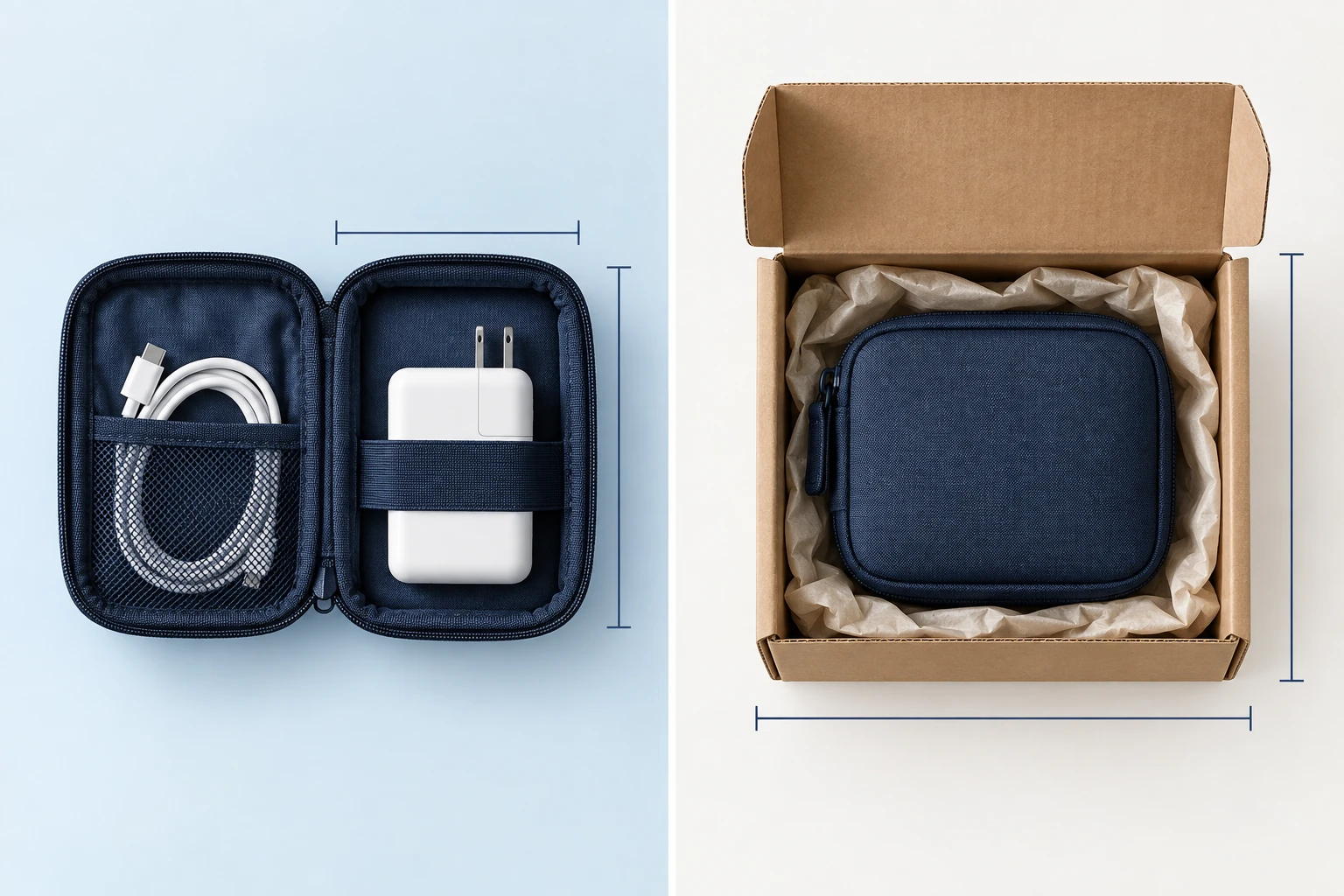
The drawback is fit-related disappointment. Show the opening a product must pass through, the clearance it needs and what is included. An adjustable design still has minimum and maximum limits. Avoid filling the page with “space-saving” claims while leaving customers to guess whether it fits their cupboard.
Adult craft supplies
Craft supplies work well when you understand a process well enough to spot a missing component. An embroidery project bag, thread organizer and accessory pouch can serve one buyer without requiring the store to carry every craft category.
A useful offer might explain which hoop sizes fit, whether small tools have separate pockets and how thread is kept apart. Tutorials give the store something more helpful to publish than repeated product announcements. They also reveal questions that should be answered on the product page.
Check every bundle’s contents and compatibility. “Starter kit” is a substantial promise if the buyer cannot finish the intended project without buying an omitted tool. Product classification and safety requirements still need review; calling something an adult craft item does not settle who it is actually designed or marketed for.
Pet-owner cleanup
Focus on the owner’s household task: removing hair from a sofa, storing grooming accessories or keeping cleanup supplies together. This gives you a more manageable initial scope than a general pet shop that includes food, supplements, restraint equipment and chew products.
The demonstration matters. Show the same surface before and after ordinary use, identify the material and keep any limitations visible. A brush that works on one upholstery fabric should not be presented as suitable for every garment or sofa.
Expect questions about cleaning and durability. Ask how the product itself is cleaned, whether parts detach and whether repeated use affects the surface. Do not extend a furniture-cleaning demonstration into a claim that the product is safe to use directly on an animal.
Travel organization
Packing cubes, laundry bags and cable pouches are easy to connect to a specific use: a weekend cabin bag, a family packing routine or a traveler carrying several small chargers. The opportunity is in helping that person choose a useful arrangement.
There is also plenty of direct competition. A generic pouch with supplier photographs gives a customer little reason to choose your store. Better differentiation could come from showing actual capacity, a useful combination of sizes, clear care instructions or a thoughtful comparison of layouts.
Inspect seams, zips and the packed set. A photograph of a complete travel arrangement can mislead if only one pouch is supplied. State the number of pieces prominently and avoid airline-fit guarantees unless the exact bag and applicable limits have been checked.
Desk organization
This niche offers clear content subjects: where cables go, which items need to remain accessible and how to organize a narrow work surface. Non-powered accessories can keep the initial range simpler than a catalog of chargers and electronic devices.
Choose the desk situation first. A shared home workspace may need portable storage; a permanent setup may benefit from fixed holders. Show cable thickness, tray clearance or the size of the objects a holder accommodates.
Adhesive products require particular care. Surface finish, preparation and removal all affect the result. Ask for instructions and test the intended surfaces before making a damage-free claim. Likewise, a holder pictured beside a popular device is not proof that every version of that device fits.
Plant-care accessories
Labels, potting mats and simple plant supports can form a focused range for indoor plant owners. Each lends itself to practical explanations: how a mat contains loose soil, where a label remains legible or what size plant a support can hold.
Prefer a specific task over a broad claim about healthier plants. Product photographs should show scale, drainage implications where relevant and how the item is assembled. Avoid implying that an accessory will fix watering, light or disease problems by itself.
Large planters may increase shipping volume and breakage exposure. Fragile, heavy or unusually shaped products deserve a separate packing and cost review before they join an otherwise compact range. Plants, seeds, chemicals and electrical grow equipment introduce different requirements and are outside this simple-accessory shortlist.
Hobby storage
A hobby you know well can reveal useful differences that a general retailer misses. Bead organizers need compartments that keep small pieces separate. A tool roll needs pockets suited to the actual tools. Model builders may care about access to parts while a project is in progress.
Show the item open, closed and in use. In particular, look at whether contents can migrate between compartments during transport. A box with many sections is not automatically useful if the intended pieces escape underneath the dividers.
This niche overlaps with craft and desk storage, so give it a distinct customer. A store for miniature painters should describe their tools and workflow rather than selling the same organizer under ten unrelated labels. Avoid unauthorized logos, licensed characters and claims of affiliation with hobby brands.
02
Which niche fits your skills and budget?
Start where you can make a credible buying recommendation. If you sew, you can explain a project bag’s limitations. If you travel regularly, you can demonstrate a packing arrangement. That familiarity does not prove demand, but it helps you create useful content and recognize weak products.
For a first range, favor products with a small number of variants, understandable dimensions and a customer benefit that can be shown honestly. A compact, non-powered item may reduce some operational complications, but it still needs product-specific quality and compliance checks.
Think about the content you can produce repeatedly. A craft store can explain projects and organization; a small-space store can show measured layouts. If your only content idea is a discount announcement, the niche may be too broad or unfamiliar.
There is no sound universal answer to “Which niche has the highest margin?” The spread between purchase price and selling price leaves out delivery, handling, payment fees, returns and acquisition. A low-cost item can produce a weak order contribution if shipping takes most of the selling price.
03
Check demand without mistaking interest for sales
Search for the customer’s problem as well as the product name. For travel pouches, compare questions about cable organization, packing small toiletries and separating laundry. Read the actual offers that appear: their contents, delivered prices, reviews and expected delivery dates.
Use several kinds of evidence. Search results reveal existing offers; customer questions reveal unresolved concerns; your own small test can show whether people respond to your version. A popular video alone cannot establish that viewers will buy at your price.
Google Trends explains that its interest scores are normalized rather than raw sales or search counts. Keep the country, dates and comparison settings consistent. A seasonal peak may tell you when attention rises, while a narrow product term may miss interest expressed through different wording.
Write down what remains uncertain. You might find obvious demand for organizers but no evidence that buyers want your proposed bundle. That is a reason to test the bundle, not to claim the entire niche is untapped. The product research guide covers how to combine these signals without treating them as interchangeable.
04
Choose products you can explain and deliver
Order samples of the exact variant you intend to list. Compare the product, its packaging and the supplier’s written specification. For a pouch, inspect zips, seams, usable space and piece count. For a storage box, inspect the closure and separation between compartments. These are proposed checks, not a claim that the products above have passed them.
Ask what changes between batches and what happens when a variant is unavailable. An apparently minor substitution can invalidate photographs or bundle descriptions. The customer bought the described item, not whichever version happens to be available.
Some categories require substantially more expertise: products for children, electrical goods, ingestible products, cosmetics, protective equipment and products making health claims. This does not mean every such product is prohibited. It means the sourcing decision needs the relevant market’s requirements and suitable evidence, rather than a generic supplier assurance. The CPSC business education resources provide a starting point for applicable U.S. consumer-product requirements.
A failed product check can remove an item without invalidating the whole niche. If one bulky organizer is impractical to ship, a smaller product serving the same customer may still be worth investigating.
05
Compare the economics before building a catalog
Use a specific order rather than an imagined average margin. Include the selling price after discounts, product cost, packing and handling, delivery, payment costs, and an explicit allowance for problems. Keep taxes and fixed overhead visible where applicable rather than silently treating the remainder as take-home profit.
As a purely hypothetical example, a $30 order with $8 of product cost, $7 of delivery, $2 of handling and packaging, $1 of payment costs and a $2 allowance for refunds or replacements leaves $10 before acquisition, fixed overhead and taxes. That is a planning calculation, not an AIDrop quote or an observed niche margin.
If the packed product raises delivery from $7 to $11, the same order leaves $6. If a proposed bundle raises both price and delivery cost, calculate the whole bundle again. Do not assume that increasing average order value automatically improves profitability. The profit-margin guide explains the differences between these cost layers.
06
Turn one niche into a small launch
Suppose you are choosing between travel organization and hobby storage. You can make competent packing demonstrations, but you know little about specialist hobby tools. Travel organization may be the better first test for you, even if a broad trend list ranks crafts more highly.
Narrow it further: one traveler, one packing problem and a small set of complementary items. Publish accurate dimensions and contents, prepare a few useful demonstrations, and direct visitors to the exact offer shown. Record questions and objections alongside orders.
Expand when you understand what the first customers need. Repeated requests for a smaller pouch are more useful than adding unrelated trending gadgets. Return to the product and supplier planning resources when the next decision concerns sourcing, samples or a new product type.
The initial goal is a focused offer you can explain, source and evaluate. That gives you a better basis for choosing a niche than a long list of supposedly winning products.