
Pinterest released its 2026 Men’s Trend Report on September 9, highlighting increased search activity around workwear, bags and home hosting. For merchants looking for their next product idea, the release offers useful subjects to investigate. It does not establish which products will sell profitably in a particular store.
The official report includes three signals worth examining: searches for “workwear outfit men” rose 314%, “duffle bag men” rose 311%, and “game night aesthetic” rose 103%. Pinterest places them within a wider account of men planning their appearance, leisure time and social activities.
These percentages describe search growth on Pinterest, not growth in product sales. A sourcing decision still needs a defined customer, an actual product and a workable delivered offer.
01
What the new figures measure
The report’s category footnotes identify the population as global male Pinterest users. They compare May–June 2026 with May–June 2025. The September publication date therefore should not be read as a measurement of September shopping behavior. The source and its footnotes were checked on September 16, 2026.
The figures also lack the absolute search counts needed to compare market size. A larger percentage increase does not necessarily represent more searches than a smaller increase in another term. Neither percentage tells a seller how many people bought an item, what they paid or whether they returned it.
That distinction affects the next action. A merchant can investigate a customer need suggested by the report without treating the report as a purchase order. The practical interpretations below are AIDrop Agent’s editorial recommendations, not product endorsements or sales forecasts from Pinterest.
02
Turn a bag search into a specific sourcing question
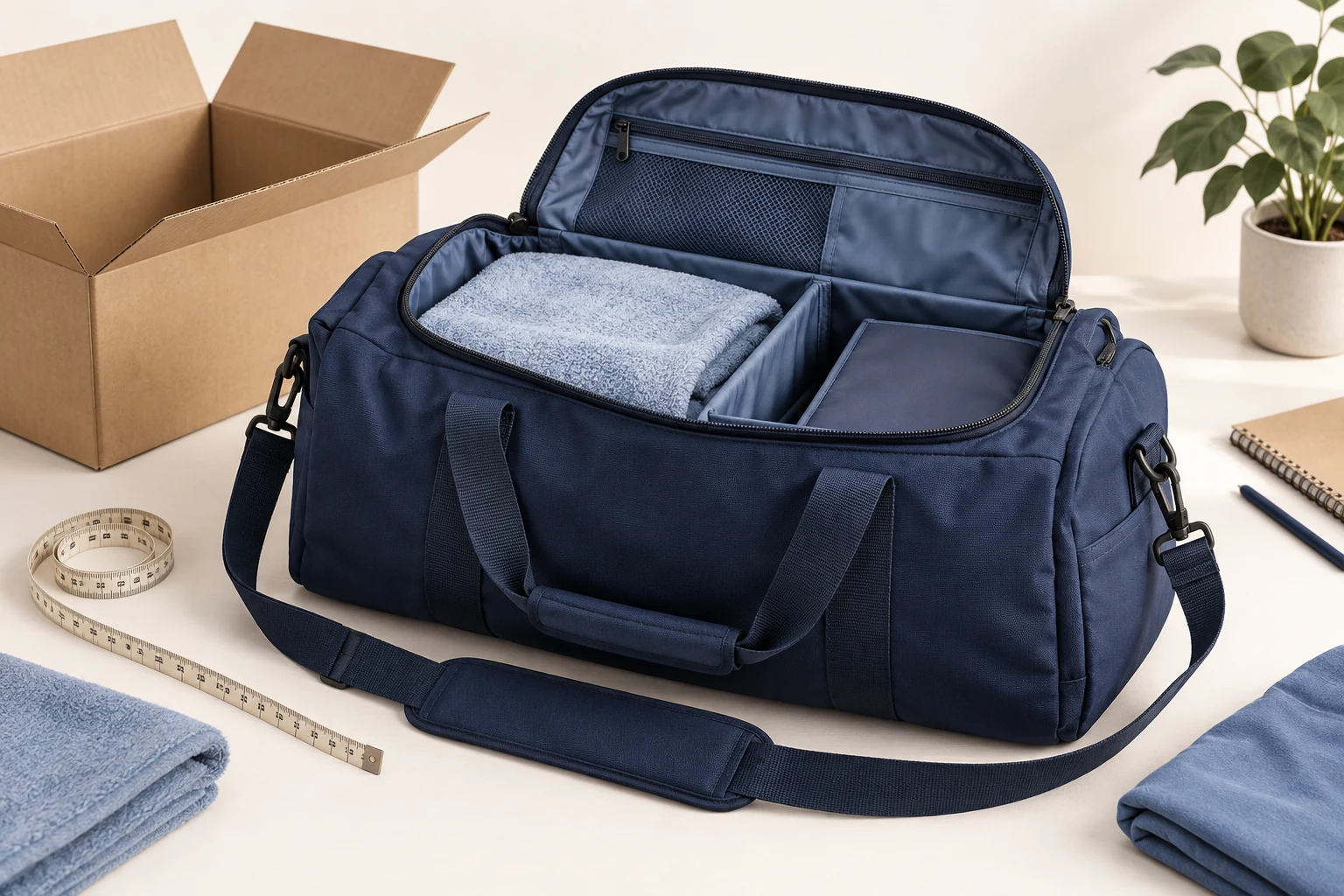
A broad bag query leaves several decisions open. The customer could want a gym bag, a weekend bag or an accessory that completes an outfit. Those uses can require different capacity, compartments and construction.
Start by choosing the use you can explain and serve. For a proposed gym bag, inspect the space needed for the intended contents and whether customers need to separate shoes or damp clothing. For a weekend bag, examine usable capacity, carrying comfort and how the opening works when packed.
Ask the supplier for the exact dimensions, material, lining, fastening and included straps. Check those details against a sample rather than assuming that similar photographs show the same product. A change in lining or hardware can alter both the customer’s experience and the delivered cost.
For a sample bag, load the items you intend to show in the listing, close the zipper and check the handles and strap attachments. Photograph the usable compartments and measure the packed shipping carton. This connects the proposed customer use with the actual item and its fulfillment requirements.
That sample check is an illustration of the work to do, not a test performed for this article. A merchant should record the result and resolve any failed check before approving the offer.
03
Hosting interest requires a narrower product idea
An aesthetic query is especially broad. Someone planning an evening with friends may be looking for room inspiration, an activity or something they can arrange using items they already own. The query alone cannot identify a product to source.
Choose a concrete task before looking for suppliers. If the idea is storage for a game collection, specify what needs to fit and how it will be accessed. If the idea is organizing a small gathering, establish which item improves the arrangement and why a buyer would choose it over an available alternative.
Compare the complete offer:
- What exactly is included, and what appears only as styling in the photograph?
- Does its size suit the intended space or use?
- What packaging protects it, and how does that affect shipping cost?
- Can the description make the benefit clear without implying unsupported performance?
Keeping the task narrow makes supplier responses comparable. It also helps prevent an attractive mood board from turning into a collection of unrelated products with no clear customer.
04
Test the offer before committing to a range
The report is a reason to update a research shortlist. It is not a reason by itself to buy a large assortment or expand into a category your team cannot evaluate.
Compare existing offers in the country you intend to serve. Check their delivered prices, product details and delivery promises. Then calculate your own costs using a quote for the exact variant and packed item, rather than a supplier’s lowest headline price.
If the product and economics justify a test, begin with a scope you can supply and assess. Use accurate photographs and a clear description of the included items. Record customer response alongside acquisition spending, actual fulfillment costs and any subsequent refunds or replacements.
The existing dropshipping product research guide explains how to combine demand evidence, competing offers and supplier requirements. The new Pinterest release adds a current lead to that work; it does not replace it.
05
What to watch after the report
Look for evidence specific to your offer: relevant customer questions, comparable transactions, sample results and your own order outcomes. If the interest is mainly in inspiration, an editorial or creative test may be more useful than an immediate inventory commitment.
Keep the report date and measurement period with your notes. When newer evidence arrives, compare like with like and revisit the decision. A product should earn further commitment through the customer’s response and the delivered result, not through the size of a search-growth percentage alone.