
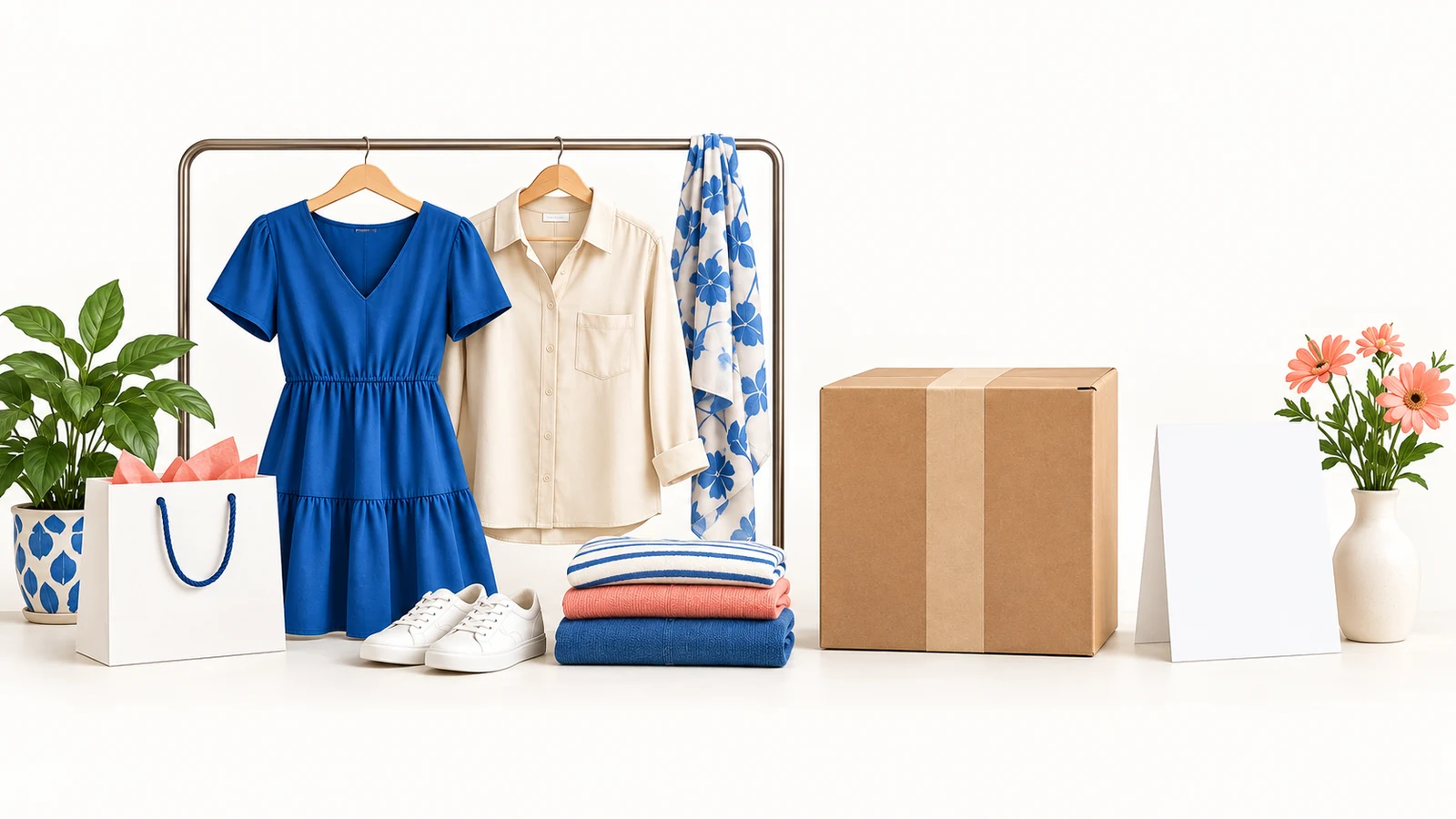
Trendsi can suit a boutique selling ready-made fashion through a connected store. It supplies the clothing and fulfills the supplier order, while you handle the offer and the customer. The important catch is that a customer’s Shopify payment does not, by itself, pay Trendsi or reserve that size.
Suppose someone buys the last medium blue dress in your store. Your screen says “Paid.” If the corresponding Trendsi order is still unpaid, you have collected the customer’s money without securing the supplier’s item. Understanding that gap is more useful than importing another hundred dresses.
The provider details below were checked on October 10, 2026. This is a document-based assessment and proposed testing method, not a report of a new hands-on Trendsi trial.
01
What Trendsi handles for your boutique
Trendsi offers a fashion assortment, store connections and order fulfillment. You choose the products, selling price, delivery promise and customer-facing description. That makes it relevant to a boutique curating existing styles.
It serves a different purpose from printing your own illustration on a blank shirt. If your store is built around original merchandise, compare the print-on-demand model before treating a ready-made clothing catalog as the same solution.
Your real product is the specific garment: its material, measurements, color, supplier stock and shipping origin. A store full of attractive photos is not yet a collection you can explain confidently to a buyer.
Start with a clear assortment, such as a few everyday dresses for one destination market. Shared stock and garment variation are easier to monitor when you can recognize every item you have listed. The clothing supplier comparison covers alternatives if this model does not fit.
02
Choose the plan after choosing the assortment
Trendsi’s current pricing page lists these starting points:
| Plan | Published monthly price | Listing scope | Decision it serves |
|---|---|---|---|
| Free | $0 | Up to 500 products | A small assortment and initial operating test |
| Pro | $29.90 | Unlimited listings | Additional listed features such as bulk importing and multi-store management |
| Enterprise | Custom quote | Custom service scope | A business needing an agreed larger arrangement |
Product and shipping bills are separate from membership. The Free offer includes access to custom-branding options; Pro lists advanced branding features. Check the exact feature you need rather than assuming all branding requires a paid plan.
For a beginner, the useful question is whether the collection can sell and fulfill correctly. An unlimited listing allowance does not answer that. A paid plan makes sense when a particular feature saves enough work or supports an operation you already need.
03
Choose a shipping origin the customer can live with
Trendsi publishes different delivery estimates for US-origin and overseas-origin products delivered within the US: 2–5 and 5–10 business days respectively. Treat those as provider estimates for that route, not guarantees or estimates for every other country.
International coverage and eligibility also need checking for the selected product and destination. A country appearing on a coverage list does not make every garment suitable for that buyer.
Consider a dress and matching accessory in one basket. If they use different origins or fulfillment paths, the customer may receive them separately. Your offer should explain this before checkout if that is how the order will work.
For the first collection, keep the route simple. Group products with compatible delivery expectations, then quote a real destination. If a buyer needs the outfit for an event, do not use the shortest catalog estimate as a promised arrival date.
04
Make sure the supplier order is paid
There are two payments to follow:
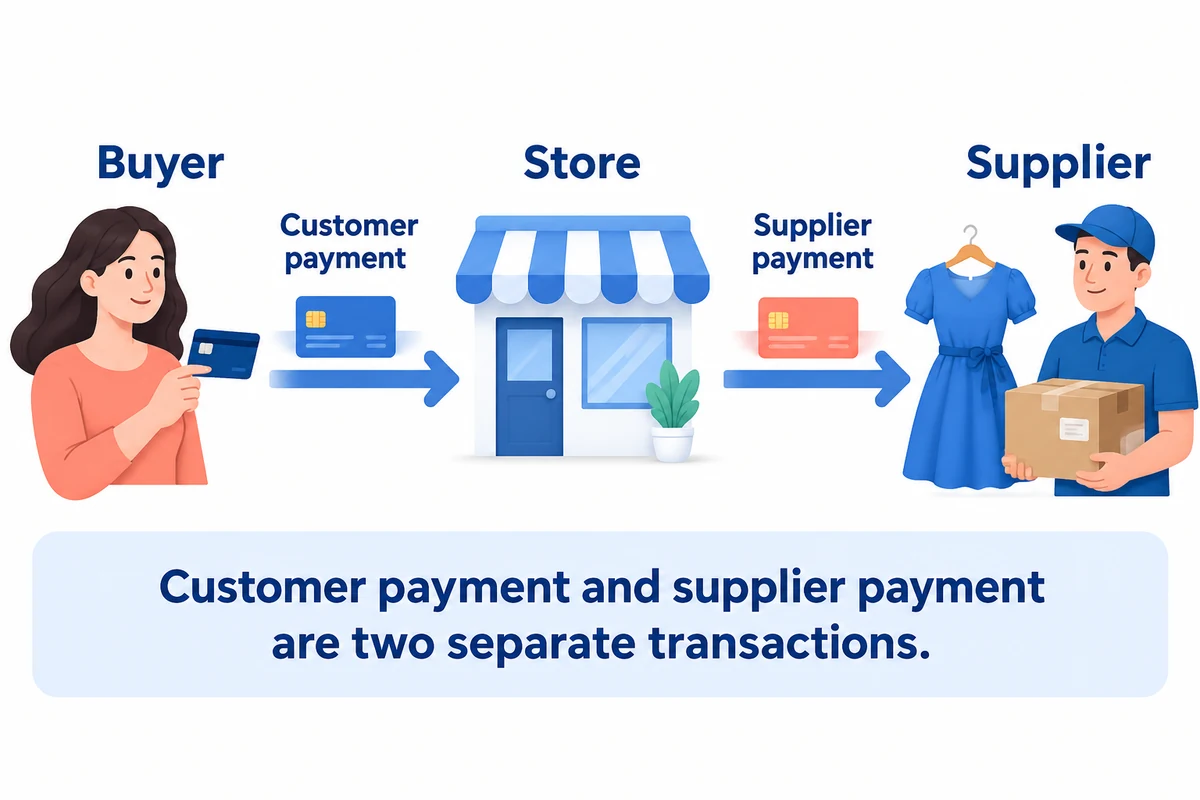
Customer → your store: the buyer pays your retail price.
Your store → Trendsi: you pay the supplier-side product and delivery bill so fulfillment can proceed.
Trendsi’s auto-checkout guidance says accounts default to manual checkout. It directs merchants to Account → Orders → Unpaid to complete those orders. It also states that unpaid orders do not reserve stock.
The documented auto-checkout control is under Account → Settings → Order Management. Confirm the current control, payment method and saved setting in your account before relying on it. Auto checkout reduces the risk of forgetting the supplier payment; you still need to review failed payments and unavailable variants.
For a paid blue-dress order, keep four facts together:
- Shopify order ID and the purchased size/color.
- Trendsi order ID and the matching garment variant.
- Supplier payment state and charged amount.
- Supplier fulfillment and tracking state.
Do not interpret “Paid” in the first system as proof of payment in the second. The same help article warns against prematurely clicking Shopify’s fulfillment control because it can interrupt the sync.
If the dress sells out before the supplier payment succeeds, stop promising that dress. Check the actual availability, offer a buyer-approved alternative or refund the buyer. Do not create a second order merely because the first is slow to appear.
05
Connect Shopify and import one dress as a draft
Connect the existing shop before building the collection. Trendsi’s connection guide gives Account → Connected Stores → Add New Shopify Store, or installation through its official Shopify app. Confirm the intended store domain before authorizing it.
For our illustrative blue dress, choose the supplier item first. Read its fabric, bust/waist/length measurements, available sizes and shipping origin. Keep the supplier identifier beside your customer-facing product name; the dress in this example is not an actual catalog SKU.
The single-product import instructions give this sequence:
- Open the product and choose Add → Add to Shopify.
- Select a manual Shopify collection. A Trendsi collection is a separate organization tool; it is not the same collection in your store.
- Choose Draft while checking the listing, set the selling price and add useful tags if needed.
- Complete Add to Shopify. Look for the Shopify icon on the item and find it under Account → Added Products.
Open the imported draft in Shopify and compare its medium/blue option with the original supplier variant. Check the size chart and price on a phone. Once ready, publish it to the intended sales channel and confirm that the live page offers only the variants you mean to sell. These are documented paths, not a new installation we performed.
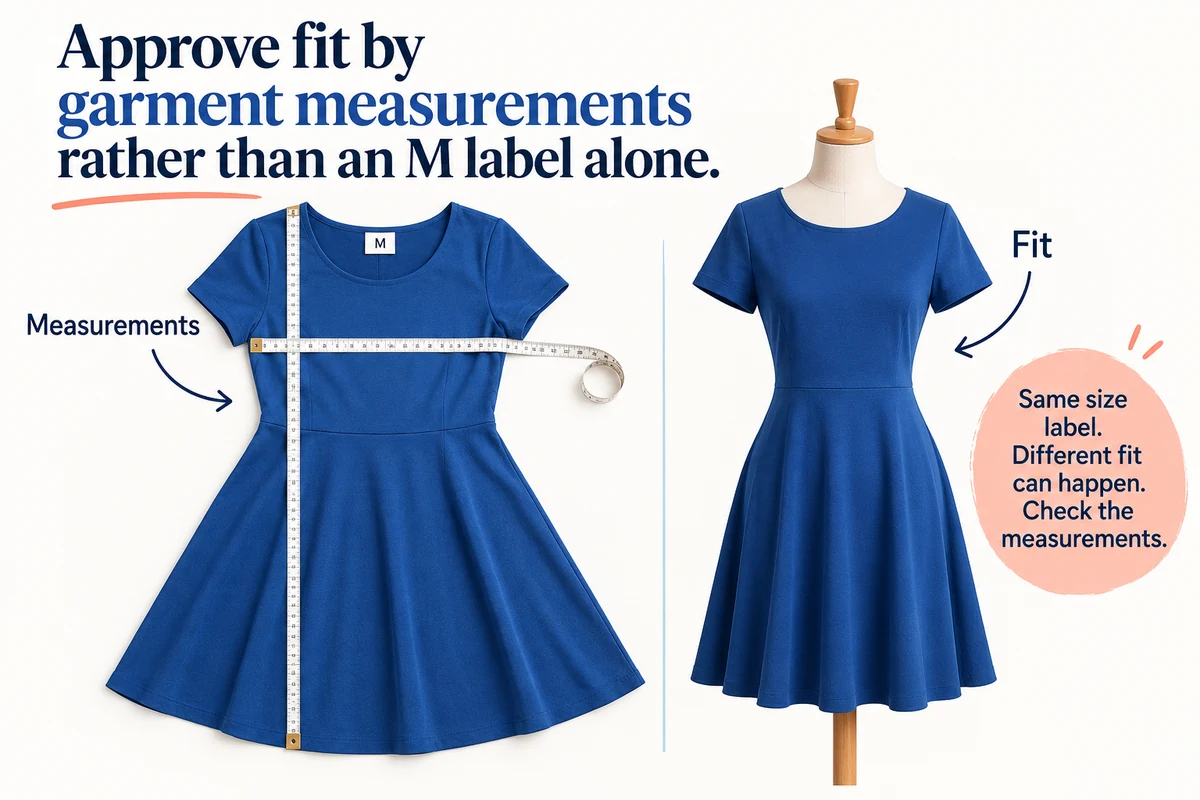
Before paying, save the product’s measurements and the precise variant. When it arrives, compare the garment with those measurements. An “M” label alone cannot explain fit; two medium dresses can have different bust, waist and length measurements.
Then make one paid store order for that linked dress. The successful result is one matching Trendsi order, the correct charge and tracking returned to the original Shopify order. Inspect the confirmation email and the received garment too.
If the imported item exists but the supplier order is absent, check the link and payment state before recreating anything. If the garment does not support your fit description, correct the description or choose another product. Those are separate problems.
06
Write a return promise you can actually honor
Trendsi’s standard return policy has two deadlines. The first begins when the customer has received the whole order. For separate parcels, use the tracking delivery date of the last parcel, with that day counted as day 1.
| Event | Policy condition for an eligible US return |
|---|---|
| Last parcel delivered | Delivery day is day 1 of the request window |
| Return requested | Submit within 7 days |
| Request submitted | Send the item back within 7 days of submission |
| Return received by Trendsi | Published processing estimate: 5–7 business days |
Suppose the dress arrives on October 4 and an accessory arrives on October 6. In this example, October 6 is day 1 and October 12 is day 7 for requesting the return. The shipping-back deadline starts from the request’s submission date. Keep the authorization and address with those dates so the customer does not mistake one clock for the other.
The item also has to qualify: unworn, with required tags and original SKU packaging. Some categories are final sale, and the standard service offers no exchanges and excludes orders delivered outside the US. An optional account benefit, such as a longer return window, needs its own terms.
Ordinary returns can still cost money. The stated policy puts ordinary return carriage on the customer and excludes original shipping/handling from refunds. Shipping errors and damaged items receive different treatment. A late or otherwise noncompliant return may incur a 20% restocking charge or be declined.
There are also two refunds to handle. The supplier may credit your payment method, but your store still needs to refund its customer. Keep those transactions linked so you do not assume that one automatically completed the other.
For a dress that is too small, first distinguish an ordinary fit choice from a wrong item or inaccurate description. Tell the buyer the applicable deadline, authorization, return address and carriage arrangement. Your own customer obligations and any broader store promise still need to be honored; the supplier policy alone does not settle them.
07
See what a $42 order leaves
A membership-free supplier still produces an order bill. Use a completed-order calculation before choosing your selling price.
Here is a hypothetical $42 dress sale, not a Trendsi quote:
| Component | Example amount |
|---|---|
| Customer receipt | $42.00 |
| Garment | −$18.00 |
| Supplier shipping | −$5.00 |
| Payment fee | −$1.60 |
| Planning allowance for refunds/replacements | −$3.00 |
| Left before advertising and fixed costs | $14.40 |
That $14.40 is available for the remaining business costs; it is not net profit. A $12 acquisition cost would leave only $2.40 before subscriptions, overhead and any other applicable costs.
The supplier also needs its $23 before your payment processor necessarily releases the customer’s payout. Ten such orders require $230 of accessible supplier funding. A profitable-looking retail price does not remove this cash requirement.
Replace the example with your actual garment, destination, payment fees and observed remedy costs. Recalculate when the assortment or shipping origin changes.
08
When to use Trendsi, and when to source differently
Trendsi is worth investigating when a ready-made fashion collection fits your audience and its shipping, fit information and return arrangement work for your store. Begin with a collection you can describe and support.
A different sourcing route becomes relevant when you need a specific fabric, measurement range, quality check or packing instruction beyond the catalog offer. These are concrete requirements to put into a sourcing brief.
If you need those controls on products sourced in China, send AIDrop Agent the garment reference, measurements, fabric requirements, sample goals and destination through the review form. We can assess the China-side scope. Trendsi account settings and its own return decisions remain matters for Trendsi support.
09
Trendsi questions
Is Trendsi free to use?
It publishes a Free plan, but the product and delivery are still paid. Treat store subscriptions, payment charges and any chosen paid features as separate costs.
Does my customer’s payment reserve stock?
The documented unpaid supplier order does not reserve it. Check Trendsi’s payment and availability state rather than relying on the store’s paid badge.
Can I offer the same return policy outside the US?
The standard published Trendsi return service excludes non-US orders. You need a workable destination-specific customer arrangement and must consider your own obligations.
What should I do if an order has not appeared?
Check the linked variant, supplier order list and payment state. Look for an existing order before manually creating another; otherwise a delayed sync can create a duplicate.
CJdropshipping Review: Costs, Warehouses, Quality and Fulfillment Fit
CJdropshipping is a practical option for sellers who want sourcing, store connections, packaging and fulfillment in one

CJdropshipping vs DSers: Who Sources, Pays and Ships the Order?
CJdropshipping can source and physically fulfill an order; DSers maps a store product to supported external suppliers

AutoDS Review: Evaluate the Automation You Would Actually Use
AutoDS can reduce listing and order work, but its value depends on your sales channel, tier, add-ons
