
Trendsi suits ready-made boutique fashion; Printful and Printify suit original printed apparel; Apliiq adds garment branding and customization; BrandsGateway serves designer resale. The right starting point depends on the clothes you want to sell, the customer’s country and how much control you need over the finished item.
A boutique selling ready-made dresses and a creator selling illustrated T-shirts need different suppliers. Even within one category, a cheap garment can become expensive if the size information is poor or a return must travel internationally.
This comparison uses provider information checked on September 19, 2026. It explains published services and limitations; it does not claim that we have personally tested every supplier’s products.
01
Compare suppliers by the clothes you want to sell
The first choice is between an existing garment and a garment customized for your store. Ready-made fashion lets you select an assortment; print-on-demand adds your design to supported products; more extensive branding can add labels or other details. Designer resale is a separate business with different documentation and presentation needs.
| Option | Product model | Useful fit | Main cost or operating limit |
|---|---|---|---|
| Trendsi | Ready-made fashion | A boutique assortment, especially when serving US customers | Shipping origin varies; its return service is limited to US orders |
| Printful | Printed or embroidered products | Apparel built around your original designs | Production and delivery both take time; ordinary wrong-size choices are excluded from its merchant refund policy |
| Printify | A network of print providers | Comparing production options for designed apparel | Evaluate the exact garment/provider combination, not just the platform name |
| Apliiq | Decorated apparel with branding options | Labels, embroidery and other details for a clothing brand | Blank garment, decoration, fulfillment and shipping are separate cost components |
| BrandsGateway | Designer resale | A store curating existing fashion brands | Paid dropshipping subscription, return conditions and destination costs |
This is a shortlist by use case, not a ranking of product quality. If you are still deciding whether to use a direct supplier, marketplace or sourcing partner, begin with our broader dropshipping supplier guide.
02
Trendsi for a ready-made boutique assortment
Trendsi offers a fashion catalog and connections with Shopify and TikTok Shop. That makes it a practical candidate for a store selecting existing styles instead of creating graphics for blank garments. Its platform information describes a free tier with up to 500 product listings, with product and shipping costs charged separately.
Separate US-stocked items from those shipped from overseas. Trendsi currently quotes 2–5 business days for delivery of US products within the US and 5–10 for overseas products delivered there. The service also covers more than 25 countries, but those US estimates should not become a worldwide delivery promise.
The detailed return policy is narrower than a general “free returns” headline. Return service applies to US orders only. Eligible unworn items need their tags and SKU packaging; requests start within seven days of receipt, and the return must then be shipped within seven days of submission. Ordinary return postage is the customer’s responsibility. Exchanges are not accepted, and categories including swimwear and intimates are excluded.
For a US boutique, this creates a defined supplier return route, albeit a short one. For an international store, it leaves a larger gap to fund and manage. Build the customer policy around the actual arrangement and applicable consumer requirements.
03
Printful and Printify for your own designs
Printful: a designed product with a defined production cost
Printful fits a store whose offer includes original artwork, embroidery or supported personalization. Its cost documentation says there is no required monthly subscription or order minimum. The charge includes the chosen product and decoration, with shipping, applicable tax and certain extras added.
A product mockup helps present the idea, but a sample answers different questions: whether the print looks right on the fabric, whether the garment is sufficiently opaque and whether the cut matches the listing. Use the sample of the actual garment you will sell, rather than assuming all blank shirts have the same fit.
Printful’s return guidance distinguishes manufacturing or printing problems from a buyer choosing the wrong size or changing their mind. The latter ordinarily does not qualify for a supplier-funded remedy. If your store offers a size exchange, allow for the new product and shipment yourself unless another agreed recovery applies.
Printify: provider choice is part of the product choice
Printify gives merchants access to multiple print providers. Its free plan includes five stores and unlimited designs; paid plans offer additional features or eligible discounts. The meaningful comparison is the product, provider, decoration and delivery destination together.
Two listings carrying the same artwork can still differ in blank garment, size availability and production location. Choose a provider that supports the sizes and colors you intend to advertise, then review the finished item and the route to the market you will serve.
Do not silently replace an approved shirt with a different blank when stock runs out. A similar mockup can conceal a different cut or fabric. If your fulfillment settings allow substitutions or rerouting, understand which changes can occur and whether they preserve the product you described.
Our print-on-demand supplier guide covers those production and routing choices in more detail.
04
Apliiq for custom labels and garment details
Apliiq is relevant when the garment’s branding is part of the appeal: a neck label, woven label, embroidery, patch or other supported detail. This offers more scope than placing a single graphic on a shirt, but each addition needs a cost and production check.
Its dropshipping pricing explanation separates the blank garment, design elements, fulfillment and shipping. It lists a $1 fulfillment fee per item, not per order. A three-item order therefore carries $3 of that fee before considering the other charges. Certain branding and setup costs are also separate.
Select the garment and decoration method before deciding what the finished product will cost. A woven label subscription, a printed label and embroidery setup are different purchases; a general “custom branding available” statement cannot price the combination you want.
Apliiq’s custom-order return guidance excludes returns simply because the buyer does not like the item. That makes an accurate sample, realistic photography and clear sizing especially useful. Confirm production and destination shipping together before launching a time-sensitive collection.
05
BrandsGateway for designer resale
BrandsGateway supplies existing designer fashion rather than garments to relabel as your own. Its service introduction distinguishes free catalog browsing from paid dropshipping access. The dropshipping arrangement has no minimum order quantity; its separate wholesale service has different purchasing requirements.
This fits a merchant who can curate established brands, handle a higher-value order and absorb the subscription cost. It is less suitable if the aim is to create a low-cost private-label range. Keep invoices and relevant product documentation, and verify what your selling channel requires for the particular brand and market. A supplier listing is not blanket permission for every marketplace account.
The shipping and returns page describes shipping charges that combine a base charge with item-related additions. Calculate a real basket for the destination, including any import costs that fall outside the quote.
Returns require particular care. Published guidance calls for requesting a return within 14 days and using approved tracked couriers, but the shipping page and general terms use different wording about dispatch and receipt deadlines. Obtain the order’s written return instructions before promising a customer a matching window. Courier cost and the time needed to inspect a returned garment can matter as much as the product’s purchase discount.
06
Compare measurements before comparing size labels
A shared size label does not establish a shared fit. “Medium” on two supplier listings is insufficient information for deciding whether customers can buy the same size across your store.
Consider two hypothetical shirts, measured flat using the same method:
| Measurement | Shirt A, labeled M | Shirt B, labeled M |
|---|---|---|
| Flat chest width, seam to seam | 48 cm | 52 cm |
| Approximate garment chest circumference | 96 cm | 104 cm |
| Difference in circumference | — | 8 cm larger |
Doubling the flat width here provides an approximate garment circumference. It does not describe the wearer’s chest measurement, and it is not a universal sizing formula for every garment construction. The ease needed for a comfortable fit depends on the cut, fabric and intended use.
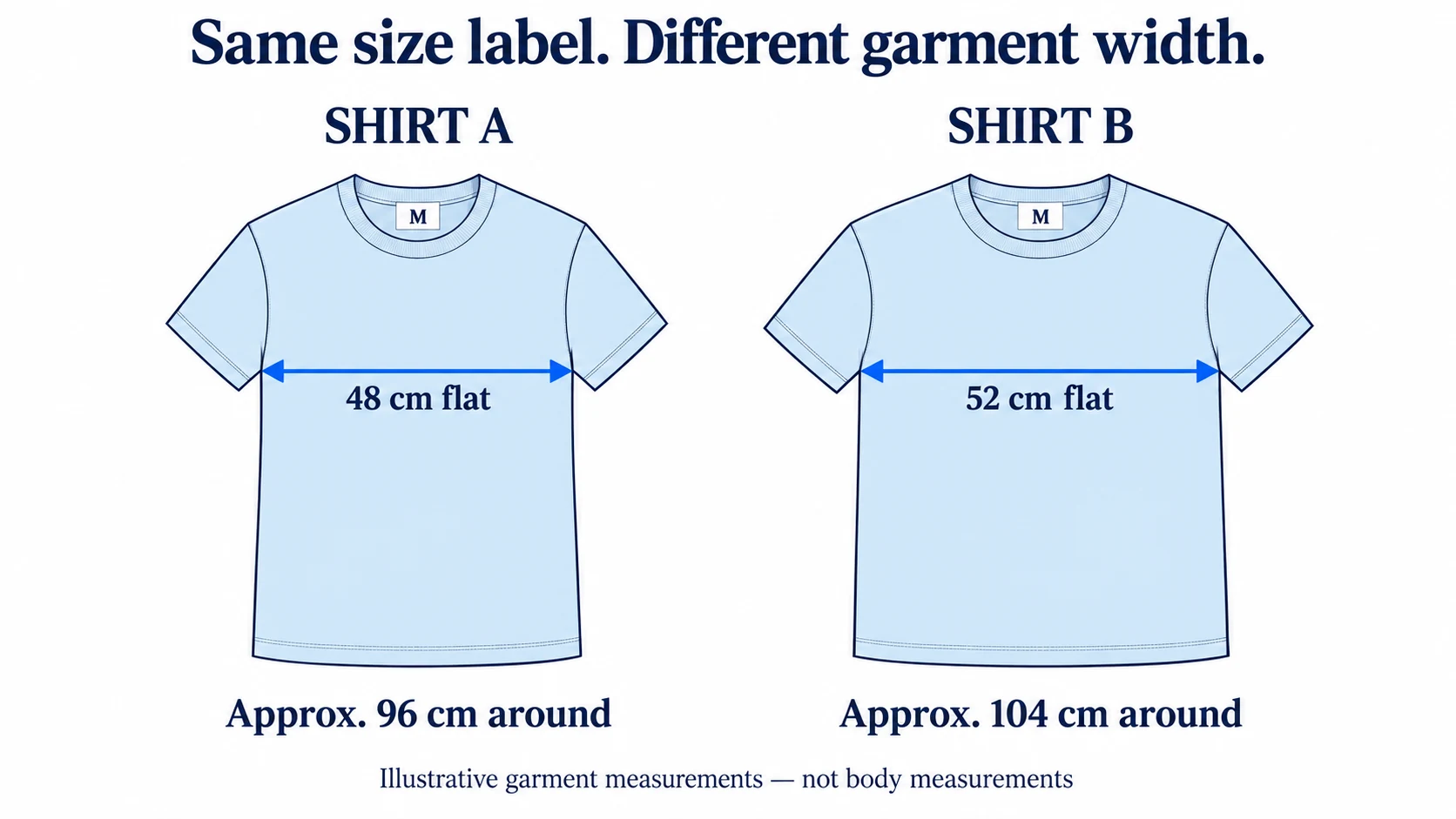
A useful supplier size chart identifies whether its numbers measure the body or the finished garment, where the measurement is taken and whether stretch fabric is measured relaxed. For trousers, waist, rise and inseam may matter more than a general letter size. For a fitted dress, the relevant bust, waist and hip measurements need a consistent method.
Compare the chart with the sample and record any discrepancy against the exact style and size. If you evaluate washing behavior, follow the supplied care instructions and record what you observed. One washed sample is useful buying information; it is not proof of a formal durability or shrinkage certification.
The resulting product page should help a shopper select a size, with units and measurement instructions they can understand. A generic chart reused across unrelated suppliers can be worse than no chart if it gives the appearance of precision while describing a different garment.
07
Track stock at size, color and shipping origin
Apparel inventory becomes complicated quickly. One dress in four colors and five sizes creates twenty variants before you consider separate warehouse stock. A style showing “100 available” does not tell you whether the blue medium can ship from the promised location.
Keep the store’s variant connected to the supplier’s exact variant identifier. Preserve the size label, color, shipping origin and stock status that determine whether the order can be fulfilled. When a feed fails or an item disappears, pause the affected offer until the state is clear rather than assuming the last quantity remains valid.
This becomes especially important when a supplier offers both overseas and domestic stock. Moving an order to a different origin can change its delivery estimate and cost. Moving it to a different producer can also change fit. Those are customer-facing consequences, not merely changes in the back office.
For a fuller specification of the records to request, use our supplier product-data requirements. The apparel-specific question is simple: can the record identify the exact garment the shopper selected?
08
Price the order after a size problem
Clothing should have enough margin to support the customer service policy you actually offer. Here is a hypothetical order, excluding taxes collected for authorities and before fixed overhead or income tax:
| Order component | Amount |
|---|---|
| Selling price | $50 |
| Garment | −$24 |
| Outbound shipping | −$6 |
| Payment and selling fees | −$3 |
| Customer acquisition | −$8 |
| Contribution if no remedy is needed | $9 |
Now suppose the shopper chose the wrong size and the store offers a free replacement. If the supplier does not reimburse it, another $24 garment and $6 shipment reduce the contribution from $9 to −$21. This assumes no recovery value from the first garment and no further fees; other outcomes will differ.
That example does not suggest every customer will return an item. It shows why the cost of a remedy belongs in pricing. Use your own observed reasons for returns as data becomes available: incorrect chart, customer size choice, defect and late arrival require different fixes.
The supplier agreement and your obligations to the consumer are separate. For example, EU consumer guidance describes a 14-day withdrawal right for many distance purchases, with exceptions such as goods made to the customer’s specifications or clearly personalized. Do not assume a standard design becomes exempt merely because it is printed after the order arrives.
Agree where garments will be returned, how condition is recorded and who issues the customer refund. Our dropshipping returns guide explains the workflow beyond the supplier’s approval email.
09
Approve a small collection before importing the catalog
Start with a collection you can describe accurately. That might be a few coordinated ready-made styles or a small set of designs on one approved blank. Keeping the initial assortment manageable makes it easier to inspect samples, produce useful fit information and follow stock changes.
For each product, retain its supplier identifier, measurement chart, fabric description, sample observations and the photos you are entitled to use. Confirm the return route and delivery arrangement for the destination you will serve. If a necessary detail is missing, keep that item off sale while resolving it.
Garment labels are part of this work. For most textile and wool products sold in the US, the FTC identifies requirements concerning fiber content, origin and the responsible business; care-label duties also apply to relevant manufacturers and importers. Ask for the actual label information rather than inferring it from a lifestyle image. Other markets and specialist categories need their own assessment.
Custom branding should preserve required information. Replacing a neck label with your logo does not remove the need for accurate product and care details. Likewise, a photograph that makes a garment look thicker or more fitted than the supplied item can create avoidable disappointment.
Once the collection performs consistently, expand using the same evidence. Add sizes or styles because you can explain and fulfill them, rather than because the supplier’s import tool makes adding them easy.
10
Clothing supplier questions
Which option is best for a beginner?
For ready-made boutique clothing aimed at US customers, Trendsi is a relevant first candidate. For your own printed designs, compare Printful and Printify. Apliiq becomes more relevant when specific branding details justify added production work; BrandsGateway serves a different, designer-resale proposition. Each still needs product-level verification.
Can I put my own label on designer clothing?
Designer resale and private labeling are different arrangements. Products sold under another brand should not be treated as blanks to relabel. Use an agreed customization or private-label service for garments intended to carry your identity, and preserve required labeling.
Does a US warehouse mean every garment ships from the US?
No. Origin can vary by product, size and color. Verify the selected variant and available origin rather than copying a company-wide warehouse claim into all delivery descriptions.
Can the supplier handle every return for me?
Only within its agreed eligibility, destination and timing rules. A return service may exclude particular categories, countries or reasons. Your store needs a funded process for customer obligations that extend beyond those supplier terms.