
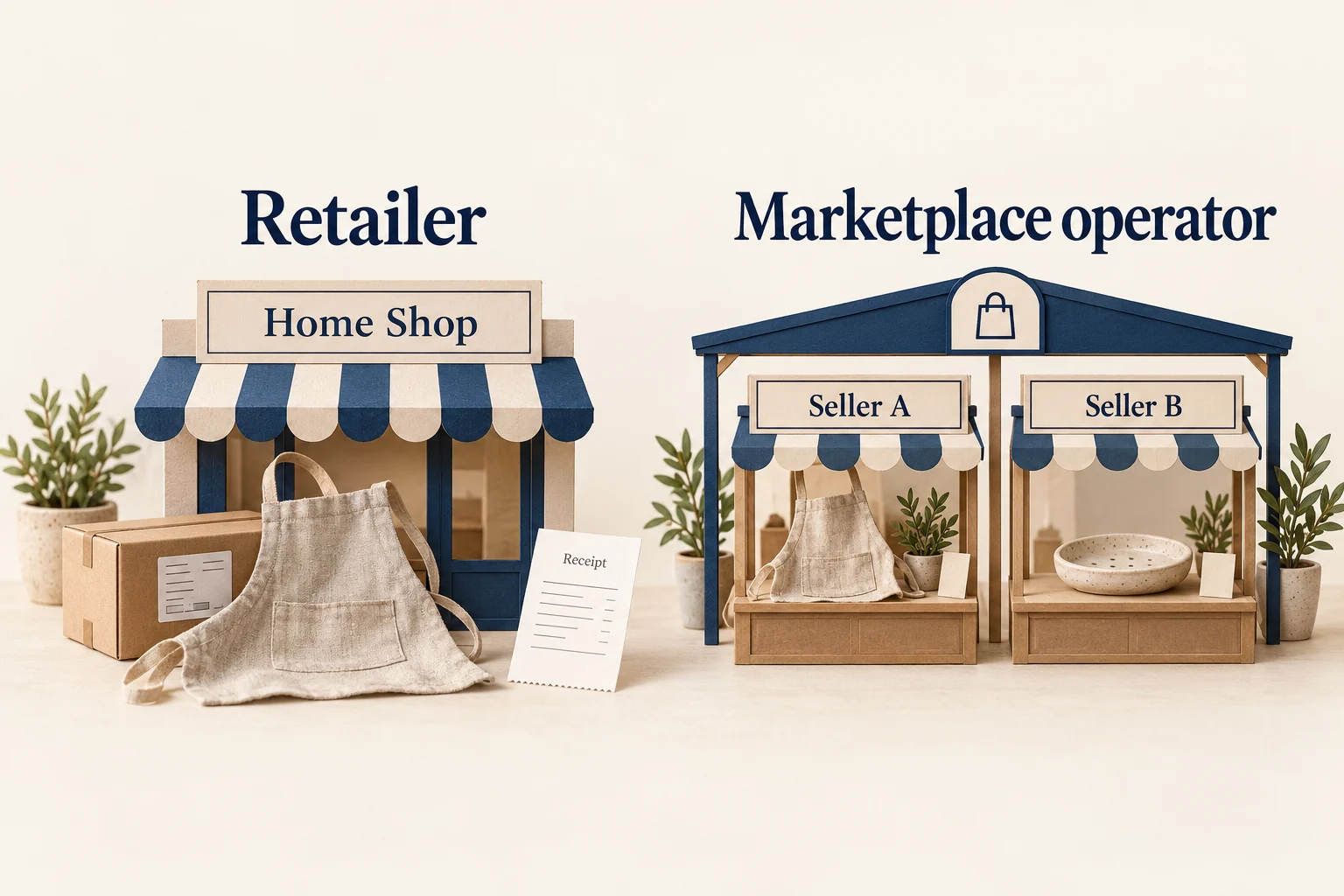
In a typical dropship arrangement, you sell the product and a supplier sends it to your buyer. In a third-party marketplace arrangement, independent sellers sell through the platform you operate. Your role changes from reselling products to admitting sellers and coordinating transactions between them and buyers.
There is also a third situation: selling your own offers on an existing marketplace such as Amazon or eBay. That is a sales-channel choice. Subject to its rules, a marketplace seller may use dropshipping to fulfill orders.
Picture a homewares shop adding products from several outside suppliers. The owner calls the expanded site a marketplace. Then an apron arrives late, a soap dish comes in a separate parcel, and the buyer asks one simple question: “Who is sorting this out?” A larger catalogue has not answered it. The agreements, product pages and order process need to agree on who sold each item.
01
First separate three roles that sound similar
Before comparing software, decide which of these jobs you intend to do:
| Role | What the business does |
|---|---|
| Dropship retailer | Sells to the buyer, purchases the supplier’s goods/fulfillment and manages the customer promise. The supplier sends the parcel. |
| Third-party marketplace operator | Runs a venue where independent sellers offer products to buyers. Defines admission, listing, transaction and service rules, often earning commissions or other platform fees. |
| Seller on an existing marketplace | Lists products on someone else’s platform and follows its seller rules. May hold stock, use a fulfillment service or use a permitted dropshipping arrangement. |
The distinction is visible in Mirakl’s comparison of dropship and marketplace models: its conventional dropship merchant resells and controls the retail offer, while third-party marketplace sellers make their own offers through the operator’s site. These are common patterns, not a complete description of every contract or country.
If you only want to sell products without packing them yourself, you may be looking for a supplier arrangement. If you want other businesses to sell to your audience under their own seller identities, you are considering marketplace operations. If you want access to eBay’s shoppers, you are considering becoming an eBay seller.
Several suppliers do not automatically make you a marketplace. A retailer can resell goods from ten suppliers while remaining the seller to every customer. Our dropshipping guide explains that underlying retail and fulfillment relationship.
02
Compare who makes the sale, not who touches the parcel
Both models can involve goods dispatched by an outside business. Watching the parcel leave a supplier’s warehouse therefore tells you little about who owns the customer transaction.
Compare the typical arrangements this way:
| Question | Typical answer in each model |
|---|---|
| Who offers the product to the buyer? | Dropship retail: your store as retailer. Third-party marketplace: an identified seller on your platform. |
| Who determines the selling price? | Retail: you set the offer subject to your agreements. Marketplace: sellers commonly price their offers within platform rules. |
| How does your business earn money? | Retail: what remains from the selling price after procurement and other costs. Marketplace operator: agreed commissions, subscriptions or other fees. |
| Who maintains the catalogue? | Retail: you are responsible for the range you sell, even if a feed supplies the data. Marketplace: sellers and the operator divide listing and quality-control tasks. |
| What happens to a complaint? | Retail: you handle your customer’s problem and pursue the supplier separately. Marketplace: seller and operator procedures must specify the buyer’s route, escalation and remedy. |
A vendor dashboard does not settle these answers. Neither does writing “marketplace” above a collection page. Check the supplier/seller agreement, buyer-facing terms, product page and checkout information together.
The payment setup also needs its own answer
Payment responsibility is another layer. Stripe’s merchant-of-record explanation describes how different Connect charge arrangements can put that payment role with an individual business or the platform. The presence of a commission split alone does not resolve every responsibility.
Ask the provider implementing your payments who carries refunds, disputes and negative balances in your selected setup. Match that answer to your agreements and buyer communications. Do not copy a comparison chart’s “vendors take all the risk” claim into a business plan or assume it determines tax or legal obligations.
03
Run the same sale through two different budgets
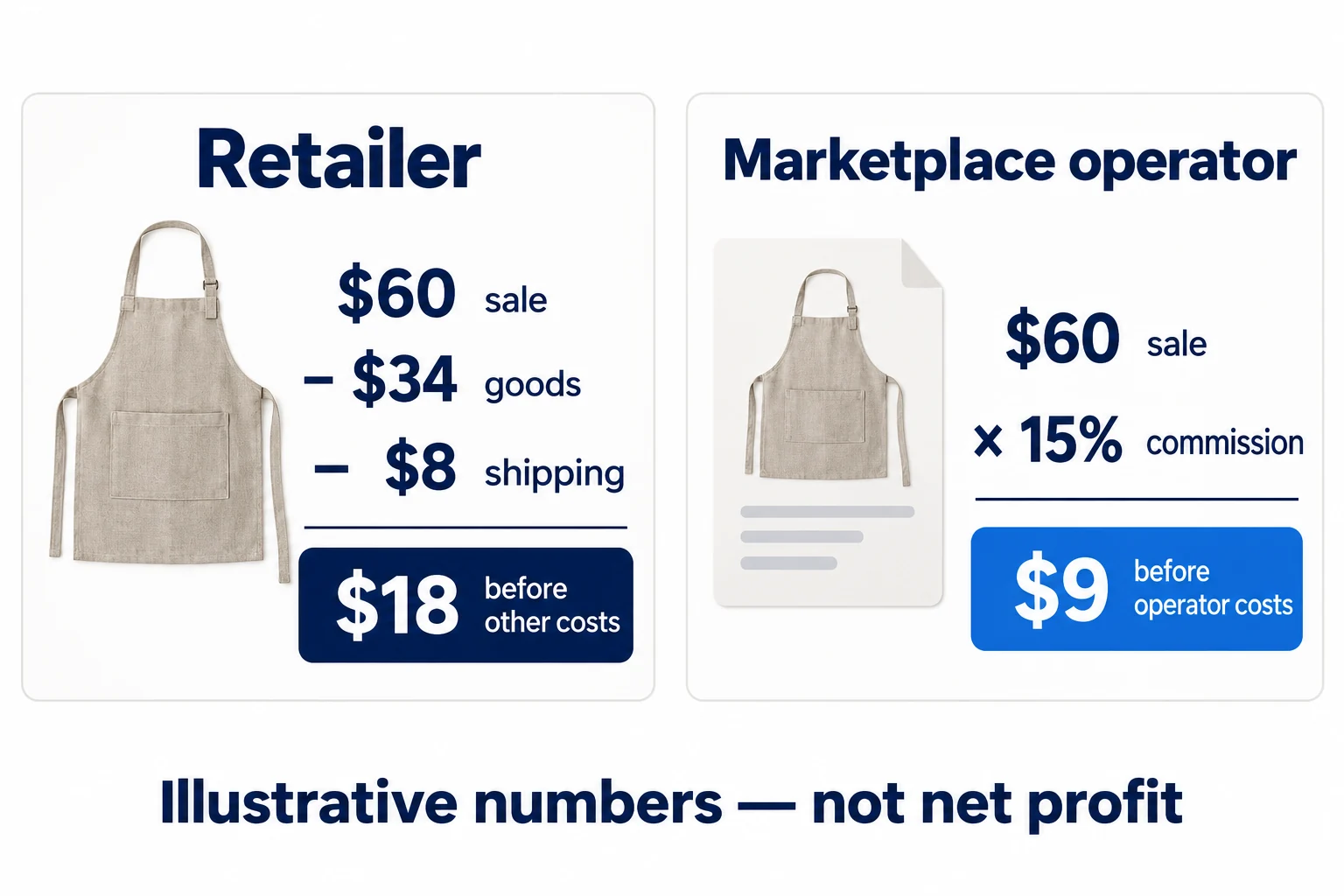
Take a fictional $60 linen apron. The following figures are teaching inputs, not a supplier quote, marketplace fee schedule or prediction.
If your business resells the apron
Suppose the goods cost $34 and supplier shipping costs $8:
$60 sale − $34 goods − $8 shipping = $18 before the remaining costs.
That $18 still has to contribute toward payment charges, acquisition, software, customer remedies and other applicable expenses. A discount or supplier price increase changes it. A payout delay can also leave you needing to fund the supplier before the customer’s money is available in your bank account.
If your business operates the marketplace
Suppose the independent seller makes the same $60 sale and owes your platform a 15% commission:
$60 × 15% = $9 platform commission, leaving $51 allocated to the seller before other agreed deductions.
The seller’s own goods and fulfillment costs belong in the seller’s calculation. The operator still needs a budget for the payment arrangement, platform costs, buyer and seller acquisition, onboarding, support and any losses it must bear.
Comparing $18 with $9 does not compare net profits. The businesses perform different jobs and carry different costs. Total orders passing through a marketplace—often called gross merchandise value—are also not the same as the operator’s commission income or profit. Financial reporting depends on the actual arrangement; this example is a decision aid, not an accounting treatment.
Use our profit-margin guide to build the retailer’s order-cost calculation. For a platform, separately model the costs of winning and serving both sides of the transaction. A commission percentage looks attractive only after the work behind it is included.
04
Follow a split order and one return
Now the homewares buyer adds an apron from one business and a ceramic soap dish from another. The checkout may look like a single purchase, but the goods leave two places.
In a retail dropship arrangement, your store has sold the items. You need an honest delivery explanation, the correct supplier orders, separate parcel tracking where appropriate and a coherent response if one item arrives late. The buyer should not have to discover your procurement structure to get help.
In a third-party marketplace arrangement, each offer’s seller and applicable service path need to be clear. The operator still has to make the combined experience work: route each order line, communicate separate dispatches and handle escalation when a seller does not respond.
Return only the soap dish
Imagine the apron is correct, but the soap dish arrives broken. Work through that specific problem before launch:
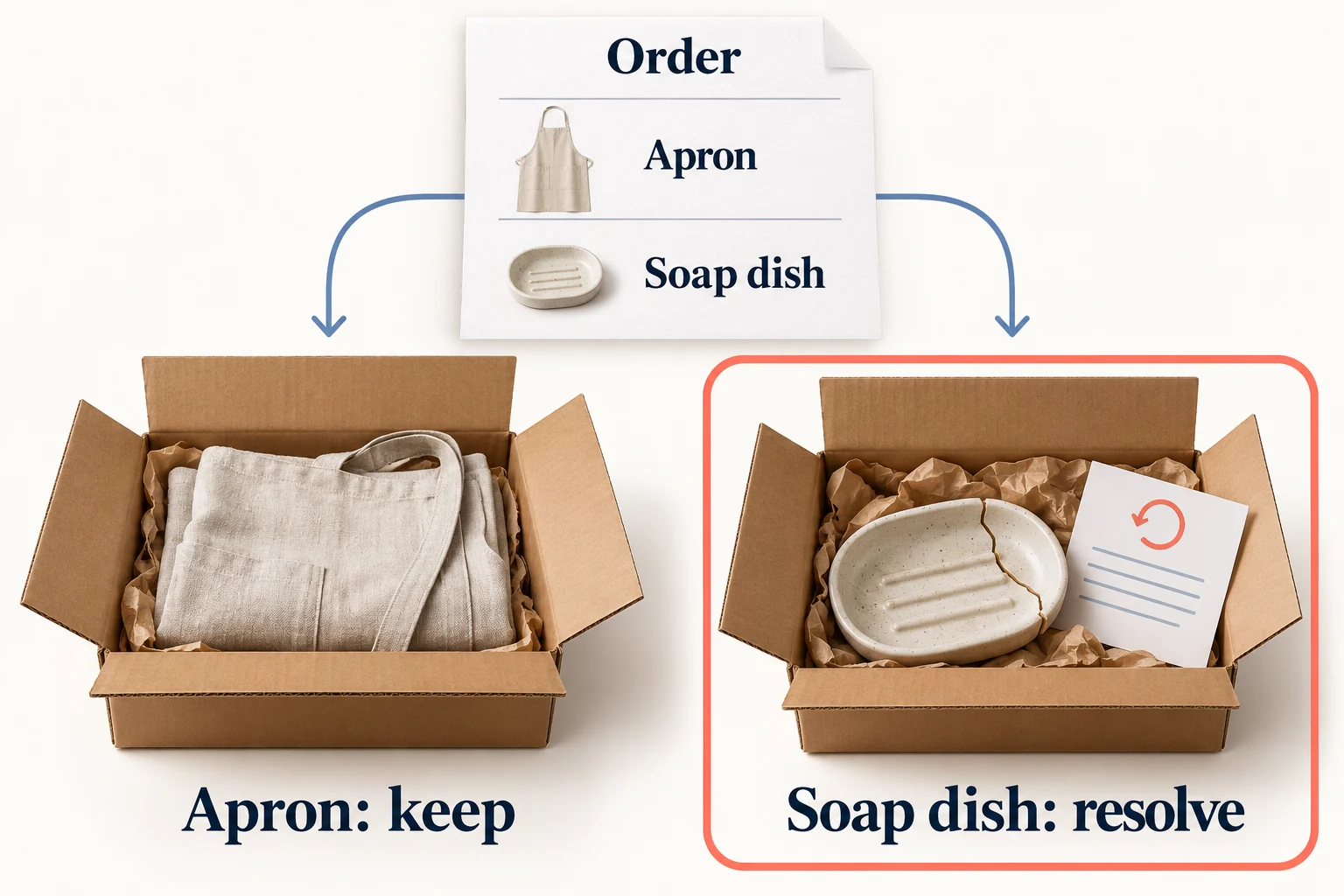
- Identify the soap-dish order line, seller or supplier and parcel reference.
- Record the damage and the appropriate customer request.
- Determine who authorizes and funds the remedy, and whether a return is required.
- Apply the agreed refund, replacement and fee treatment to the affected item.
- Check that the apron order and its valid payment/fulfillment records remain correct.
These are questions to resolve in your own proposed workflow. They are not a claim that a marketplace can disclaim every buyer issue or that broken goods must always be returned. A partial problem should not accidentally close or refund an unrelated, correctly delivered line.
Automation still follows configured rules
Shopify Collective offers a useful concrete example of connected retail/supplier operations. Its retailer documentation describes supplier fulfillment and tracking flowing back to the retailer’s store. That connection does not mean every participating store has become a third-party marketplace operator.
Its returns-policy settings separately cover the return destination, labels, fees, supplier declines and what happens after a supplier refund. An app can automate selected actions; someone still needs to choose a policy that fits the real arrangement.
05
Selling on a marketplace is a separate choice
If your actual question is “Should I sell on Amazon or start dropshipping?”, separate the channel from fulfillment. Selling through a marketplace does not specify where your stock comes from or who sends the parcel.
| Sales channel | What its published dropshipping rules mean for your plan |
|---|---|
| eBay | Direct wholesale-supplier fulfillment is allowed. Listing and then buying from another retailer or marketplace that ships to your buyer is prohibited. You remain responsible for the stated delivery timeframe and buyer satisfaction. |
| Amazon | Its policy explanation requires the seller-of-record arrangement, appropriate seller identification and responsibility for returns and customer service. An outside supplier does not remove those conditions. |
That is why “marketplace versus dropshipping” cannot by itself decide whether a sourcing plan is allowed. The marketplace’s actual rules and your supplier agreement matter. A retail checkout on another website is not automatically an authorized wholesale fulfillment relationship.
For the channel decision, including the supplier’s ability to meet parcel and handling-time requirements, see Amazon vs eBay dropshipping.
06
Choose the work you are equipped to own
The better model depends on the business you can run, not which side of a chart has more advantages.
Resell when you want to own the retail offer
A retailer may want a tightly selected homewares range, consistent product explanations and a clear relationship with the buyer. Supplier fulfillment can extend that range without requiring the retailer to pack every order.
You still need dependable supply, useful product evidence, workable order economics and a response when goods disappoint. Paying a supplier does not make those retail decisions for you. Start with supplier-model comparisons if the unresolved problem is sourcing and fulfillment rather than admitting independent sellers.
Operate a marketplace when connecting sellers and buyers is the business
You need a reason suitable sellers will join and a reason buyers will shop there. Seller registration, listing review, order routing, fee collection, payment onboarding, performance rules and disputes become recurring work.
If your only asset is a new website, adding a vendor-registration form does not create either side of that audience. If you already serve a distinct community and have willing sellers, a marketplace may be worth investigating—but validate their interest and the operating costs before commissioning a large build.
Match the remedy to the actual bottleneck
If the apron keeps shipping late, renaming your shop a marketplace will not fix the supplier’s dispatch. You need an achievable commitment, evidence of performance and a customer remedy. If independent sellers cannot manage their listings or receive correct payouts, adding another dropshipping app does not settle that platform problem.
For a China-side physical fulfillment problem, you can ask AIDrop Agent to review the product, packaging and destination. Bring the actual handoff that is failing. That request has a different scope from building payment infrastructure or creating demand for a new marketplace.
07
A hybrid needs a label on every offer
An established retailer might resell a selected core range while allowing independent third-party sellers to offer complementary products. Mirakl describes support for combined marketplace and dropship operations; that is evidence of an available software approach, not proof that a hybrid suits your business.
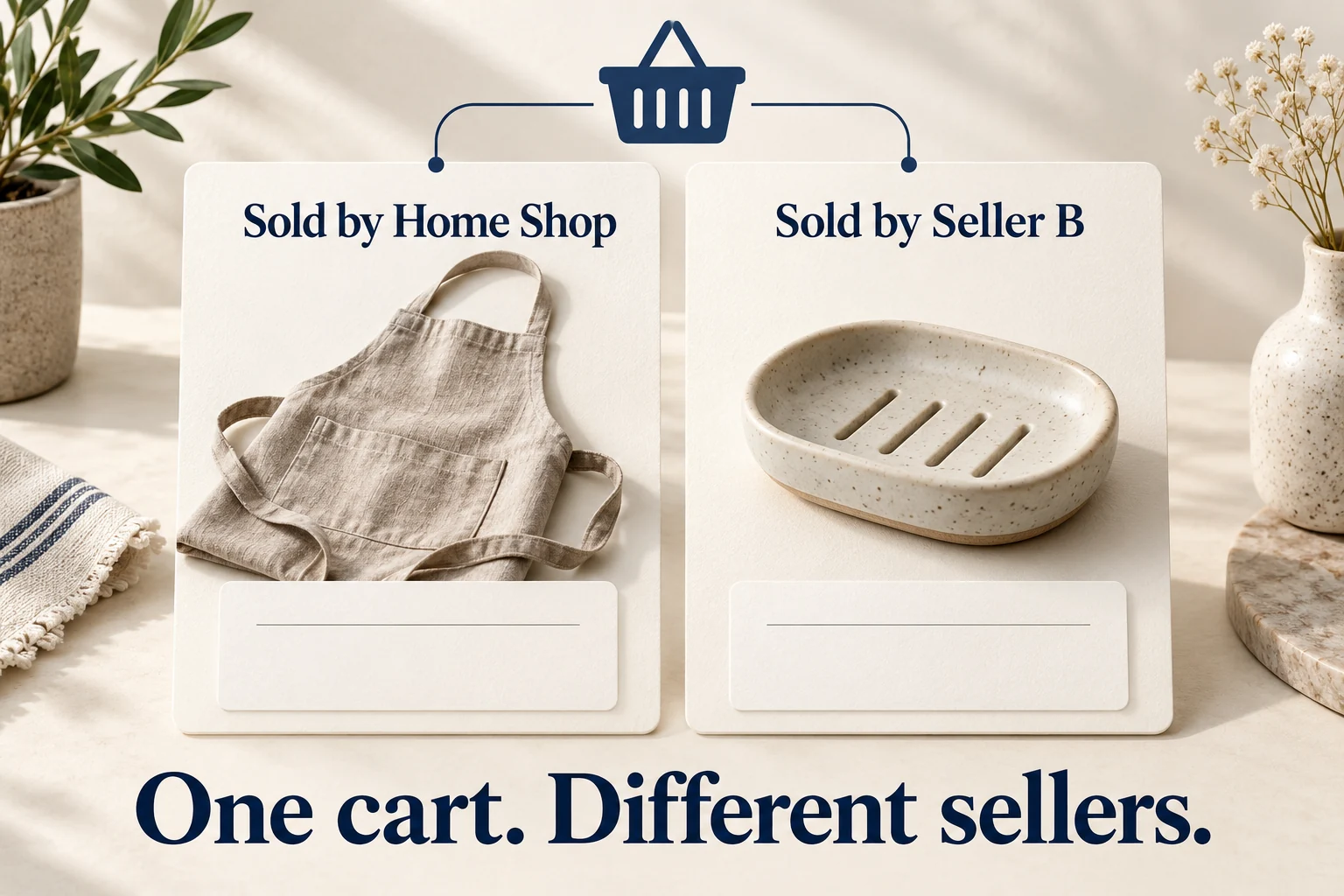
The crucial work is at the offer and order-line level. The buyer should be able to understand who sells an item, what delivery arrangements apply and where to seek help. Behind the scenes, the correct purchase, commission, payout and refund rules must follow that same item.
Consider a store-owned apron offer beside an independent seller’s soap-dish offer. They may share a cart without sharing the same commercial relationship. A single delivery slogan or return setting may not fit both.
Keep the distinction deliberate. Do not let an import connector or a theme label silently decide it. If your team cannot explain the difference in ordinary language, it is too early to expect buyers or support staff to understand it during a complaint.
08
Test the rules before expanding the catalogue
Use a small proposed pilot: one apron offer, one soap-dish offer and one two-item order. The purpose is to expose missing rules, not to prove that demand or profitability exists. This exercise has not been run in a merchant account.
Put a name and a record beside every promise
| Record | What needs an explicit answer |
|---|---|
| Product offer | Who is selling this item to the buyer, and where is that identity shown? |
| Customer order | Which seller or retailer owns each line, and which terms were presented? |
| Supply/fulfillment instruction | Who receives it, accepts it and supplies the actual parcel reference? |
| Money record | What is procurement cost versus seller proceeds versus operator commission, and when is each due? |
| Delivery message | Which parcel contains which item, and what is the buyer told if dispatches differ? |
| Return or complaint | Who authorizes the action, pays the relevant costs and updates the customer? |
First, walk through the normal order. Then introduce the soap-dish problem on paper or in an appropriate test environment. Check whether your selected system can keep the successful apron line intact while recording the correct partial remedy and financial adjustment.
A paper walkthrough is useful before any money moves. In an authorized system test, inspect the affected item’s status, refund amount and resulting payout records. A diagram shows what you planned; the saved system records show what the selected setup did.
Use the failure to choose the next action:
- Nobody owns the buyer message: assign that work before opening more offers.
- A partial refund becomes a whole-order refund: correct the rule and test the affected path again.
- Seller identity changes between listing and receipt: reconcile the offer, terms and payment setup before proceeding.
The output should be a short, internally consistent order record and a buyer-facing explanation. It should also identify the next action when something goes wrong. Our customer-service guide covers maintaining that communication while a supplier or seller investigates.
09
Frequently asked questions
What is the main difference between marketplace and dropship models?
In conventional retail dropshipping, you resell to the buyer and the supplier fulfills for you. In a third-party marketplace, you operate the venue for independent sellers. Confirm the actual seller and payment responsibilities rather than relying on the label alone.
Can I dropship on a marketplace?
Potentially, under its rules. eBay and Amazon describe permitted arrangements and conditions. Check the actual supplier relationship, product and parcel requirements before listing; it is not blanket permission to buy from any retail site after a sale.
Does using several suppliers make my store a marketplace?
No. You can remain the retailer for every item, even when several suppliers dispatch the goods. Independent sellers making offers to buyers is a different relationship from suppliers fulfilling your retail sales.
Which model makes more profit?
There is no useful universal answer. Retail margin and operator commission cover different costs. Compare the actual acquisition, service, technology and remedy burden at a realistic volume; do not treat either gross order value or commission as net profit.
Does the marketplace operator avoid returns and customer service?
It needs an explicit buyer-help and escalation process even when sellers perform much of the work. Agreements, payment setup, platform policies and applicable obligations determine the details. Delegation does not make unanswered complaints disappear.
Can I use both models on one site?
Yes, a deliberate hybrid is possible. Keep the seller identity, delivery information, money records and return path correct for each offer. Test a mixed order and a partial problem before expanding the range.
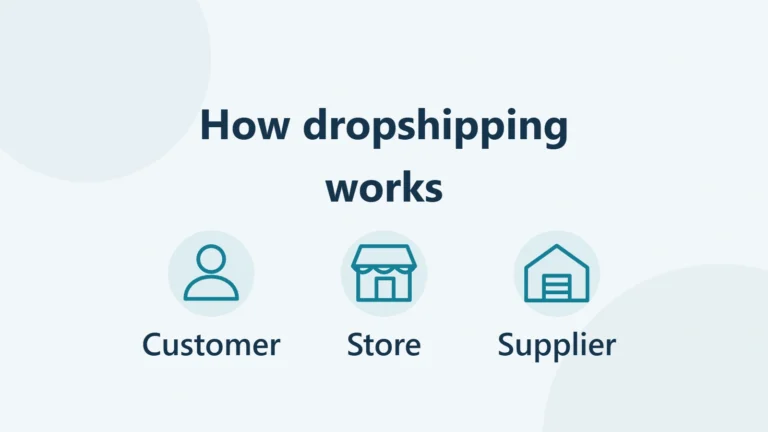
What Is Dropshipping? How to Build and Run the Business
Learn how dropshipping works, earns money and handles risk, from product research and supplier checks to shipping,
How to Start a Dropshipping Business: From Offer to First Delivery
Start a dropshipping business with a clear offer, verified supplier, workable pricing, tested checkout, and a plan
Dropshipping for Beginners: Learn the Model and Test Your First Order
Learn dropshipping basics, choose a focused offer, budget for supplier payments and rehearse checkout, shipping and support
