
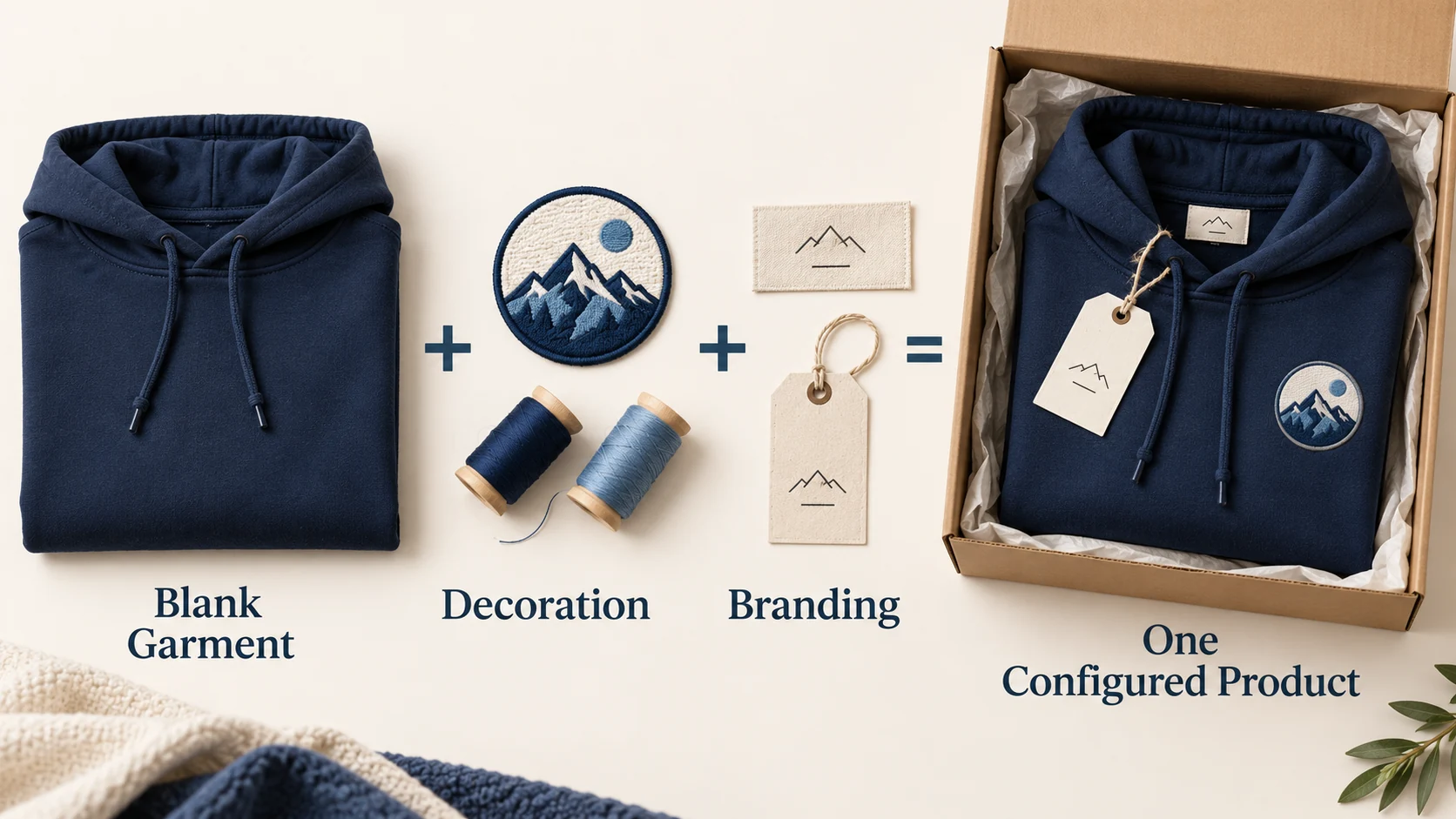
Apliiq is a print-on-demand apparel service for stores that want printing, embroidery and garment branding such as labels or patches. You sell the garment through your store; Apliiq charges your payment method to make and ship it. Choose the blank and decoration first, approve a sample, then price the additions before publishing.
A small clothing line can feel much more deliberate with the right neck label and a well-placed logo. But those details cannot rescue an uncomfortable hoodie, and they can quietly consume the money left from a sale.
The approach below follows public Apliiq documents checked on October 12, 2026. The clothing examples and proposed inspections explain how to make a decision; they are not our physical test results.
Explore the broader topic: Print on Demand Suppliers: Compare Production, Proofs and Fulfillment.
01
Choose the garment before the logo
Begin with the person who will wear it. A relaxed hoodie for a running club, a heavier streetwear sweatshirt and a lightweight event shirt are different offers even when they carry the same artwork.
For a fictional running-club hoodie, make the first configuration concrete:
| Product note | Example to confirm before ordering |
|---|---|
| Blank and fit | Selected relaxed-fit hoodie, with its actual fabric and measurements |
| Color and sizes | Navy; only the sizes supported by that blank |
| Decoration | Small mountain emblem on the left chest |
| Finished design size | Approved physical width, with the artwork version saved |
This gives you something to inspect. “A premium clothing brand” does not specify a garment.
Apliiq’s getting-started guide covers product design, payment setup and publishing. Use the actual blank’s fabric and measurement information when preparing your listing. A supplier’s category name does not establish that every hoodie has the same weight or shape.
Keep a simple product note with the chosen blank, color, decoration method and finished artwork size. If you later change the blank, revisit the sample. A design that sits neatly on one chest panel may look cramped on another.
Compare two blanks using the same fit
To decide between two blanks, compare the fit you intend to sell. For a relaxed club hoodie, use the same measurement method on both samples: laid-flat chest, body length and sleeve measurement as defined by each chart. Compare those with a hoodie that represents your intended fit, rather than with its size letter alone.
Two fictional sample findings lead to different changes:
| Sample finding | Useful change |
|---|---|
| A has the desired body room, but its sleeves restrict the intended wearer’s movement | Find a blank with suitable fit; enlarging the logo cannot help |
| B allows that movement, but the emblem is too close to a seam | Adjust the decoration placement and approve it again |
Record the chosen blank’s product code beside the measurements. That gives a later size complaint a useful starting point: did the buyer choose from the wrong chart, did a different blank arrive, or does this blank simply suit a different fit preference? The remedy depends on that answer.
For other apparel routes, the clothing supplier comparison distinguishes stocked garments, decorated blanks and sourcing work. Apliiq’s particular strength to investigate is branded decoration of a chosen garment, rather than complete control of its original fabric and cut.
02
Printing, embroidery and labels do different jobs
Printing applies an image to the garment. Embroidery builds a design from stitches. A neck label identifies the brand at the collar. These additions solve different problems, so buy the one your product needs first.
| Your design or branding job | Method to investigate | What to check on the sample |
|---|---|---|
| Detailed graphic or illustration | A supported printing method | Fine details, color and the feel of the printed area |
| Small, simple club emblem | Embroidery | Readable stitches, backing and puckering |
| Brand name inside the collar | Supported neck or private label | Comfort, placement and remaining garment information |
| Distinctive patch or woven identity | Supported patch or woven-label service | Attachment, appearance and the upfront commitment |
Apliiq’s decoration guide explains the available methods. Confirm compatibility for the selected garment instead of assuming every technique works on every blank.
Also separate a per-item label charge from a prepaid branding arrangement. The pricing explanation describes both variable additions and inclusive prepaid services. Their cost does not necessarily appear in the same place as the garment’s design price.
For the first hoodie, a small embroidered emblem may tell the whole story. Adding a second decoration, a neck label and a patch is worthwhile only if buyers notice and value them enough to cover the extra cost.
03
Set up Shopify and publish the saved design
After installing the Apliiq app in the intended store, add the required payment method. Inspect the processing preference before you publish: the Shopify setup guide describes automatic processing as the default.
That matters because a retail order can start a supplier charge and production. Do your sample and pricing work before accepting orders, or deliberately use the review controls available in your account while setting up.
Work through the saved product rather than assembling the listing from unrelated mockups:
- Select the blank, garment color and sizes.
- Add the decoration and its physical placement.
- Select only the branding services you have approved and funded.
- Review the saved product’s production artwork and mockups.
- Choose the correct connected store and publish when the configuration is ready.
Apliiq’s save-and-publish instructions make the saved garment configuration important. Changing a display picture does not necessarily change the file used to manufacture the order.
On the storefront, select each enabled color and size. Check the cart, size information and images. If the navy hoodie image remains visible after choosing a different color, fix the presentation before selling; if the supplier product changes unexpectedly, fix the connection as well.
For a first paid order, record the store order, selected garment and supplier charge. Verify that the returned shipment belongs to that order, then compare the delivered garment with the saved design.
A branding preview is not ready-to-use stock
Apliiq’s branding-preview instructions allow you to make mockups with labels and patches before buying the supplies. The same instructions warn against selling that configuration until the supplies are produced and stocked. The image can be ready weeks before the physical branding is ready.
For the running-club hoodie, keep these approvals separate:
| Ready item | What it lets you do | What remains unfinished |
|---|---|---|
| Saved branded mockup | Discuss the look and choose placement | Purchase and receive the actual supplies |
| Branding stock confirmed | Configure the funded branding arrangement | Inspect the finished garment with that addition |
| Complete sample approved | Show the actual result and launch that configuration | Monitor replenishment if its supplies run low |
If the hoodie’s blank is available but the woven label is not, do not advertise it as immediately ready for production. Wait for the complete configuration, or launch an intentionally unlabelled version with matching pictures and copy. Removing the label from a customer’s order after purchase is a separate change that needs to be explained.
Before a promotion, ask for the available branding quantity and replenishment lead time for your chosen arrangement. A hundred available blanks cannot fulfill a hundred labelled hoodies if only twenty labels remain.
04
Why an embroidery image becomes a different file
A picture describes what a logo looks like. An embroidery file tells a machine how to stitch it: where thread goes, in what order and with which colors. This preparation is called digitization.
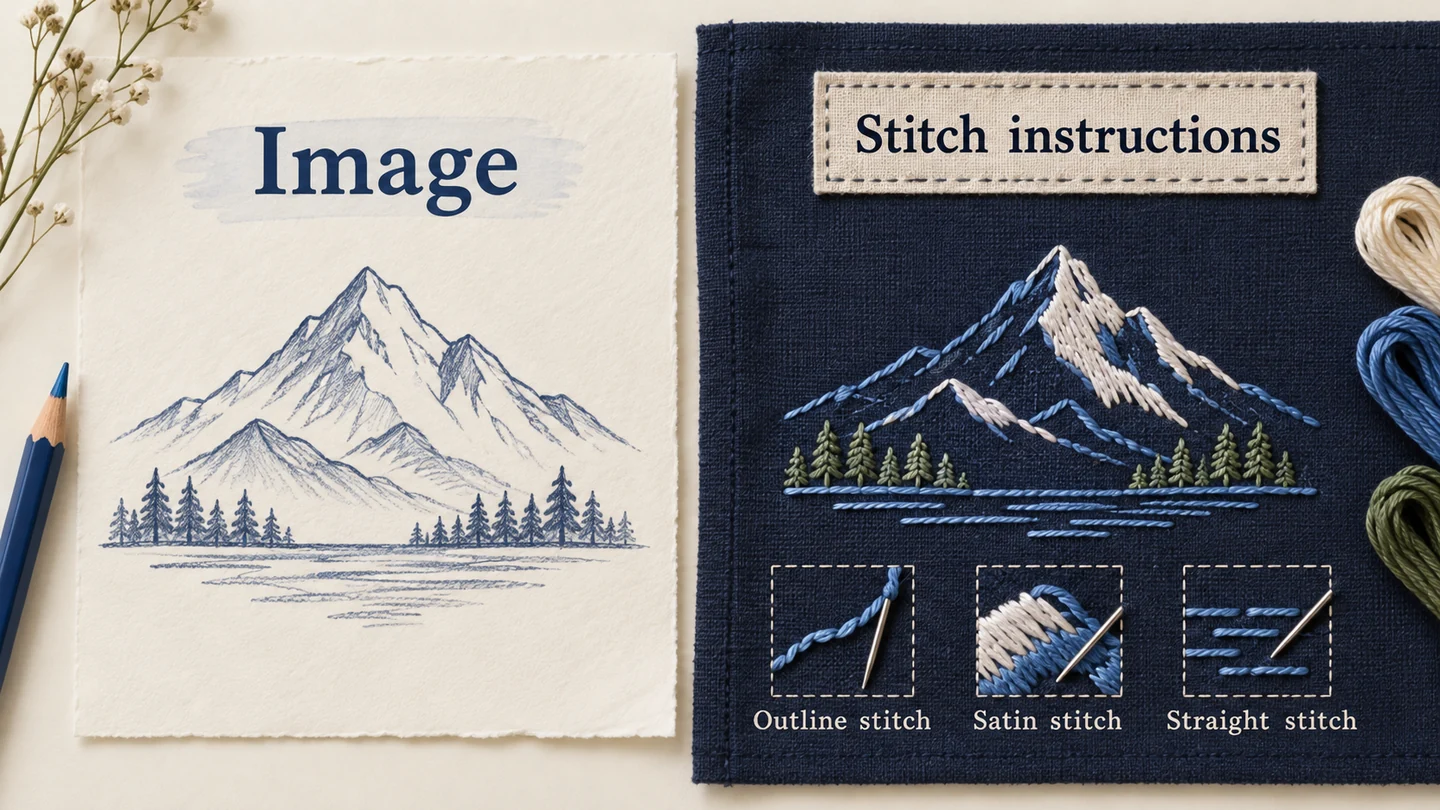
Consider the club’s mountain logo. At 8 cm wide, its peaks and lettering might have useful space. At 3 cm wide, the same tiny lettering may crowd together. Making the preview smaller does not automatically create good stitch instructions for the smaller design.
The digitized-file help page describes selecting a completed file through Artwork → Choose digitized file. A file still being digitized is not ready for selection. Its finished size, colors and method have restrictions; they are not freely editable like an ordinary image.
Before paying for digitization:
- Approve the physical design width and thread choices.
- Check whether a proposed size, color or stitching change requires a revised file.
- Save the completed file for repeat orders; moving its placement is a separate request from changing its stitch instructions.
Keep a production note such as “Mountain-v2, approved left-chest size, navy blank, selected thread colors.” It helps you distinguish a new artwork revision from a repeat order using the same file. The print-file and sample guide explains what to preserve when approving a design.
05
Calculate the first hoodie and the next hoodie
Apliiq’s pricing guide lists embroidery starting at $10, a $1 fulfillment charge per item and an $11 preparation charge for a first unique embroidery design. It also describes a $2.50 variable neck/private-label charge after the introductory allowance. Verify the current selected configuration and terms before using these figures.
Here is a $48 hoodie example. The blank, shipping, payment fee and remedy allowance are hypothetical; this is not a live Apliiq quotation.
| Component | Example cost |
|---|---|
| Blank hoodie | $16.00 |
| Embroidery | $10.00 |
| Per-item fulfillment | $1.00 |
| Shipping | $6.00 |
| Variable label addition | $2.50 |
| Supplier-side total | $35.50 |
| Payment fee and remedy allowance | $4.20 |
| Remaining before advertising, tax and overhead | $8.30 |
If the first order also bears the full $11 preparation cost, that first sale leaves −$2.70 before advertising. A repeat order using the approved file does not bear that first preparation charge again, subject to the actual design and service terms.
This is not a reason to hide the cost. Treat preparation as a launch investment, then ask how many sales the recurring contribution can repay. Ten repeat orders contributing $8.30 each leave $83 before advertising, tax and overhead; the original $11 investment still needs to be recovered from that total.
Now add a $6 acquisition cost per order. The repeat contribution falls to $2.30. An extra decoration costing $3 would then make the offer unworkable at $48. Remove an unnecessary addition, reduce another real cost or choose a price buyers can justify.
For multi-item orders, remember that a per-item charge is not automatically a once-per-parcel charge. Recalculate two hoodies from their actual checkout bill rather than copying the one-item calculation.
Recover setup costs while keeping production funded
The earlier calculation also gives you a launch decision. With $2.30 left per repeat sale after the assumed advertising cost, recovering an $11 digitization investment takes five such contributions: four provide $9.20; five provide $11.50. Samples, tax and other launch costs would require more. This is cost recovery, not a forecast that five orders will arrive.
Keep prepaid branding separate from that $11. A hypothetical $100 purchase of 100 usable labels would have this effect:
| After ten labels are used | Amount |
|---|---|
| Cash already paid | $100 |
| Material cost allocated to those ten garments | $10 |
| Ninety unused labels remaining | $90 of material cost |
Allocating $1 to each label used helps price the garment, but the full $100 left the account first. Use the actual quantity, application charges and terms; these are not Apliiq’s quoted label prices.
That distinction is useful when a launch is small. A decoration with a modest per-item charge may fit better than a branding purchase whose unused stock ties up your sample and advertising budget. Compare the cash required now as well as the contribution from the next sale.
06
Buy a sample that answers the difficult questions
The sample-price explanation distinguishes sample artist review from dropshipping production. Paying for a sample can therefore answer artwork questions that a mockup alone leaves unresolved.
Order the actual garment and decoration you intend to sell. When it arrives, inspect it before wearing or washing, then follow the care instructions for a wash check. Keep the label and order details so you can report a problem accurately.
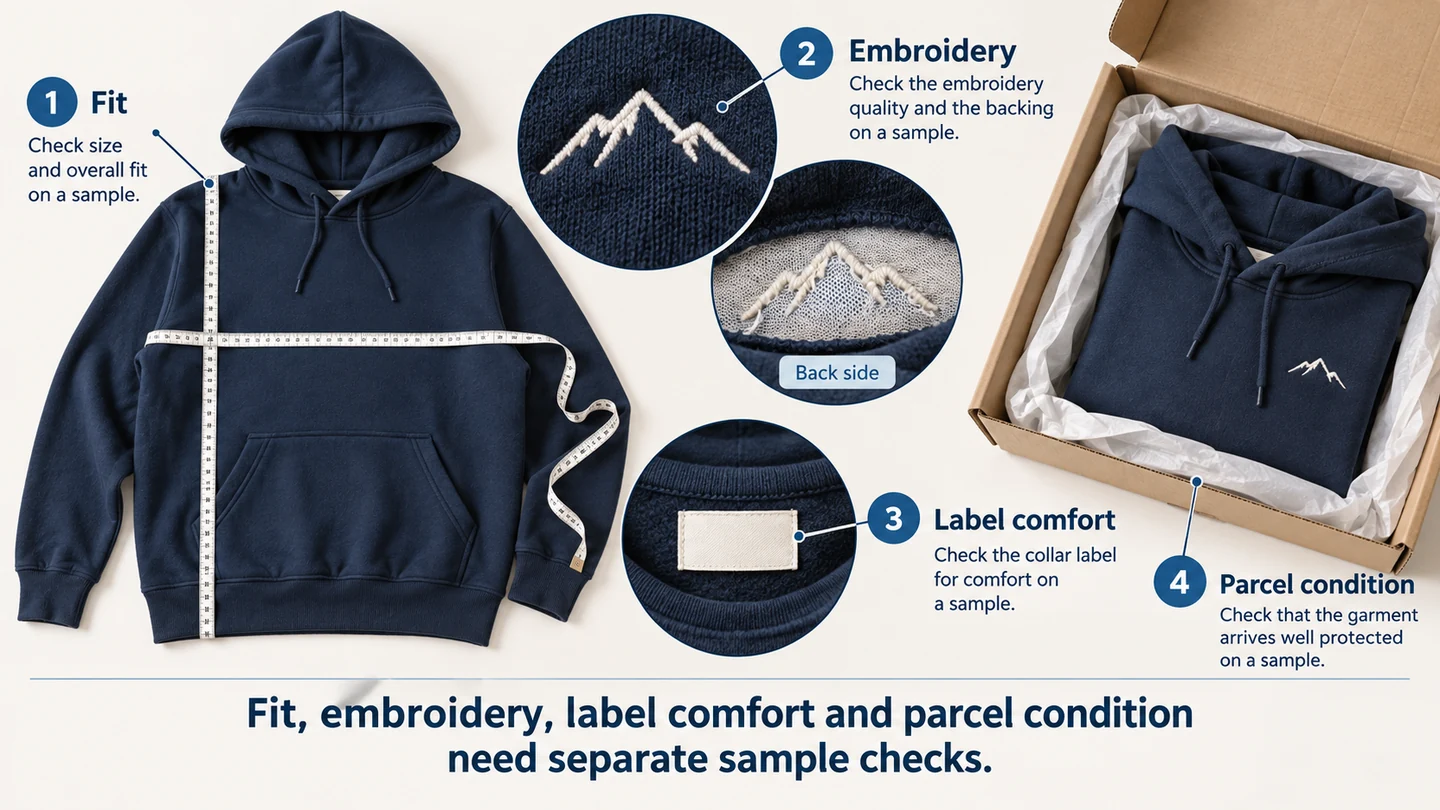
| Area | What to observe | What you can change afterward |
|---|---|---|
| Fit | Chest, length, sleeve and how the wearer moves | Blank choice, size guidance or the offer’s intended fit |
| Embroidery | Legibility, puckering, backing and placement | Artwork simplification, size or decoration method |
| Branding | Label comfort, attachment and visible information | Label option or placement |
| Parcel | Garment condition and paperwork on arrival | Packing request and storefront expectations |
These are checks to perform, not reported outcomes. Photograph the real sample in ordinary light and show the logo close enough to judge its texture. Record the version you approve. If the supplier proposes a different blank later, compare it with that approval before allowing a substitute.
Use the sample’s result to change a specific part of the offer. If the tiny club name becomes unreadable but the mountain outline looks clean, simplify the lettering or enlarge the approved design before another sample. If the logo looks good but the backing irritates the intended wearer, investigate the decoration’s suitability or another method. Calling the whole hoodie “premium” would hide the decision you still need to make.
07
Deal with a wrong print, cancellation or size request
A manufacturing error and a buyer choosing the wrong size have different financial consequences. Apliiq’s refund guidance asks for order details, photographs and an explanation within its stated 30-day reporting window for faults. A replacement is subject to the provider’s assessment; wrong size or changed mind is not automatically supplier-funded.
| What the buyer reports | What to compare before requesting a remedy |
|---|---|
| Crooked emblem | Order ID, whole-garment photograph and close position view against the saved design |
| Uncomfortable but correctly made hoodie | Selected size, delivered size and the measurements your listing provided |
The first case may be a production fault. The second may be a fit decision your store must fund rather than an automatic supplier replacement.
Cancellation also depends on the stage. The cancellation instructions distinguish stopping an order before the blank is purchased from abandoning work later. Contact the provider promptly and obtain the actual recovery amount.
Your store’s remedy and applicable consumer obligations are separate from the supplier’s reimbursement policy. Budget for a remedy the supplier does not fund, and avoid publishing a blanket “no returns under any circumstances” statement.
08
Apliiq questions for a first clothing line
Does a custom label make this a fully custom garment?
It changes the garment’s branding. It does not by itself change the blank’s fabric, pattern or construction. If those are the features you need to control, investigate a garment-development or sourcing arrangement separately.
Can I reuse an embroidery file at a different size?
Check the completed file’s restrictions first. A different finished size or thread arrangement can require new digitization. Do not assume a resized mockup changes the production instructions.
Can I use Apliiq without an automatically connected store?
Its custom-store instructions describe a manual order route. Manual entry requires your own process for product details, payment, addresses and tracking; it is not the same as an automated Shopify connection.
How much startup cash do I need?
Allow for samples, any artwork preparation or prepaid branding, and supplier charges before retail payouts become available. No large garment inventory does not mean no money is required.
If your line needs a China-sourced blank, sample review or a different packing arrangement, ask AIDrop for a separate sourcing proposal. Include the garment measurements, fabric requirement, decoration and destination. Compare the complete proposal with your Apliiq configuration rather than comparing blank prices alone.
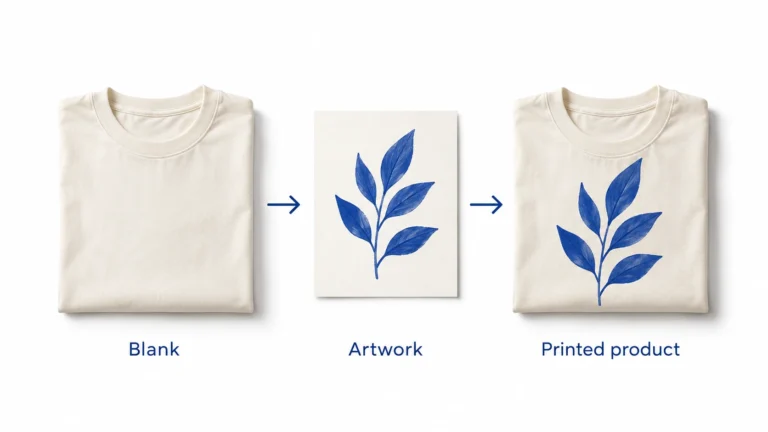
Print on Demand Dropshipping: From Design to a Fulfilled Product
Understand print-on-demand dropshipping, approve designs and samples, calculate full order costs, and manage production, delivery and customer
Print on Demand Suppliers: Compare Production, Proofs and Fulfillment
Compare Printful, Printify and Gelato by product, routing, samples, complete order cost, integration and returns before choosing
Print-on-Demand Files and Samples: Approve the Actual Print
Prepare each print file for the exact provider, product and print area, using its current template and
