

An Australian dropshipping store needs the applicable business registrations, taxes and customer protections. An ABN identifies the business; a registered name and GST registration do separate jobs. Forming a company is not a universal requirement.
Check the seller and tax duty
Being below the usual A$75,000 GST threshold does not remove income-tax or consumer-law duties. This guide covers an Australian-operated store selling physical goods to Australian buyers; overseas-only sellers can have different GST rules.
A fictional organizer offer shows the applications, taxes, postcode quotes and refunds. The country selection guide covers the earlier market decision.
01
Give each registration its own job
Choose who owns the store first. A sole trader is the individual running the business; a company is a separate legal entity with its own obligations. That choice affects whose details go on applications, bank accounts and invoices.
| Registration | What it does | What it does not do |
|---|---|---|
| ABN | Identifies the business with an 11-digit Australian Business Number | Automatically register GST or approve a product/payment account |
| Business name | Registers the trading name where required | Form a company or grant trademark protection |
| GST | Registers the business to account for goods and services tax | Replace the business’s income-tax return |
On a phone, swipe the table sideways to compare every column.
The Australian Business Register requires an eligible enterprise. An actual business you have started or are starting can qualify; a mere idea or hobby does not automatically do so. Applying directly through the official ABR process is free.
Prepare the ABN and business-name applications
Suppose fictional sole trader Alex Taylor is starting a desk-accessory store. The ABN application details include the real owner/structure, relevant tax details, business activity, actual start date, address and contact information. A company or partnership needs different entity and associate information.
For Alex, “online retail of desk accessories” describes the activity; “Neat Desk Supplies” describes the customer-facing brand. Alex’s real tax file number belongs in the appropriate private application field, not on the product page.
- Prepare those details and evidence that the enterprise is starting or operating, then apply through the ABR’s official application.
- Save the application reference and, if issued, confirm the ABN details reflect the actual owner and business.
- If trading under Neat Desk Supplies, follow ASIC’s business-name registration: establish name availability and use the required ABN or application reference through the Business Registration Service or ASIC Connect.
- Use that same owner in the store, supplier billing and payment application. Address any applicable state/local business or premises requirements for the actual location and activity.
Trading under Alex’s own name can fall within the business-name registration exception. Registering a brand name still does not prove that it is available as a trademark. Do not buy packaging on the assumption that the ABN or name registration settled every name-rights question.
02
Decide when to register for GST
For an ordinary commercial business, the GST registration threshold is A$75,000 of GST turnover. This is the applicable sales measure, not profit after supplier, advertising and delivery costs. The ATO’s registration guidance uses both current and projected turnover.
| Test | Period to calculate | Decision |
|---|---|---|
| Current GST turnover | Current month plus the previous 11 months | Reaching the threshold ordinarily triggers registration, unless the ATO is satisfied projected turnover is below it. |
| Projected GST turnover | Current month plus the next 11 months | If the applicable projected turnover reaches the threshold, do not wait until the money has already been received. |
On a phone, swipe the table sideways to compare every column.
Use the ATO’s inclusions and exclusions rather than simply copying a store dashboard total. GST itself is excluded. The projected test also excludes specified sales of capital assets and sales made solely because the business is closing or permanently reducing its size. Some activities have compulsory registration regardless of the ordinary threshold; these include taxi/ride-sourcing, and separate rules apply to fuel-tax-credit claims.
A new shop can reach the projected test first
Current sales and projected sales differ
For a new ordinary taxable-goods shop, imagine the current month has A$7,000 of applicable GST turnover and no earlier trading months. The current twelve-month total is only A$7,000. A supported projection of A$7,000 in each of the current and next eleven months would instead total A$84,000.
This is a hypothetical calculation, not a sales forecast for your store. Apply the actual inclusions, exclusions and registration rules to a dated projection. The government GST guide advises checking each month and registering within 21 days when required.
Registration and the first tax return
Once required, register within 21 days. Have the ABN first, then use the available ATO online service, contact the ATO or use a registered tax/BAS agent. Choose the appropriate effective date and set the store’s invoicing and GST calculation from that date.
BAS reporting starts with registration
GST registration brings reporting through business activity statements, or BAS. Keep customer sales and eligible purchase GST separately so the return can calculate what is payable or refundable. Do not treat tax collected from customers as spending money for advertising.
Below the compulsory threshold, voluntary registration is possible, but it brings the associated duties. If you are not GST-registered, do not charge GST or claim GST credits. Ordinary taxable sales use 10% GST; in a GST-inclusive price, the GST component is one-eleventh of the total.
The GST threshold is not an income-tax exemption
Income tax is separate. A sole trader reports business income and expenses in the individual tax return; a company lodges its own return. The government’s tax comparison explains that distinction and possible PAYG instalments. Below A$75,000 does not mean the store’s business income can be left out. Keep the sales and expense information needed for the appropriate return; employee-related tax and super duties arise if you employ people.
03
Separate the customer sale, supplier bill and import
A low-value parcel from overseas does not automatically make your Australian retail sale GST-free. The ATO’s guidance for Australian businesses using imported goods explicitly distinguishes the Australian GST-registered dropshipper’s consumer sale from its overseas purchase.
| Part of the order | What the retailer does |
|---|---|
| Your sale to the Australian customer | Account for GST on your own ordinary taxable sale if registered. A supplier dispatching a parcel worth less than A$1,000 does not erase that GST. |
| Your purchase from the overseas supplier | For the applicable business-purchase treatment, provide the ABN and state that you are GST-registered. An ABN alone does not establish that status. Obtain an invoice reflecting the actual purchase. |
| The goods entering Australia | Establish the actual importer and applicable border treatment, charges and documents. The retail GST calculation does not settle every import obligation. |
On a phone, swipe the table sideways to compare every column.
For example, your customer pays your store’s price, while your supplier bills you its wholesale price. Those are different amounts and different transactions. Do not copy the supplier’s tax line into checkout and assume the customer sale is handled.
GST credits also depend on the actual purchase and required documentation. Private use, purchases relating to input-taxed sales or wrongly charged tax can change what is claimable. A supplier invoice is useful information, not an automatic entitlement to a credit.
04
Choose a supplier whose offer you can explain
An Australian customer can receive an organizer from Australian-held stock or from an overseas supplier. Those are alternative dispatch routes, not proof of where it was manufactured. The supplier’s Australian web address does not establish that your selected colour is in an Australian warehouse.
Start with the exact model: dimensions, material, drawer/compartment size, included parts and authorised photographs. A sample helps you assess the product and packaging. It does not certify all future stock or replace an applicable mandatory standard.
Product Safety Australia’s guidance distinguishes mandatory requirements from voluntary standards. The actual product category matters; a desk organizer, electrical item and child’s toy do not share one approval rule. As a retailer, you remain part of the supply chain even without holding stock.
If the route imports goods, establish who is the importer and what the specific goods require. The government’s importing guide covers customs and other restrictions, including biosecurity where applicable. Buying locally held goods and taking responsibility for an import are different arrangements.
Quote two postcodes, not just the item
Ask for the exact product delivered to a metropolitan postcode and a regional postcode. Include preparation, freight, tax treatment, carrier and return terms. The following figures are hypothetical comparisons, not supplier quotes or promised delivery times; costs are net of eligible GST where applicable.
| Quote detail | Australian-held stock | Overseas stock |
|---|---|---|
| Product | A$22 | A$18 |
| Metro delivery | A$8 | A$10 |
| Metro product + delivery | A$30 | A$28 |
| Regional delivery | A$15 | A$18 |
| Regional product + delivery | A$37 | A$36 |
| Preparation | 1–2 business days | 2–3 business days |
| Metro transit after dispatch | 2–5 business days | 7–12 business days |
| Return arrangement | Actual local return address and terms | Receiving country, authorisation and postage responsibility |
On a phone, swipe the table sideways to compare every column.
The overseas item’s A$4 lower price produces only an A$2 metro advantage and an A$1 regional advantage after delivery. A slower route and expensive return can use up that difference quickly.
Keep preparation and transit separate in the offer. For the hypothetical overseas route, customer wording could be:
Ships from our overseas supplier. Preparation usually takes 2–3 business days, followed by an estimated 7–12 business days in transit to this postcode.
ACCC supply guidance specifically addresses dropshipping disclosures about stock, source and likely delivery. Publish estimates supported by your actual route, including its regional exclusions, rather than reusing the example’s times.
For a China-side route, AIDrop can discuss packing and the physical shipping arrangement. Send the product link, quantity, two destination postcodes and current delivery problem through contact. That discussion can help define the shipment; it does not register your Australian business or approve the product’s legal status.
05
Make checkout and the price work together
Shopify Payments’ Australian requirements include business/identity eligibility and an appropriate Australian AUD bank account supporting BECS transfers. Merely displaying prices in AUD does not establish that your bank or business qualifies. Another provider needs its own supported-account application.
Once the provider is activated, establish the actual platform/payment fees, reserves, payout timing and refund charges. Those terms determine how much arrives in the bank and when you can use it.
Show the required total price clearly, including GST where applicable and unavoidable charges, under the Australian price-display rules. Make destination-dependent shipping clear in the ordering process. A regional buyer should not discover an unmentioned surcharge after paying.
Before live sales, use the supported payment test method for a metro address, regional address, decline and excluded destination. Confirm the correct variant, price and supplier order data. Turn test mode off before accepting live money; a test payment does not demonstrate a real bank payout.
Check customer information and marketing choices
A customer’s address is useful for delivering an organizer. That does not automatically make it a newsletter subscription. Keep the order-processing fields and the marketing choice separate in the store.
Customer information
Check the OAIC coverage rules. Most businesses with annual turnover of A$3 million or less are exempt, but exceptions include relevant personal-information trading and related covered businesses. Covered businesses must follow the Australian Privacy Principles. Record which customer details each provider receives and why.
Marketing messages
An ordinary purchase alone does not establish marketing consent. For express opt-in, say what messages you will send and record who agreed, when and how. ACMA requires sender/contact details and a working unsubscribe; honour requests within five working days.
Test with a controlled address: order without opting into promotions, confirm it is not added as an expressly subscribed marketing contact, then test the unsubscribe for a separately consenting contact. Required order updates and lawful business records are separate from promotional messages. This is a check for your store, not a test we performed.
What an A$55 order pays for
This hypothetical GST-registered store sells an ordinary taxable organizer for A$55 including 10% GST. A$55 ÷ 11 is A$5 GST, leaving A$50 sale revenue. It uses the local-stock metro quote above.
- Revenue excluding GST: A$50
- Product: −A$22
- Metro delivery: −A$8
- Payment fee: −A$2
- Advertising: −A$8
- Allowance for problems: −A$3
- Remaining before overhead and income tax: A$7
The regional offer loses its A$7 margin
The net cost figures assume eligible GST credits where applicable. If regional delivery rises from A$8 to A$15 while the price stays the same, the extra A$7 leaves zero before overhead and income tax. Price or restrict the regional offer from the actual quote.
Cash needed before payout
Pay the actual A$33 supplier invoice
Cash can be tighter than the A$7 result suggests. Suppose the actual supplier invoice in this hypothetical local-stock order is A$30 net for the product and delivery, plus A$3 GST. You must pay A$33 when it is due, even if the customer payout has not arrived and an eligible GST credit will be claimed later. Advertising and a refund or replacement need additional cash.

A profitable-looking sale therefore needs two decisions: is the price enough for the whole order, and is money available to pay its bills on time? An estimated payout date is not cash already in the account.
06
Handle the customer's order through to a remedy
Your store is the seller. Australian consumer guarantees do not disappear because the supplier’s return window has closed. A store policy or manufacturer warranty cannot remove those rights.
The ACCC remedy guidance distinguishes the problem before deciding the remedy:
| What happened | Practical response |
|---|---|
| Major problem | The customer generally chooses a refund or replacement. Assess the problem where appropriate and organise the remedy through your store. |
| Minor problem | Provide a free fix within a reasonable time. If it cannot be fixed appropriately, further remedy rights can arise. |
| Customer simply changes their mind | Apply your stated voluntary policy; this is different from a fault covered by consumer guarantees. |
| Parcel is late or has not moved | Establish whether the carrier actually received it, update the buyer and resolve the supply problem rather than repeating an unsupported arrival promise. |
On a phone, swipe the table sideways to compare every column.
Suppose the hypothetical organizer arrives cracked and unusable, making the problem major. Give the customer the applicable refund/replacement choice and a practical way to return or resolve the item. Open your separate supplier damage claim, but do not make the customer’s remedy depend on when a wholesale credit arrives.
Keep the return-cost record too
The remedy includes the applicable return cost
If the organizer has a confirmed fault, keep the customer’s reasonable return-postage receipt and reimburse that cost. The ACCC explains return costs: easily posted goods and large/heavy goods have different collection arrangements. Do not make “original packaging only” a condition for exercising these rights.
A label is not carrier acceptance
For a delay, a tracking label is not proof of carrier acceptance. Obtain the actual parcel status, provide an honest updated estimate and the applicable options. ACCC guidance prohibits taking payment where you know or should know you cannot supply as promised. Dropshipping stock and delivery information therefore belongs in the offer before checkout, not only in the apology afterwards.
Run the first order once
- After the registration and live-payment setup, accept the correct payment status, product variant, quantity and supported address.
- Send that order to the supplier once and obtain acceptance. A retried app connection should not purchase a duplicate parcel.
- Follow preparation, carrier acceptance and tracking. Send the buyer the relevant status and act on a fault or delay.
- Match the customer receipt, supplier invoice, freight, payout and any refund. Compare the real delivered cost with the price and regional terms.
- Adjust the offer before increasing traffic: price, stock availability, destinations, estimated delivery or the product itself may need to change.
The practical result is an Australian seller identity, the right registration/tax treatment and an offer you can fulfil and support. For platform setup and marketing beyond those legal foundations, use the business launch guide.
Questions before taking Australian orders
Does getting an ABN register my store for GST?
No. An ABN identifies the business; GST registration is a separate tax step. Check the applicable current and projected turnover and compulsory cases. Below the threshold, voluntary registration still brings invoicing and BAS duties.
Are overseas parcels below A$1,000 automatically GST-free for my store?
No. This guide’s Australian GST-registered retailer accounts for its own ordinary taxable customer sale. Its overseas purchase and border import need their separate treatment. An overseas-only seller can have different rules; do not substitute that case for this store.
Can the supplier’s short return window end the customer’s rights?
No. Your store’s applicable consumer-guarantee duties remain even if the wholesale claim window closes. Assess major versus minor problems and arrange the appropriate remedy. A voluntary change-of-mind policy is a separate question.
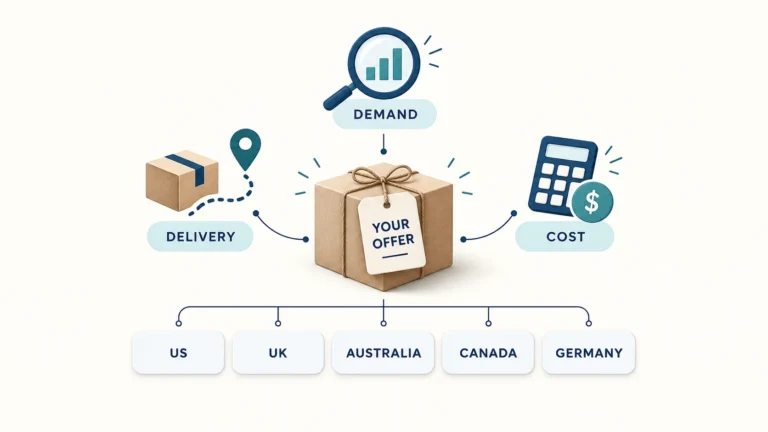
How to Choose Countries for Dropshipping: Demand, Delivery and Operating Constraints
Compare the US, UK, Australia, Canada and Germany by demand, delivery, current import rules, payment access and
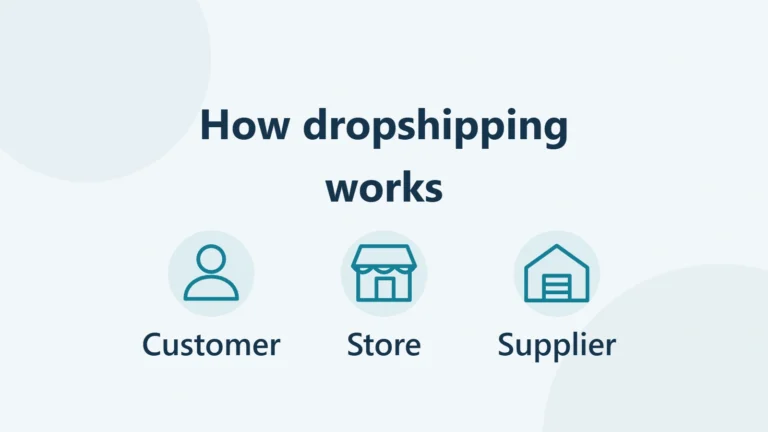
What Is Dropshipping? How to Build and Run the Business
Learn how dropshipping works, earns money and handles risk, from product research and supplier checks to shipping,
How to Start a Dropshipping Business: From Offer to First Delivery
Start a dropshipping business with a clear offer, verified supplier, workable pricing, tested checkout, and a plan
