
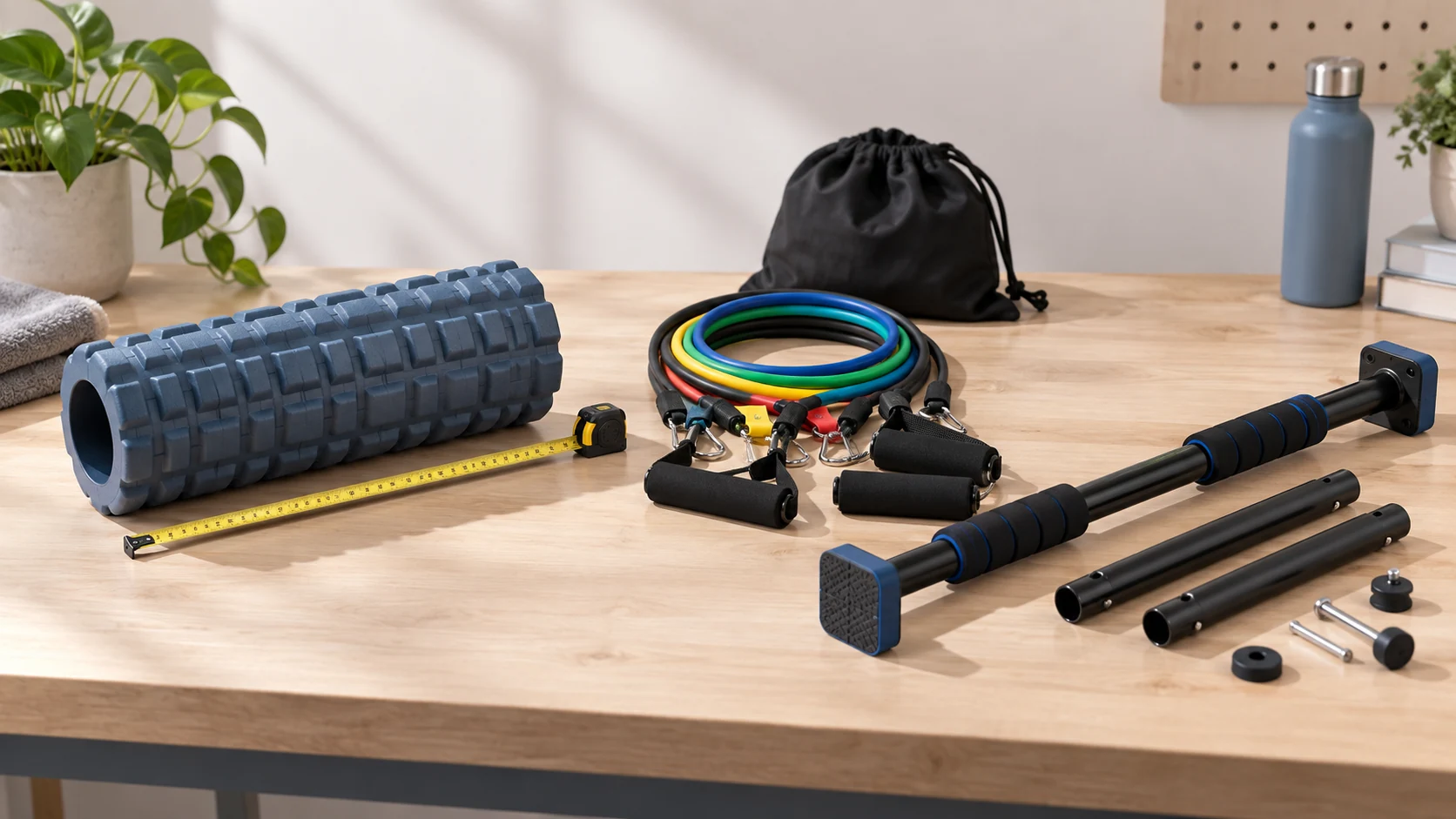
Fitness products can be dropshipped: your supplier keeps the stock and sends orders, while you choose what to sell, explain it to customers and deal with problems. Start with a small range you can describe clearly. A buyer should know how the item is used, whether it fits their space, what comes in the box and what happens if a part is missing.
Different fitness products ask different things of your supplier and store. A foam roller needs accurate measurements and care information. A doorway pull-up bar also needs a clear fixing method and support for its stated load. A treadmill adds powered equipment, delivery and repairs. Pick the kind of work you can handle before filling a store with everything called “gym equipment.”
The dropshipping products guide helps compare categories. Here, we will work through choosing fitness items, finding a suitable supplier, describing the exact model, pricing its parcel and supporting the buyer.
Explore this topic
- Golf Products Dropshipping: Start with Accessories That Fit
- Yoga Mat Dropshipping: Compare the Mat, Then Quote the Rolled Parcel
01
Choose a workout need you can serve
Choose a buyer and a use first. Someone making room for stretching at home may need a yoga block and mat. Someone setting up a strength corner may need bands, weights or a bar. These buyers have different questions, so a focused range makes your pages and support easier to manage.
Small size does not settle the choice
Compact accessories can be a manageable starting point, but size alone does not settle the choice. A lightweight band still needs clear strength markings and instructions. A heavy weight set may need expensive delivery and a costly return. Compare the explanation, parcel and customer help each item needs, along with demand and selling price.
You can source from a manufacturer willing to send individual orders, a distributor with a dropship program, a platform listing several suppliers, or an agent arranging sourcing and fulfillment. Ask who actually holds the stock, which countries they serve, whether they accept one-unit orders and who handles a defect or missing part. A catalog platform may contain several sellers with different terms.
For a concrete supplier example, Wai Lana’s dropshipping page describes an approved account, orders emailed to its team, warehouse dispatch and tracking sent back. Read the current terms for your account and destination; do not assume every fitness supplier uses that process. Wholesale buying in bulk and earning an affiliate commission are different arrangements from supplying your store’s customer orders.
Before listing a candidate, confirm your right to use its photos and descriptions, how stock changes reach you, and whether the supplier will send the same model shown on your page. Check its return address, postage rules and response time too. These answers let you choose a supplier you can actually work with, rather than one with the largest number of product pictures.
02
Explain how this product is used and what comes with it
Write the page for the person opening the box. What exercise is the item intended for? How big is it in use? Which parts and instructions arrive? If there are sizes or strengths to choose from, show the differences beside the order choices.
A foam roller’s length and diameter help a buyer picture it. Its material, surface and care instructions help them choose and look after it. A folded mat’s parcel measurements do not describe the area available for exercise; show both where relevant.
Use the model’s strength designation
For a band, get the exact length, material, strength designation and attachment details. “Heavy” does not promise the same force at every stretch. Ask how the manufacturer describes resistance and which length or setup that description covers. Match the photo and strength label to the variant the supplier sends.
A doorway bar needs the supported opening dimensions, fixing method, load information, instructions and warnings for that exact model. A treadmill needs more: power requirements, delivery and assembly arrangements, spare parts and a workable repair route. A picture of either product does not answer those questions.
| Item | What the buyer needs to know | What to get from the supplier | Hold the listing if… |
|---|---|---|---|
| Foam roller | Size, surface, intended use and care | Measurements, material and the correct variant photo | Different sizes share one unexplained photo |
| Resistance band | Strength designation, length and attachments | Model markings, how strength is described, kit contents and instructions | “Heavy duty” is the only explanation |
| Doorway bar | Whether it fits and how it is installed | Supported opening, fixing instructions and support for the model’s load rating | Fit, fixing or load information is missing |
On a phone, swipe the table sideways to compare every column.
Order a sample to compare these answers with the item, packaging and instructions you receive. The dropshipping samples guide explains how to record that comparison. A sample shows you one unit; it does not prove a load rating or approve every later shipment. Do not improvise a load test and treat the result as a safety certification.
03
Check stronger promises and product-specific requirements
Describe supported features plainly. “Includes three marked bands” is a different statement from “prevents joint pain.” Words such as “unbreakable,” “non-slip,” “joint-friendly” or “safe for all doors” can promise more than a supplier’s photo or sales description establishes.
Support health claims before using them
For US sales, the FTC’s health products guidance explains the support needed for objective health and safety claims. Do not add a treatment or injury-prevention benefit because another store uses it. Get appropriate advice about a stronger claim and the actual product before publishing it.
The CPSC regulations and standards portal also explains that mandatory requirements depend on the product, and relevant voluntary standards may exist. Work from the item, intended use and destination. “Fitness compliant” is not a complete answer for an entire catalog; other markets need their own review.
A real recall shows why exact identification matters. In May 2026, the CPSC recalled specified HomeProGym resistance bands because the band could separate from its handle, creating an impact hazard. The notice identifies purple bands marked 60 lb and gray bands marked 70 lb. It directs affected consumers to stop using them and follow the remedy. It does not say every resistance band is recalled or establish a failure rate for the category.
Keep the supplier’s model code, identifying markings and lot or serial number where available. Ask how you will receive updated instructions, warnings, model changes and recall information. If a bar’s document describes another fixing method, or a band’s paperwork cannot be matched to current stock, hold that item until the mismatch is resolved. A professional review may be needed where its safe use or market requirements remain unclear.
Keep a recall match separate from an ordinary missing-part case
Identify the notice, item and affected orders
For a notice you investigate, keep its issuer, date and URL beside the maker’s exact model, identifying markings and affected serial/lot range where given. Link the matching customer order IDs and record the official next step. An unmatched brand name alone is not a decision that your kit is recalled—or clear.
04
Price the parcel and the support work
Get a shipping quote for the packed item to the destination you plan to serve. Ask for carton length, width, height and actual weight, along with the service and any extra charges. A long foam roller can take up a lot of space even when it weighs little. A compact weight set can be heavy and need stronger protection.
FedEx’s dimensional-weight explanation shows why parcel size can affect the charge. Use the actual carrier and service rules for your quote. For powered or battery equipment, confirm the route is suitable before promising delivery; the PHMSA lithium battery guide distinguishes battery type, configuration and transport mode.
Consider this hypothetical comparison in the same market. A foam roller sells for $45, costs $12 and needs $11 for protected delivery. That leaves $45 − $12 − $11 = $22. A weight set sells for $90, costs $38 and needs $26 for delivery, leaving $26.
The weight set leaves only $4 more at that stage. Neither amount is net profit: payment fees, advertising, store costs, tax and refunds still need attention. Add the expected work and money for a missing part, damaged parcel or return. Keep cash available for the buyer’s remedy even if the supplier has not yet approved a credit.
Show customers a processing and shipping estimate you can support. For US orders covered by the FTC merchandise rule, the seller needs a reasonable basis for its shipment promise and must follow the required delay, consent or cancellation/refund process when it cannot meet it. A supplier’s delay does not take that customer conversation off your hands.
If you need help sourcing in China, AIDrop’s product sourcing service can help coordinate supplier questions, samples and packing options for your chosen model. Send the product link, destination and current problem so the proposed work is clear. Confirm the actual checks and documents available during onboarding; sourcing help does not establish a load rating, medical benefit or legal approval for your market.
05
Make a complete kit and a clear remedy
List the parts that arrive, then ask the supplier to match that list to its current bundle. Keep the model code, variant, quantities and instructions together. If a supplier changes the bundle after your sample, your page and existing orders may need a correction.
In this hypothetical band kit, the door anchor is missing. The page promises three resistance levels, but one band has no readable strength marking, and the instructions show an anchor that is not in the box. Ask whether this is a packing error, a different bundle or a discontinued part. Do not quietly remove the anchor from the photo and leave customers to work out what changed.
Match the promised kit to the received parts
For a fictional KIT-A, suppose the intended contents are three marked bands, two handles, one door anchor and one instruction sheet. These chosen quantities are a worksheet example, not Wai Lana’s or HomeProGym’s bundle contents.
Before offering the kit
Get the current model’s approved packing list and part versions. Copy the supported quantities into the page and check the kit photo. Store “three marked bands” as an exact bundle description, not a strength or safety guarantee.
When an order is incomplete
Compare the paid option, supplier acceptance and received parts. If the anchor is absent, identify the approved anchor for that model and confirm stock and timing. If a band’s marking is unreadable, ask the supplier to identify it; do not guess its strength from color.
Before resolving the case
Record the agreed part or return route, postage payer and next update time. Tell the buyer not to perform exercises that require the missing anchor. Do not suggest a substitute attachment or an improvised load test.
After a supplier corrects the bundle, compare the next packing record with the approved list and check that the public description matches. A complete kit still needs its own appropriate instructions and product review; counting parts does not prove safety.
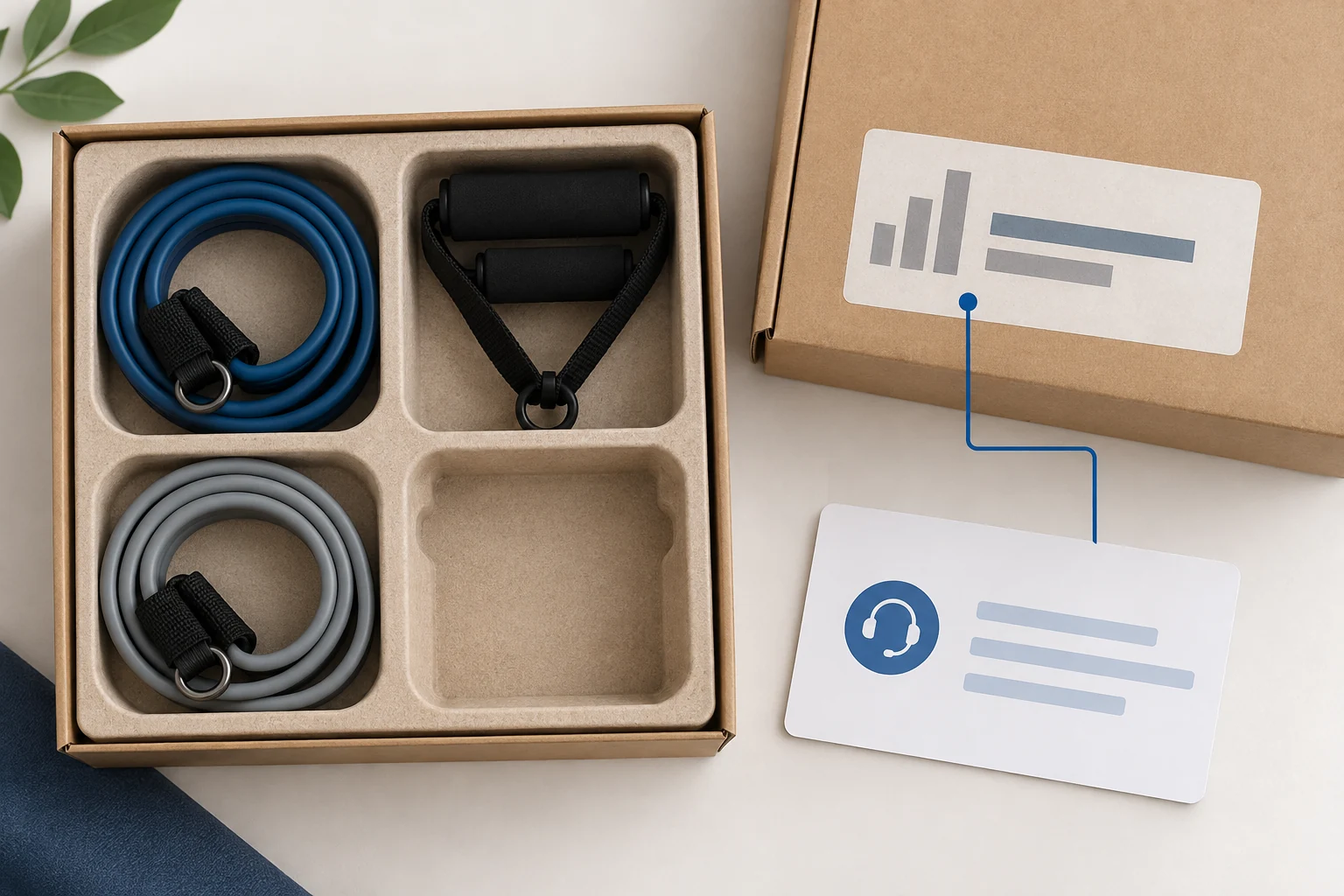
For an incomplete order, check the buyer’s order and received model against the correct parts list. Tell the buyer what you can actually send and when, or offer the appropriate alternative or refund under your policy and applicable obligations. A replacement should match that model; an unapproved accessory can create a new problem.
If a customer reports a torn attachment or another possible safety fault, tell them to stop using the suspect item while it is assessed. Ask for the order reference, model marking, photos and what happened. Record their account without diagnosing the cause from a photo or blaming them automatically. Route it to the supplier and check current official recall information where relevant.
Resolve essential-part or fixing problems
Unclear fixing instructions, a damaged load-bearing part or a missing essential part is a reason to stop and resolve the issue. Do not ask the customer to improvise a wall fixing, use another doorway or keep using a suspect unit while waiting. The quality-control guide explains the broader supplier follow-up.
Agree in advance who supplies replacement parts, where a return goes, who pays postage and how an unsafe report is escalated. Your buyer’s remedy and your supplier’s reimbursement are separate decisions. Save the customer resolution, then pursue the supplier credit and check whether other identifiable units need attention.
06
Keep the first range accurate before adding more
For each item, keep one current record of the supplier, model and variant; dimensions and contents; instructions and warnings; supported descriptions; packed quote; and return or replacement arrangement. Include any sample observations as observations of that unit. An unanswered question should stay visible until it is resolved.
Consider a hypothetical first range. A roller with confirmed measurements, care information, packing and a remedy may be ready to list. The band kit with mismatched contents stays on hold. A doorway bar without clear fixing and product-specific load information also stays on hold. These choices describe the information available for those particular items, rather than ranking whole categories as safe or profitable.
Review the new version, not its appearance
When a supplier offers a new version, compare the material, dimensions, parts, instructions and packaging before accepting it. Update the page and affected orders if something the buyer was promised changes. Recheck the route and cost if the carton or dispatch warehouse changes.
Keep a short record of recurring questions and complaints. Buyers choosing the wrong size need a clearer page. Repeated missing anchors need a packing correction. A possible safety defect needs prompt investigation and any applicable reporting or recall action. Knowing which model each customer received makes that work possible. Expand once your existing range is accurate and its support can be handled reliably.
07
FAQ
Can I use a band’s color to describe its strength?
Only if the manufacturer links that color to the exact model’s strength designation. Colors are not a universal resistance scale. Explain the supplier’s supported designation and relevant setup rather than promising a precise force at every stretch.
Does receiving a good sample mean the product is safe?
A sample lets you compare one item’s contents, measurements, markings and instructions. It does not prove a load rating, satisfy every market requirement or confirm all later shipments. Keep the manufacturer’s supporting information and check changes to the model.
Can the supplier handle all customer support?
The supplier may help with parts, technical questions and credits, but the buyer still needs a clear route through your store. Agree who investigates faults, approves remedies and pays return postage before taking orders.
Can a beginner dropship a treadmill?
It may be possible with a suitable supplier, but first resolve power compatibility, market requirements, delivery and assembly scope, spare parts and repairs. A compact accessory’s shipping quote and support plan do not cover a powered machine.
Dropshipping Products: Practical Ideas and How They Compare
Compare concrete dropshipping product ideas, from pouches and phone stands to apparel and wall art, with shipping,

Pet Supplies Dropshipping: Fit, Materials and Product-Use Boundaries
Start with a narrow non-ingestible pet accessory. Verify intended use, fit, materials, sample version and recovery path

Outdoor Gear Dropshipping: Product Use, Durability and Shipping Fit
A picnic blanket, dry bag and camp chair call for different use evidence and parcels. Check model,
