
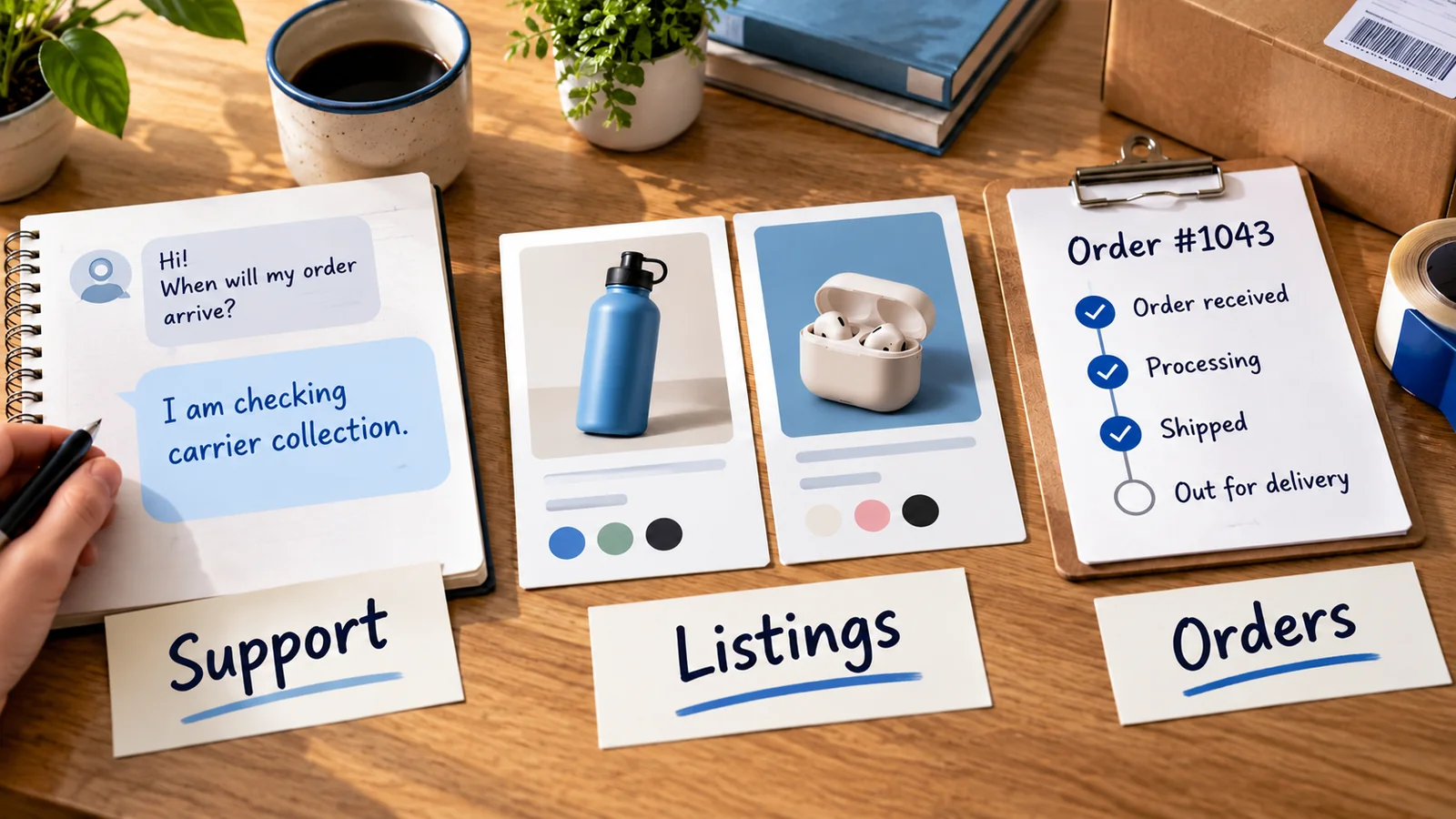
Dropshipping jobs are paid ecommerce roles: answering customer messages, maintaining product listings, coordinating orders or helping a store find and market products. You do not need to buy a store or pay its suppliers to work for it. Your first task is to choose a role you can demonstrate, then find a verifiable employer or client with a clear paid scope.
Searching only for “dropshipping jobs” can hide useful opportunities. A retailer might call the same work ecommerce customer support, catalog assistant or order coordinator. The job description matters more than whether dropshipping appears in the title.
This guide is for applicants. If you own a store and want to hire help, the dropshipping virtual assistant guide covers defining the work and supervising it. Starting your own shop is another route again; the beginner’s guide explains that business commitment.
01
Find the role that matches the work you can show
An ecommerce store needs several kinds of work. You do not have to claim you can run every part of it to make a useful first application.
| Role to search | Typical work to discuss | A useful application sample |
|---|---|---|
| Ecommerce customer support | Order questions, delivery updates and returns | A clear reply based on a fictional order record |
| Product listing or catalog assistant | Titles, variants, images and product details | A small, accurate product record with its source information |
| Order or fulfillment coordinator | Following accepted orders and investigating exceptions | A short order log showing what is waiting and who acts next |
| Sourcing assistant | Collecting product and supplier information | A comparison of equivalent items, including missing information |
| Ecommerce marketing assistant | Preparing content, email or campaign assets | A relevant sample and an explanation of its purpose |
These are role examples, not promises that every employer uses the same title or accepts beginners. Some positions require a particular language, work location, schedule or platform experience. Some involve warehouse work rather than remote administration.
For a real illustration of adjacent work, MerchStores’ ecommerce operations coordinator page describes Shopify and cross-brand operations. It shows why ordinary ecommerce titles are worth searching. It is not a guarantee that the vacancy will remain open or fit your location when you apply.
Choose the role where you can explain your decisions. A listing assistant who catches a mismatch between a product size and its source has something concrete to offer. “I know Shopify, TikTok, Amazon and all dropshipping tools” is much harder for an employer to evaluate without evidence.
02
Search for ecommerce titles as well as dropshipping jobs
Use job boards for employee roles, freelance marketplaces for defined client work and the employer’s own careers page to verify a posting. Indeed’s dropshipping search is one place to discover titles. Freelance marketplaces such as Upwork also carry ecommerce support work. Neither makes every advertiser trustworthy.
Try searches that name the output:
ecommerce customer support Shopifyplus your language or location.order coordinator ecommerceplus the required work arrangement.product listing assistant variantsfor catalog work.dropshipping virtual assistant customer servicefor relevant client tasks.
Then read the full description. A remote role can still be limited to one country. A part-time role may require fixed coverage hours. An “entry-level” job can still expect writing, spreadsheet and customer-service skills.
Keep a short application log
Record the employer, original posting URL, role, location restrictions, schedule, pay basis and application date. Add one sentence about the sample you sent. This prevents you from applying to the same repost repeatedly or confusing two recruiters’ requests.
Verify contact details independently. Navigate to the company’s site yourself rather than relying entirely on a link in an unexpected message. Check whether the role exists there or ask the company through a published contact route.
If the posting is vague about the actual work, ask a narrow question: “Which queue would I handle in the first week—customer messages, product listings or supplier order follow-up?” A usable answer helps you decide whether to apply and what to show.
03
Build a sample around one ordinary order
A short sample can make your ability easier to judge. It should look like the work the role requires, using fictional or properly anonymized information. Do not disclose another client’s customer records to prove experience.
Consider this fictional customer-support exercise:
| Order A1042 | Information available |
|---|---|
| Payment | Recorded on Tuesday |
| Shipping label | Created on Wednesday |
| Carrier acceptance | No acceptance scan visible on Thursday |
| Customer message | “Has it shipped? I need it next week.” |
The important judgment is that a label does not prove the carrier has the parcel. A good candidate separates what is known from what needs checking. They do not invent an arrival date to make the reply sound confident.
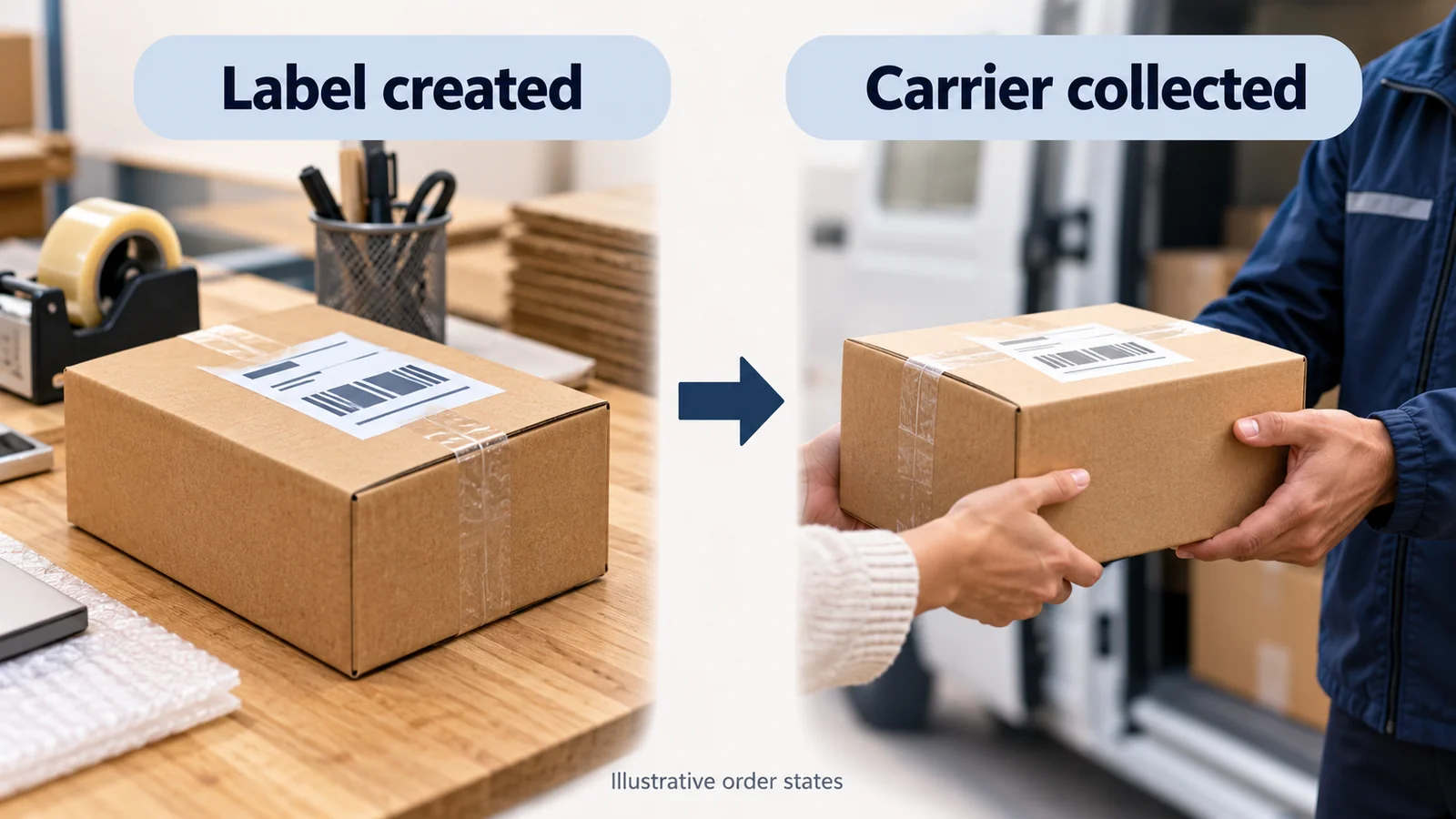
An example reply could be:
I can see that the shipping label was created, but I cannot yet confirm carrier collection. I am checking that with our fulfillment team. I will update you by 3 p.m. today with what we have established and the next action.
The 3 p.m. time belongs to this fictional exercise. For a real customer, use a follow-up time your team can meet and make the relevant timezone clear. You should be able to explain both the message and the action behind it: ask the responsible team about collection, then return to the customer with the result, even if the investigation is still open.
Show the internal note, too
A brief note might say: “A1042: confirm physical collection with fulfillment team; label alone is insufficient. Customer needs arrival next week. Do not promise a date until the route and collection are confirmed.”
That note tells the next person what to do. It is more useful than marking the ticket “shipping issue” and leaving the customer to ask again.
For listing work, use a different sample. Show two product variants, their source codes, accurate sizes and the questions you would send back for clarification. Do not submit a customer-service sample for every role simply because it is available.
04
Write an application the employer can use
Connect the advertised task to one relevant example. State what you can do, when you can work and where your experience stops. A beginner can be convincing without inventing a previous business or revenue result.
Here is a short application pattern:
Hello, I am applying for the ecommerce support role. I can cover the stated afternoon hours in your timezone and write customer replies in English. I have attached a fictional order-status exercise showing how I separate a shipping label from confirmed collection and record the next action. I have not used your helpdesk yet; I would need access to its training environment or instructions. Could you confirm the paid trial scope and who approves refunds?
Replace every claim with something true about you. If you cannot cover the required hours, say so rather than hoping the schedule will change after hiring. If the employer asks for a particular language, a relevant writing sample is more persuasive than a long tool list.
Make the sample easy to open and understand. Label fictional information clearly, keep private data out and explain your own contribution to any shared project. You do not need a complicated portfolio website for one well-chosen exercise.
An employer may ask follow-up questions. Be ready to explain why you did not promise delivery, how you would handle an unknown answer and which decision requires approval. Those explanations demonstrate judgment, which is difficult to see in a generic cover letter.
05
Agree the pay, scope and account access
Before real work begins, confirm whether the arrangement is employment or contracting, who pays you and what payment covers. Location-specific employment, tax and work-authorization requirements still apply; “online” does not settle them.
For an hourly role, clarify expected hours, time recording and payment dates. For a fixed project, clarify the output, number of revisions, deadline and what happens when the scope changes.
Suppose a fictional project pays $90. If it takes six hours, the gross return is $15 per hour. If the same scope expands to nine hours, it becomes $10 per hour before platform fees, expenses and tax. This is arithmetic for comparing an offer, not a market salary estimate.
Ask about a paid trial with a bounded task. A small sample showing your approach is different from spending several days operating a real store for free. Clarify the distinction before providing work the business will use.
Use an account appropriate to the role
Ask the business to provide named access with the permissions needed for the task. Shopify’s store permissions guidance explains its role-based controls. Actual options depend on the store and plan; you should not need the owner’s personal password to answer ordinary support questions.
Know what you can approve. Reading an order, issuing a refund and changing payment settings are different powers. If your task is to prepare a reply, the employer should identify who authorizes compensation or a new delivery promise.
Do not use your own bank account or payment card to move a client’s customer money. Normal support and catalog work should have a clear business-owned system and a named supervisor. If the proposed arrangement changes into handling personal transfers, pause and verify what is being requested.
06
Know when the offer is asking for your money
The FTC’s job scam guidance identifies advance fees, fake checks and reshipping schemes. A supposed employer may ask you to deposit a check, send some money elsewhere or receive expensive products at home and forward them. Those requests deserve an immediate stop, not a small test payment.
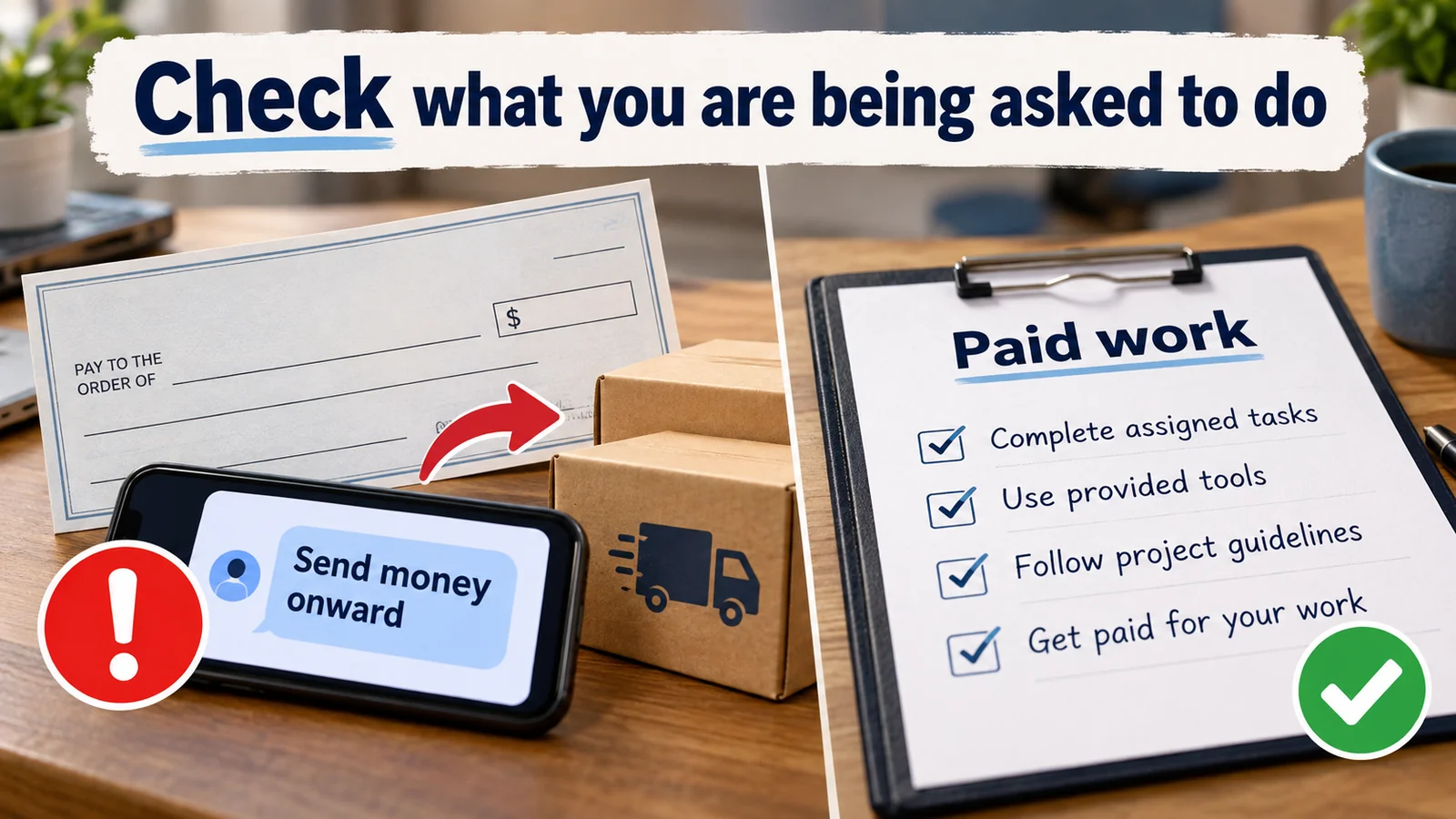
Buying a dropshipping course or launching your own store is a purchase or business decision. It is not the same as being hired. If an advertiser calls a store purchase a “job,” ask who pays wages, what work is required and why you must buy something first.
An unfamiliar company is not automatically fraudulent, and the absence of online complaints does not establish that it is safe. Look for a consistent business identity, a real work description and a payment arrangement you understand. Discuss an unusual offer with someone you trust before providing sensitive information.
If you have already sent money to a suspected scam, contact the payment provider promptly and report the situation. US readers can use the FTC reporting route linked from its guidance; elsewhere, use the relevant local reporting authority. Keep the messages and payment records.
07
Questions about dropshipping work
Can I get a dropshipping job with no experience?
Some support or catalog roles may accept beginners, but you still need to demonstrate the relevant basics. Build a small sample, write clearly and apply to roles whose requirements you can honestly meet. Do not buy a promised job guarantee.
How much do these jobs pay?
There is no single rate for “dropshipping work.” Duties, location, language, employment status and experience change the offer. Compare current relevant postings and calculate what the actual scope leaves you after fees and expenses.
Do I need my own Shopify store?
Not to be an employee or contractor doing store work. A practice environment or fictional work sample can help you learn, but buying a live shop is a separate business commitment.
Can I do the job only on a phone?
A few tasks may be possible, but catalog work, spreadsheets, order comparisons and multiple business tools are often much easier on a computer. Ask what equipment and software the role requires before accepting it.
Can I work for a client in another country?
Possibly, if the client accepts your location and the arrangement meets applicable work, contract, payment and tax requirements. Confirm the timezone and payment method as well as the advertised rate.
Is AIDrop Agent advertising a vacancy here?
No. This article explains how to find and evaluate work. It does not announce an AIDrop opening or authorize anyone to collect recruitment fees in our name.
What Is Dropshipping? How to Build and Run the Business
Learn how dropshipping works, earns money and handles risk, from product research and supplier checks to shipping,
How to Start a Dropshipping Business: From Offer to First Delivery
Start a dropshipping business with a clear offer, verified supplier, workable pricing, tested checkout, and a plan
Dropshipping for Beginners: Learn the Model and Test Your First Order
Learn dropshipping basics, choose a focused offer, budget for supplier payments and rehearse checkout, shipping and support
