

Dropshipping delivery intercept requires the carrier to change the parcel’s route. Verify the buyer’s request, find the actual tracking event and authorized label holder, then request an eligible change once. Keep the original destination as the working route while the request is pending.
Get the carrier event and account owner
For the bag in this example, changing apartment 8B to 8D in the store will not move the parcel. The label-account holder must ask the actual carrier. Until the change executes, the buyer still needs an update about the original route.
UPS describes Delivery Intercept as an option for eligible shipments before delivery, including rerouting, holding for pickup or returning to sender, with possible fees.
That is a carrier-specific example, not a promise for every China-origin parcel or last-mile partner. The address-validation guide addresses corrections before shipment. This article deals with the shorter, less certain window after handoff.
Explore the broader topic: Dropshipping Tracking: Set It Up and Handle Missing Updates.
01
Establish the current parcel state and who controls it
Distinguish label, custody and delivery
Open the carrier’s tracking, not just the supplier’s “shipped” badge. Note whether a label was created, the carrier accepted the parcel, it entered the last-mile network, an attempt was made or delivery completed. A label-only order might still be stopped at the warehouse; an accepted parcel needs a carrier action; a delivered parcel cannot be intercepted retroactively.
Find the person authorized to change it
Identify the label account and shipper of record. The storefront may not hold the carrier account because a supplier, consolidator or logistics provider purchased the service. That party may have to request the change. Ask who can see the carrier’s response and who will be charged if the request succeeds.
Keep the original supplier order and parcel ID with the case so a warehouse does not create a second shipment while the first remains in motion.
| Parcel state | Likely action to investigate | Proof needed before changing the buyer promise |
|---|---|---|
| Label only, no acceptance | Supplier may still be able to void/relabel | Supplier confirms old label and parcel were stopped |
| In carrier network | Eligible carrier intercept or redirect | Carrier request number and completed status |
| Out for delivery or attempted | Last-mile options may be narrow | Latest carrier event and recipient instructions |
| Delivered | Investigate actual delivery and customer remedy | Proof-of-delivery details, not an intercept receipt |
Eligibility depends on this actual shipment
The table is a decision path, not a guarantee that any service permits the listed change. Some contents, destinations and delivery stages restrict redirection. UPS says its intercept must be requested before delivery and that fees can apply when a request is completed. A different carrier may use another process or allow only the recipient to choose a pickup point.
A clear fulfillment handoff tells support who owns the label account and when the supplier loses direct control of the parcel. Record that owner before offering address changes to buyers.
02
Check the requested address before paying for a reroute
Confirm the buyer’s 8B-to-8D correction
Suppose the illustrative order is a $62 bag addressed to apartment 8B, but the buyer says it should be 8D in the same building. Confirm the new address with the buyer and compare it with the original paid order and label.
Verify the requester before a redirect
Do not accept an address change from an unrelated email without verifying it against the account or another approved channel; a post-purchase reroute can be abused to divert goods.
The fraud-screening guide discusses why a change in delivery details may need review before a supplier spend or release.
Check timing, cost and allowed change
Ask the carrier or shipper whether the correction is allowed, whether it changes service or cost, and whether it can be applied before the next delivery attempt.
A country change is more than an apartment edit
If the buyer has asked for a different country, the issue is far larger than an apartment correction: customs documents, duties, service availability and the buyer’s original charge may all change. Do not promise a same-day redirect based on a store-admin address field.
Keep addresses in authorized private records
Write down the customer’s exact request, the verification method, the original and new address, the actor submitting the carrier request and the result. Restrict access to the address details in the case record. The public tracking page should not expose more personal information than needed to resolve the parcel.
03
Submit once, then watch for a completion event
The shipper of record submits the eligible request through the carrier’s current workflow. Save its request ID, quoted fee, deadline and whether the carrier labels it pending, accepted, completed or denied. If the carrier’s system says “request received,” keep the original route as the working state until a confirmation says otherwise. The old parcel can still be delivered before a pending request is executed.
Request the option actually offered for this UPS parcel
For an eligible UPS shipment, the documented shipper flow uses tracking details, My Choice for Business, or logged-in shipping history. Request before delivery; this example does not authorize a different consolidator or last-mile lane.
Choose and submit once
Find the correct package in tracking or the authorized shipping history. Select an available change: another address, return to sender, rescheduled delivery or pickup hold. Enter the actual requested details and save the request reference, quoted fee and submission time.
Read the result before promising
Check the same request for its current response, then follow the physical event. Request received or accepted is not a completed redirect. If no eligible option appears or the request is denied, ask for the actual alternative; do not create a second shipment as a retry.
The UPS US page says request fees can apply and are charged when the request is completed. Verify the actual bill and outcome; do not invent a universal fee or assume that a carrier charge automatically belongs to the buyer.
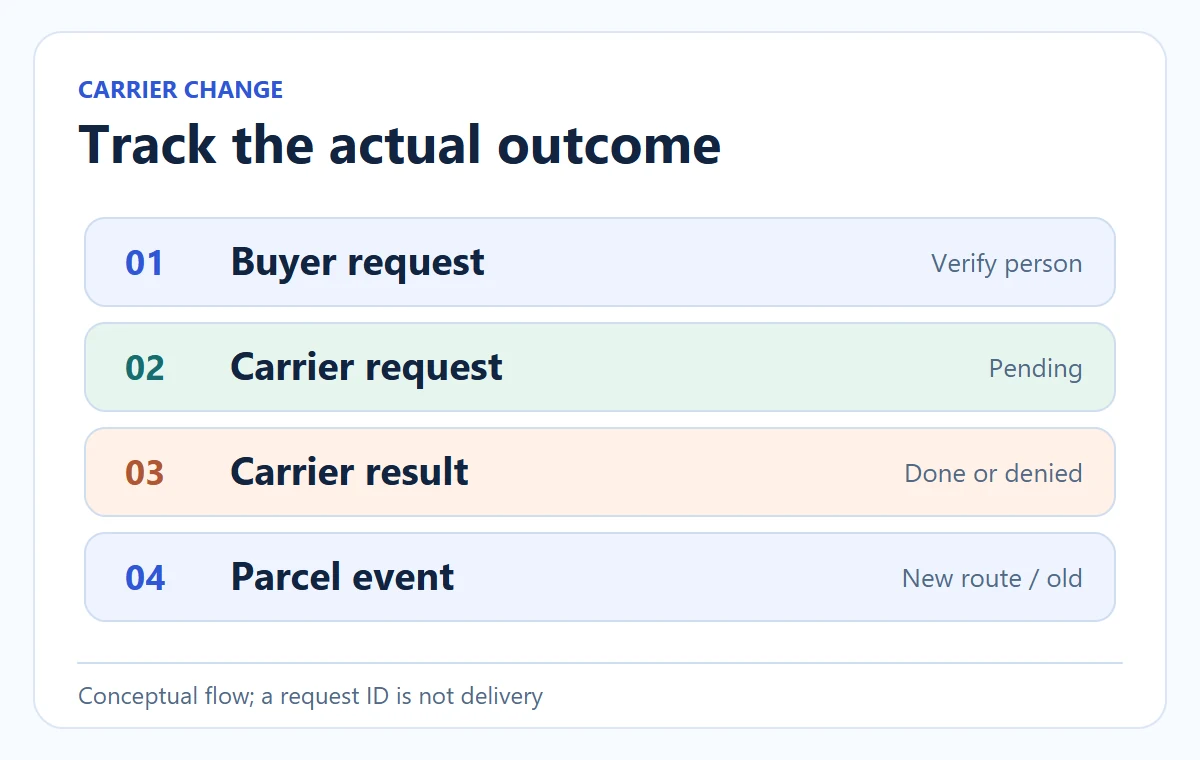
Tell the buyer the correction is still pending
A message for the hypothetical bag could say: “We have verified your request to change 8B to 8D. The parcel is already with the carrier, and its label-account holder has requested the correction. It is not confirmed yet. Please watch the original destination and tracking. We will update you by 16:00 [actual time zone] or sooner when the carrier responds.”
Send the confirmed result or real alternatives
After the carrier confirms the actual change, send its new instruction. If it denies the request, explain the supported pickup, return or later remedy options. Do not turn an accepted request into a claim that delivery to 8D already happened.
Separate the carrier bill and buyer responsibility
Keep costs in the right ledger. An intercept fee, extra shipping or return charge may arise from the carrier, while the customer payment and supplier invoice remain separate transactions. Decide who bears the cost under the store’s terms and the actual cause of the error.
Keep one parcel and one address-change decision
Use a private case record for the $62 teaching bag: original order/parcel/tracking ___; original address 8B; verified requested address 8D; current carrier event and zone ___; authorized requester ___; intercept reference ___; next review ___; actual result ___; billed fee ___. These are proposed fields, not a submitted request.
Pending or denied
Keep the original shipment visible and the request open or denied as recorded. Tell the buyer what remains possible. No duplicate bag is authorized simply because the store address now says 8D.
Completed action
Record whether the carrier actually redirected, held for pickup or returned the bag. Then check the resulting delivery, collection or customer remedy. A return event may finish the carrier action while the buyer still needs a refund or replacement.
For the negative rehearsal, let the bag be delivered to 8B before the correction executes. Expected result: preserve the failed/pending request, investigate actual delivery and buyer access, and decide the remedy. Do not mark 8D delivered from a request receipt.
Separate label error from a later buyer change
If the supplier printed 8B despite the store supplying 8D before release, that is different from the buyer changing the address after handoff. Do not charge the buyer automatically just because the carrier charged the shipper.
04
Resolve failed intercepts without creating two shipments
A return needs a physical destination and buyer plan
If the carrier cannot redirect and returns the parcel to sender, wait for the return event and confirm where it will arrive. A China-origin supplier return may not be a simple domestic return. Compare recovery cost, product condition and buyer promise before deciding whether to ship another unit.
Check delivery to the original address
If the carrier instead delivers to the original address, investigate that event and the buyer’s actual access before authorizing a duplicate parcel.
Keep the original parcel history and create a replacement track only if it is approved. The replacement must point back to the same case:
- Carrier evidence: Latest physical event for the original parcel.
- Request and charge: Intercept status and actual quoted or billed fee.
- Decisions: Buyer choice and supplier status.
- Replacement: New tracking only for a separately approved new parcel.
- Close reason: Actual return, corrected delivery or completed agreed remedy.
Use the RMA workflow to keep any reshipment and buyer remedy attached to the original case. The proof-of-delivery guide applies if the original shows delivered but the buyer cannot locate it.
The final verification is the physical outcome: old parcel returned, corrected parcel delivered, or an agreed customer remedy completed. A support ticket closed after an intercept request is not enough. Review repeated intercept causes—wrong supplier export, weak address capture or buyers editing too late—and fix the earliest preventable step.
AIDrop Agent can help map the China-side label owner and supplier handoff for a route you are considering. Bring an anonymized tracking timeline, the original store address and carrier response through the review form. Whether an intercept is possible remains a decision of the actual service and carrier.
05
Test the promised workflow before a real buyer needs it
If address-change requests recur, find out how much control the store actually has. Use a controlled shipment on the same carrier service, not a general help article for another lane.
Test the exact service’s change window
Record the time from label creation to physical acceptance, the last event at which the shipper could request a change, the account holder who must act, any fee and the way completion is reported. Keep the test’s parcel and buyer data separate from production customer cases.
A 30-minute promise needs a real warehouse hold
Then write the cutoff in customer-facing terms. “You can edit your shipping address within 30 minutes” is only sound if the order really remains unreleased for that interval and the supplier app does not buy a label immediately.
Promise review within the observed workflow
A safer policy might promise review of a request until supplier release, while explaining that carrier changes after handoff depend on eligibility. The exact text should reflect the observed workflow, not a fixed rule copied from another store.
Test before-label and after-handoff changes separately
For the illustrative bag, compare two attempts. A change submitted before the supplier prints the label should result in a single correct label and no carrier intercept fee. A change after carrier acceptance should show a carrier request ID and a separate completion event.

Tell the buyer when the route cannot change
If the second attempt cannot be completed on that route, customer support must say so promptly and offer the real alternatives. This test converts a vague support promise into a verifiable operating boundary.
Keep the customs destination consistent
Cross-border parcels add another boundary: the destination on a customs document, carrier label and buyer order may all need to stay consistent. A request to change an apartment within one city differs from a request to change country after the parcel has been declared.
Use the proper route after a country change
The latter may be impossible on the purchased service or require a return and a new shipment with new documents. If the carrier says no, do not edit the paperwork to imply the parcel was always going to the new country. Preserve the original transaction and ask the broker or carrier for the proper path.
Match the completed option to its actual bill
After a successful intercept, inspect the final delivery record. Was it held for pickup, delivered to the new address or returned to the shipper? The fee may be billed only when the service completes, and a request ID alone cannot tell accounting which outcome occurred.
Investigate an accepted request that did not execute
Attach the final scan and fee invoice to the original order. If the parcel was delivered to the old address despite an accepted request, investigate that discrepancy before telling the buyer the change succeeded.
Carrier eligibility does not verify the buyer
One address change can also expose a privacy problem. Customer support should verify the requester before disclosing the original destination or accepting a redirect, particularly for valuable goods. A courier’s eligibility check does not verify that the person contacting the store is the buyer.
Use the secure actual change channel
Record only the necessary verification outcome in the support ticket and use the carrier’s secure change channel for the new address. If the request appears suspicious, hold any second shipment while reviewing the payment and account facts; do not silently send a replacement to an unverified destination.
06
Frequently asked questions
Can I change the Shopify order address after shipping?
You may be able to update the store record, but that does not rewrite the carrier label or parcel route. Confirm an eligible change with the shipper of record and the carrier.
Does an intercept request guarantee the new address?
No. Keep tracking the original parcel until the carrier confirms the request was completed. Request eligibility and completion can differ.
Who pays an intercept fee?
First confirm who the carrier charged and why the change was needed. Then apply the store’s actual terms and responsibility findings; a carrier charge alone does not decide what the buyer owes.
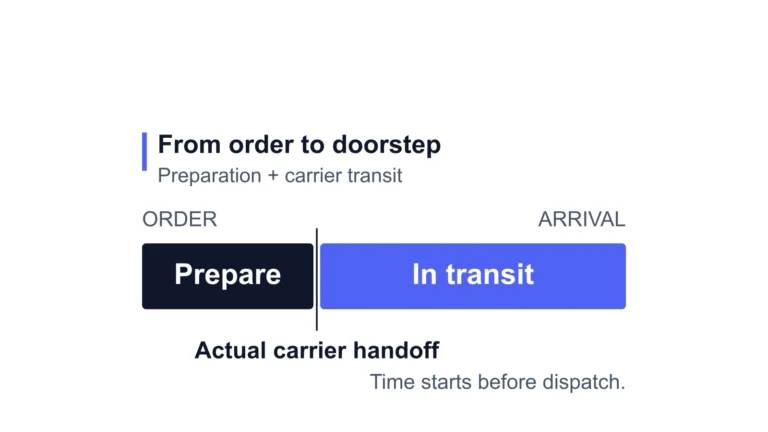
Dropshipping Shipping Times: What to Promise Your Customers
Use product-specific processing and transit estimates to set a delivery promise. Named route examples and a worked
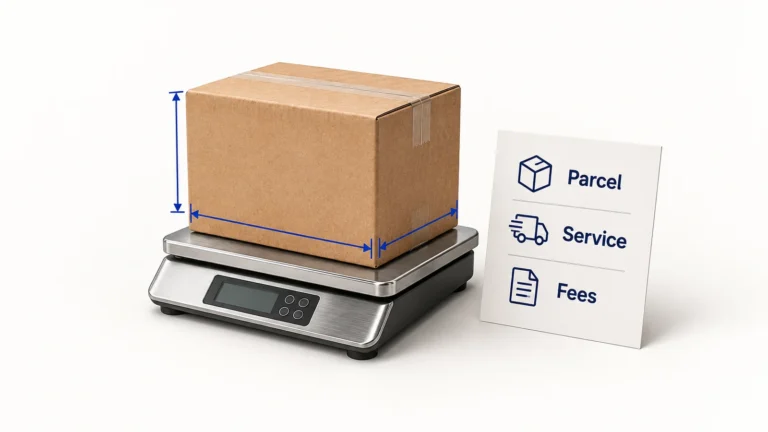
Dropshipping Shipping Costs: Compare the Whole Parcel Quote
Calculate dropshipping shipping costs from packed dimensions, billed weight and fees. Compare a worked parcel quote, import
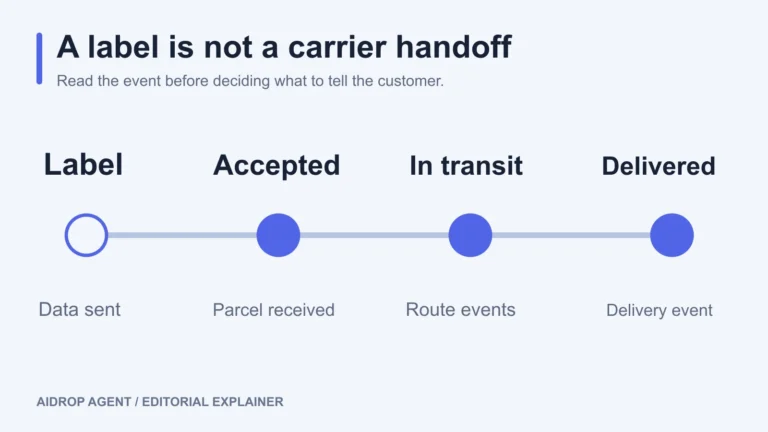
Dropshipping Tracking: Set It Up and Handle Missing Updates
Set up parcel-level tracking, interpret carrier events, and investigate missing updates without mistaking a shipping label for
