

Dropshipping sells a physical product that a supplier ships to the customer. Drop servicing sells work completed by another professional. A shirt order belongs to the first model; a package of six edited product photos belongs to the second.
Both leave you responsible for the offer and customer relationship. The choice is which work you can judge and manage: a parcel with the right product, or a project that meets a clear brief.
If you cannot yet assess either, start with a narrower product or service. Outsourcing production is useful when you can recognize a good result and explain what needs fixing.
01
A parcel and a project need different kinds of quality control
A shirt buyer expects the selected size, color and material to arrive at the address. You can compare a sample, inspect the supplier record and follow the shipment.
A photo-editing client expects files suitable for the agreed use. A tracking number cannot tell you whether six images have white backgrounds, consistent framing or the required resolution. You need a brief and a way to inspect the files.
Shopify’s drop-servicing explanation describes selling services while outsourcing their production. That definition leaves an important practical question: what exactly will your customer receive?
“Photo editing” could mean background removal, color changes, retouching scratches or new shadows. If you and the contractor price different work, the gap becomes extra coordination, cost or a disappointed client.
For the wider physical retail model, see what dropshipping involves. The comparison here is about the promise you keep after someone buys.
02
What you still do after outsourcing
Compare the same jobs across the two businesses:
| Your job | Dropshipping | Drop servicing |
|---|---|---|
| Define the offer | Product, variant, contents and delivery | Inputs, deliverables, deadline and revision scope |
| Choose a provider | Supply, sample and fulfillment fit | Relevant skill, sample work and capacity |
| Start the work | Correct funded supplier purchase | A brief and usable source files |
| Inspect progress | Product preparation and parcel events | Drafts, quality and missing inputs |
| Resolve a problem | Wrong item, damage, loss or return | Failed brief, missed deadline or changed requirement |
Some products need more support than some services. A repeatable background-removal job can be simpler than a device with compatibility questions. A straightforward household product can be simpler than a design project requiring subjective approval.
The skill you keep is judgment
You do not have to perform every task yourself. You need enough understanding to spot the important failure.
For photo editing, can you see a rough cutout edge, an altered product color or a file too small for its intended use? Can you explain the correction in terms the contractor can follow?
For a physical item, can you distinguish the correct model and variant, compare its sample with the page and identify a shipment problem?
Choose a first offer where those answers are clear. A provider’s portfolio or catalog can help you assess candidates, but it does not replace understanding what you have sold.
03
Compare a completed order with a completed project
A large difference between selling price and outsourcing cost can disappear during completion. Use a worked photo-project example, rather than a promise of typical earnings.
A client pays $300 for six agreed images. The contractor charges $180, payment processing costs $9 and you allocate $15 of tools to the job:
| Project line | Amount |
|---|---|
| Client revenue | $300 |
| Contractor | −$180 |
| Payment cost | −$9 |
| Tool allocation | −$15 |
| Before acquisition and other overhead | $96 |
| Extra correction charged by the contractor | −$35 |
| Remainder after the correction | $61 |
The apparent $120 markup was not what remained. The extra correction then reduced $96 to $61.
Now include your time in the decision. If calls, briefing and review take four owner-hours, $61 divided by four is $15.25 per hour before acquisition and other overhead. This is a way to compare the workload, not a wage or net-earnings claim.

For a product order, include the goods, freight, payment costs and likely remedies. Compare per completed project with per shipped order, then consider how much time each consumes. A higher cash remainder on one project does not automatically produce a better business if completing it takes most of the day.
The profit-margin guide separates contribution from markup and final business profit.
Put payment dates beside the costs
The client may pay a deposit while the contractor requires an advance. A processor may hold the customer’s payment. A final balance may depend on acceptance.
List what you owe and when you expect accessible funds. Physical suppliers can also need payment before dispatch. Receiving a customer order first does not guarantee that the money is available when production must begin.
04
Write an offer the provider can actually deliver
For the six-photo example, a usable offer could read:
Edit six client-supplied product photographs. Remove the backgrounds and deliver six 1200 × 1200-pixel JPEGs on white. Include one round correcting work that does not match this brief. New products, new creative directions and editable source files require separate agreement. Confirm the delivery date after the usable source images arrive.
That gives the customer and contractor the same starting point. Upwork’s drop-servicing guide also discusses scope, deliverables and revision policy; a contractor’s standard package may not match your offer.
For this job, ask for a sample using an image you have permission to supply. Inspect the background, product edges, color and output size. Keep the accepted sample with the brief so a later correction has a reference.
Inputs to settle: the six source photographs, intended use, permission to share them, and any product details that must not be retouched.
Outputs to settle: six finished files, dimensions, format, deadline and how they will be named or delivered.
Completion to settle: who reviews the work, what counts as a correction, the response period and the agreed remedy for a failed job.
For a dropshipped product, the corresponding offer identifies the item, variant, included pieces, destination, price and delivery terms. Use the same specification in the supplier purchase. A similar-looking image is not enough to establish that it is the item you advertised.
05
Handle a problem without losing track of the original promise
Suppose the brief says white backgrounds, but two returned files have gray backgrounds. Identify those two files and request the specific correction against the agreed sample. On return, inspect those files and make sure the correction did not alter the product color or dimensions.
Now suppose the client asks for a different product and a holiday campaign. That is new work. Explain what changes in the price and deadline before starting it.
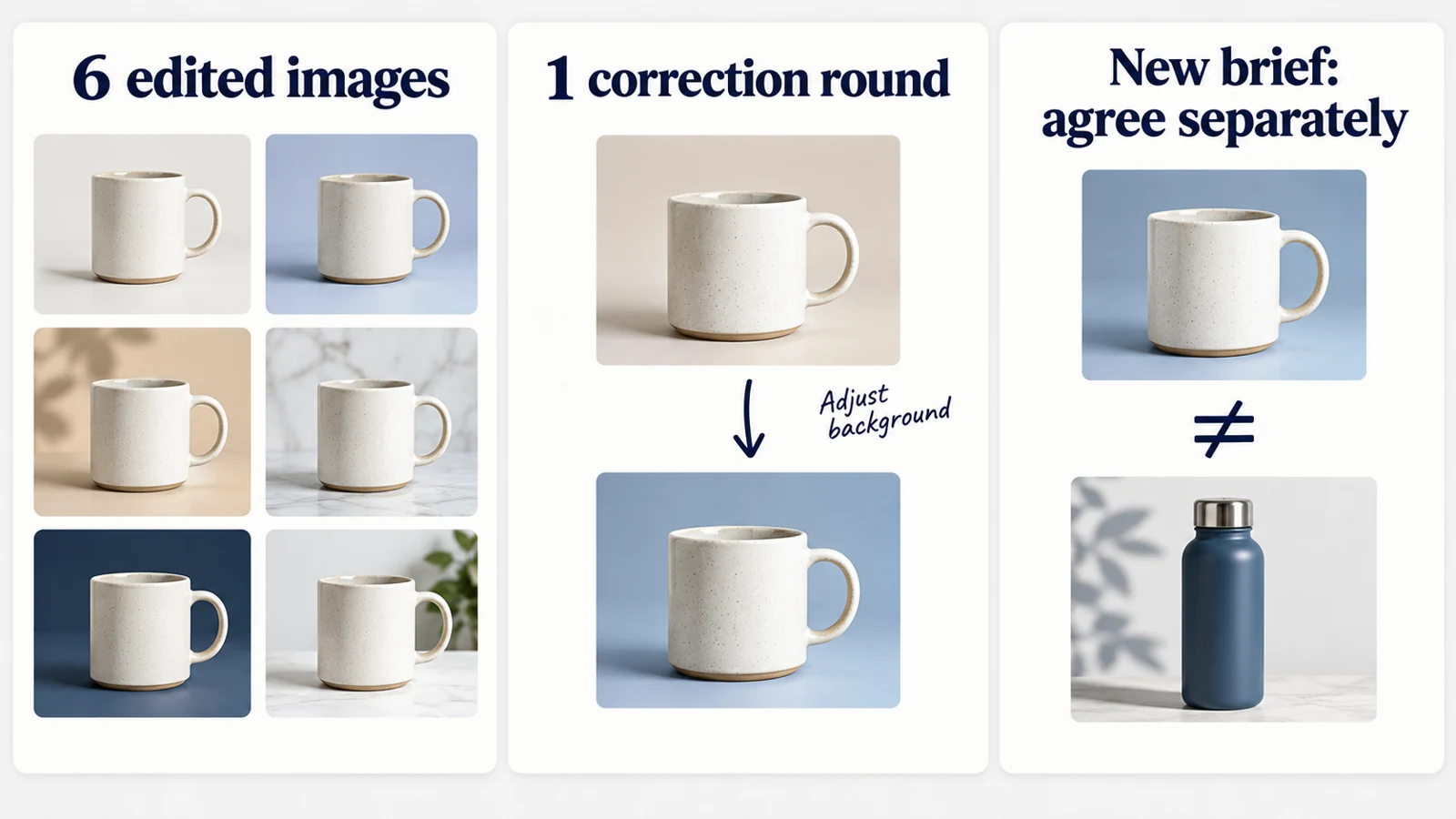
The distinction is useful only if the original work was defined clearly. It should not become a way to avoid fixing a result that failed the promise.
For a physical order, a wrong shirt size and a buyer asking for another style are also different situations. Match the actual order with what arrived, then give the appropriate customer directions and supplier claim information.
In both businesses, close the loop. Track the corrected file or replacement, the customer’s acceptance or remedy, and any provider credit. A payment adjustment alone may leave the actual work unfinished.
06
Choose a small first test
For a service, use a narrow output you understand. Prepare the source files, commission a sample and record how much briefing and review it takes. A cheap quote becomes less attractive if you cannot explain the changes or keep a realistic deadline.
For a product, choose an identified item and representative destination. Follow the sample or controlled order, inspect what arrives and test how a question or discrepancy is handled. The result should help you judge the specific offer, not pronounce an entire supplier perfect or unreliable.
After either test, answer three practical questions:
- Can I recognize and explain the required quality?
- Does the actual completion cost and owner time support the price?
- Can I give the customer a workable next step when something changes?
If one answer is weak, narrow or improve the offer before scaling the catalog or buying more leads. You can also combine models later, but each promise still needs its own provider, cost and support process.
For a physical-product sourcing or fulfillment comparison, send AIDrop Agent the item, packing and destination requirements. That is a product-service inquiry; a photo-editing or other professional-service offer needs the relevant specialist instead.
07
Drop servicing versus dropshipping questions
Which model is easier for a beginner?
The one whose work you can assess. Narrow product and service offers are easier to test than broad promises. Neither removes customer support or the need to understand the purchase.
Do I need to do the outsourced work myself?
You need enough knowledge to judge it, brief it and explain a useful correction. Being unable to inspect the result leaves the customer problem unresolved even if somebody else produced it.
Does drop servicing have no shipping costs?
Digital work may avoid a physical parcel, but it can involve revisions, tools, coordination and specialist costs. Compare the completed job rather than assuming the missing freight line makes it more profitable.
Can automation run either business completely?
Tools can pass orders, files and notifications. Product changes, unclear briefs and customer remedies still require decisions. Learn the real handoff before relying on automation.
Can I sell both products and services?
Yes, when the offers belong together and you can support both. Keep their deliverables, costs and completion records clear instead of assuming one provider handles the other promise.
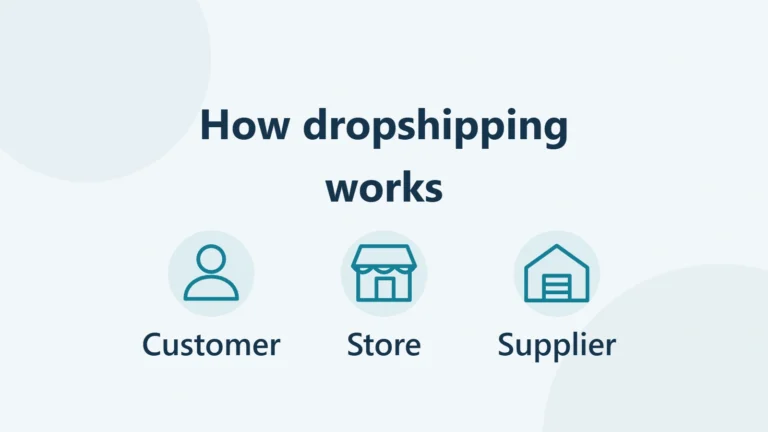
What Is Dropshipping? How to Build and Run the Business
Learn how dropshipping works, earns money and handles risk, from product research and supplier checks to shipping,
How to Start a Dropshipping Business: From Offer to First Delivery
Start a dropshipping business with a clear offer, verified supplier, workable pricing, tested checkout, and a plan
Dropshipping for Beginners: Learn the Model and Test Your First Order
Learn dropshipping basics, choose a focused offer, budget for supplier payments and rehearse checkout, shipping and support
