
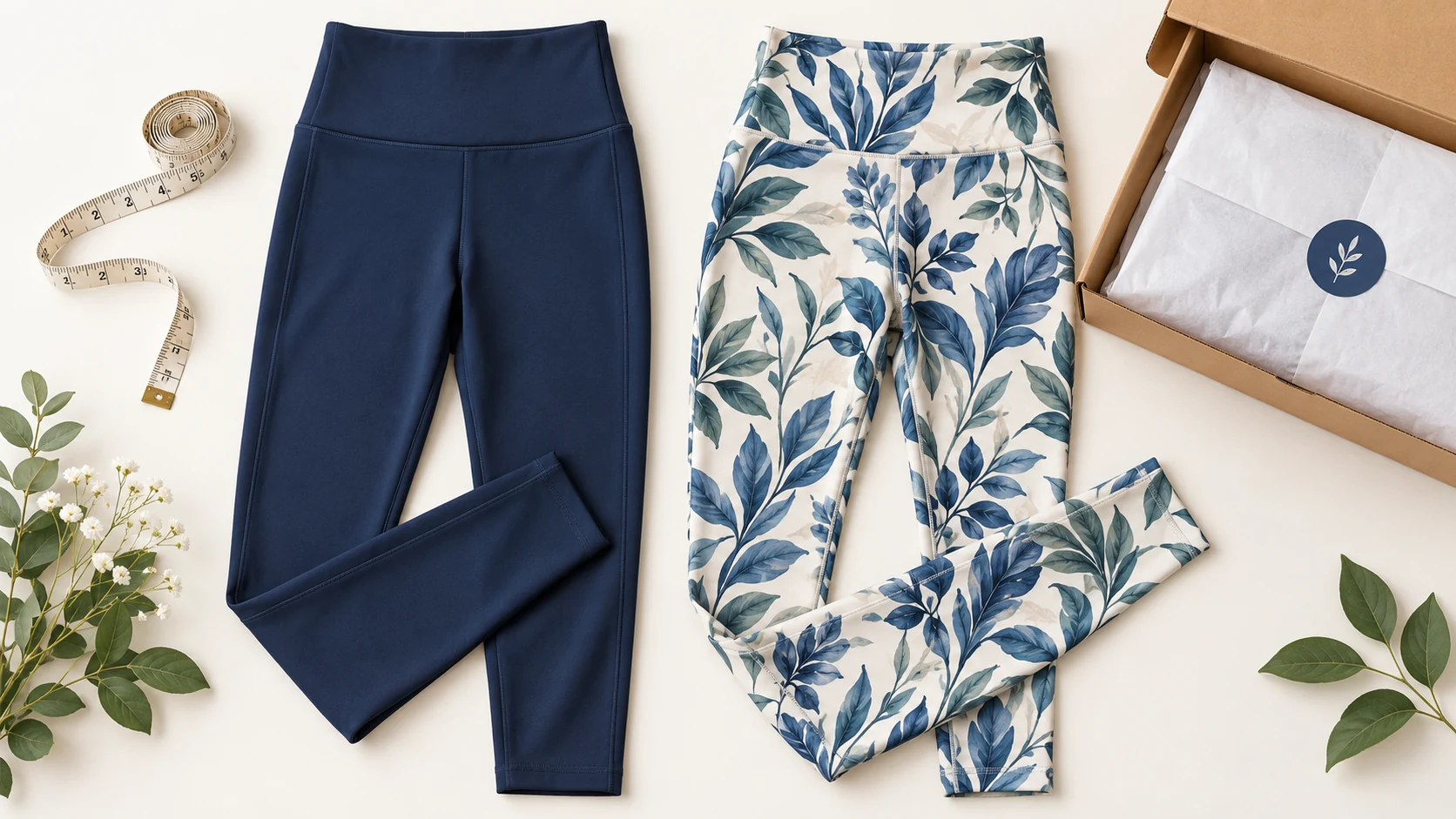
Compare Printful or a selected Printify provider for original printed leggings, and a ready-made fashion supplier for an existing style. Private sourcing can offer more specification choices, but needs a separate quote and sample approval. Choose by the exact fabric, size range and delivery route—not a universal ranking of company names.
A pair can look opaque when hanging neatly and look different when someone bends. Another can have a beautiful pattern but a waistband that moves during ordinary wear. The supplier decision should begin with the product you want your buyer to use.
Public sources below were checked on October 12, 2026. They establish documented products and terms, not an independent performance test. The movement and sample checks are proposed work for your store.
01
Choose a sourcing route before a supplier
Decide whether your offer is an existing fashion style, your printed artwork or a garment made to a more specific requirement. That choice narrows the suppliers before you compare prices.
| Route | Named starting point | Why investigate it? | What still needs checking? |
|---|---|---|---|
| Configured POD product | Printful all-over-print yoga leggings | You want a documented base style with original artwork | Exact style, region, size chart, sample and destination cost |
| POD provider selection | Printify custom leggings | You want to compare available print-product arrangements | Selected product/provider, template, sizes and fulfillment |
| Ready-made fashion | Trendsi‘s current eligible catalog | You want an existing look rather than a new print | Actual available leggings SKU, stock, route and seller eligibility |
| Private sourcing | A manufacturer or sourcing partner | You need a particular fabric, fit or construction | Production quantity, development, samples and individual fulfillment |
Printful’s specific yoga-legging page and Printify’s leggings page are useful POD starting points. Trendsi is a fashion-catalog route to investigate; this guide does not claim that one particular leggings SKU is currently in stock there.
For a small original-pattern collection, start with a supported POD product and inspect its sample. For a store whose promise depends on a specific waistband, inseam or fabric, ask about those requirements directly. Adding a logo to an existing base does not give you complete control over the garment.
The wider clothing-supplier comparison covers these business routes. Here, the useful comparison is between actual leggings that could serve your intended buyer.
Shortlist for your store’s actual requirement
An illustrator with a botanical collection needs supported print areas, consistent artwork and a base garment buyers can size. A POD route is a sensible first candidate. A fitness store needing a particular inseam and pocket arrangement should establish whether the existing base has those features before spending time on a pattern.
| Store requirement | First route to shortlist | Reason to reject a candidate early |
|---|---|---|
| Your artwork on a supported high-waist base | Exact Printful or Printify POD style | Template, fit or supported sizes do not suit the collection |
| Existing fashion look with no original print | Available ready-made style | No actual SKU or destination availability is confirmed |
| Specific pocket, inseam or material requirement | A base that already matches, otherwise private sourcing | Supplier substitutes a different construction or cannot explain development quantities |
This gets you to a shortlist, not a winner. Request the finished quote and sample from the candidates that survive. Rejecting an unsuitable base early is more useful than ordering samples from five companies solely because they appear in a list.
02
Compare the exact leggings and fulfillment location
A platform name is not a complete garment specification. Even a single product page can list different regional fabric arrangements.
Printful’s all-over-print yoga-legging page shows why region belongs in the product record:
| Listed fulfillment region | Listed composition for this particular style |
|---|---|
| US/Mexico | 75% recycled polyester, 25% elastane |
| Latvia | 82% polyester, 18% elastane |
The listed fabric weights also differ, and comparable substitutions are allowed. These details apply to that style, not every Printful legging. Save the region, composition, size chart, sample and permitted changes together; review your photos and claims when the base changes.
Do not copy the broadest size range from a platform collection onto one style. The buyer can order only the sizes offered for the particular product and route. Check every enabled size on the actual page and in the connected store.
For a private inquiry, give the supplier a specification it can actually quote:
- Verified composition and the material requirement you need.
- Waistband construction, inseam and size chart.
- Artwork and permitted changes.
- Destination and individual fulfillment requirement.
“High-quality yoga leggings” alone leaves those decisions to the supplier.
For that particular Printful style, the page lists 225 g/m² for US/Mexico and 230 g/m² for Latvia, alongside the different blends above. Those are specification differences to retain, not enough evidence to declare one region’s garment superior. The higher elastane percentage alone does not establish better recovery or a more suitable fit.
If a region or base changes after your approval, work through the consequences:
- Obtain the replacement composition, chart and care information.
- Compare them with the product record your buyer currently sees.
- Sample a materially different configuration before reusing performance or fit claims.
- Update descriptions, labels and photos where the change affects them.
If the change is proposed for an existing order, resolve it with the buyer before substituting. Changing the product page later does not approve a different garment for someone who already purchased the original offer.
03
Check how the fabric looks when it stretches
Stretch spreads the fabric structure and printed surface over more area. That can change what the eye sees. A dark print becoming lighter under strain and a fabric becoming visibly see-through are related observations, but they are not the same defect.
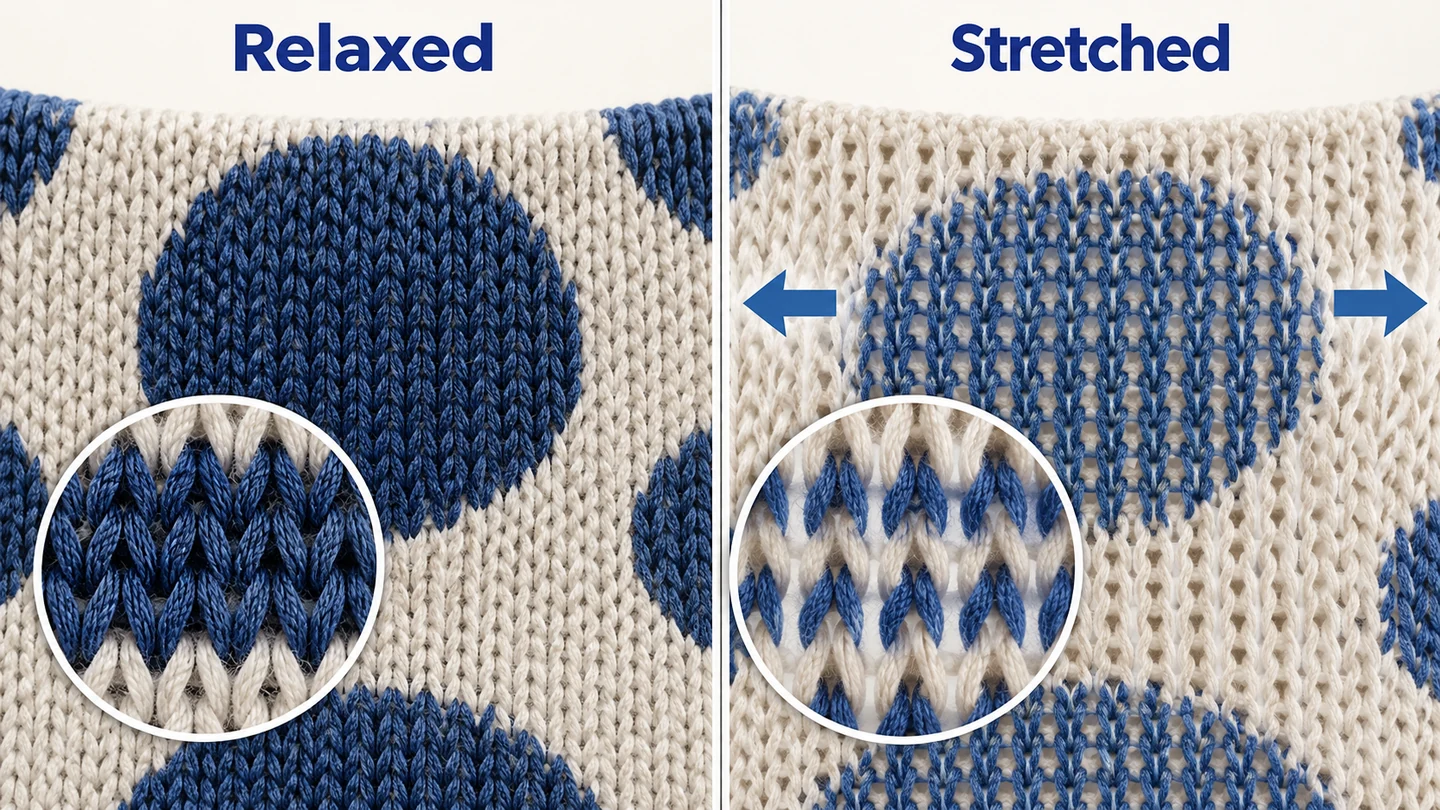
Fabric mass, often shown as GSM, tells you weight per square meter. It does not prove opacity, fit or performance on its own. Yarn, knit structure, stretch, color and the amount of strain all affect the result.
Order the intended size and design. Inspect it standing normally, sitting and bending comfortably in consistent light. Use a suitable fit sample and respect the wearer’s privacy; these checks do not require suggestive photography.
| Observation | Question it answers | Possible action |
|---|---|---|
| Print looks lighter when stretched | Does the chosen pattern still look deliberate in use? | Change the artwork, fit or base product |
| Material shows through during movement | Does the actual garment support the advertised coverage? | Reject the configuration or remove an unsupported claim |
| Pale fibers appear after surface friction | Does wear alter the visible finish? | Revisit material, care and product suitability |
Printful’s chosen product page includes a rough-surface warning about exposed white fibers. Treat it as a product-specific use limitation, rather than promising that all printed leggings behave identically.
These are basic merchant observations, not standardized textile testing. Avoid advertising “squat-proof,” compression benefits or exceptional durability simply because the supplier uses similar language or one picture looks good.
Separate a fit problem from a print problem
Keep the base, size, wearer, light and movement consistent when comparing a light and dark version of your artwork. If the print looks different only on the pale version, investigate the design’s appearance on that base. If both show through under the same comfortable movement, investigate the garment and fit rather than simply darkening all the photographs.
When a chart-guided sample feels unusually tight, first confirm that the delivered size and style are correct. A wrong variant needs a mapping or fulfillment remedy. A correctly supplied garment that still does not suit the intended wearer needs a fit decision. Those cases should not both become a blanket “size up” instruction.
Keep the observations separate in your sample note:
| What changed? | What stayed the same? | What you can reasonably conclude |
|---|---|---|
| Pale pattern versus dark pattern | Same base and size under comparable conditions | The artwork may change the visible result |
| Medium versus large | Same base and design, measured against its chart | You can compare those two fits, not establish a universal sizing rule |
| Another regional base | Its fabric or construction may also differ | The previous sample cannot automatically approve the substitute |
Choose the combination that supports the actual offer. A beautiful repeat pattern can suit casual wear while failing the coverage claim you wanted for a movement-focused listing. Change the product or claim before launching it; do not let the original mockup make that decision for you.
04
Test fit, seams and the design as one product
Fit changes how the fabric and artwork behave. A waistband that rolls down can affect comfort even if the print is excellent. A motif crossing a seam can look broken even when each panel is printed correctly.
Use the actual size chart and specify whether it describes body measurements or finished garment measurements. Record the inseam and other relevant measurements using the stated method. Do not convert a flat garment measurement into a body recommendation without supported guidance.
For your sample, work through three different views:
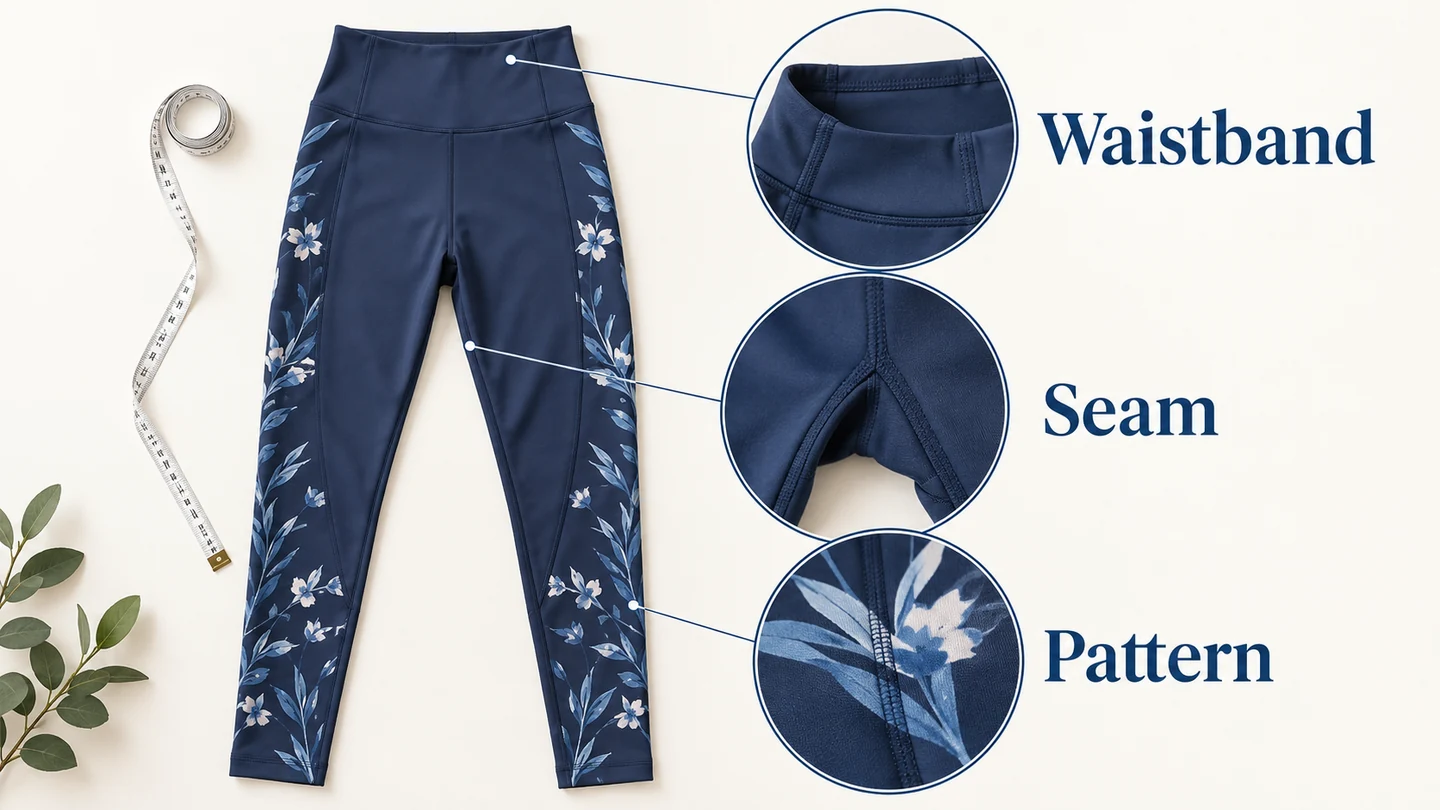
- Laid flat: inspect seams, gusset, waistband and print placement.
- Worn comfortably: check ordinary movement, waistband position and usable pocket placement where offered.
- After instructed care: compare dimensions, stitching and appearance with the original record.
If you sell both a light and a dark pattern, check the effect those designs have on the same base. An abstract dark pattern and a large pale flower may reveal different issues. A sample of one is not evidence for the other.
For all-over artwork, keep crucial words or logos clear of sensitive joins. Preview every panel and check the physical garment. Save the approved design version and exact base style so a later reprint does not silently use a different configuration.
The POD file-and-sample guide explains the approval record. The goal is a sellable garment, not merely a file that uploads successfully.
05
Build a price that survives a size problem
Quote product and shipping for the selected destination, then account for selling fees, advertising and the remedy your store offers. A supplier’s markup suggestion cannot decide those costs for you.
Here is an illustrative $52 order, not a provider quote:
| Cost | Amount |
|---|---|
| Production | $25.00 |
| Shipping | $6.00 |
| Payment fees | $1.80 |
| Planned remedy allowance | $2.20 |
| Remaining before advertising, tax and overhead | $17.00 |
| After $10 advertising | $7.00 |
A 10% discount takes $5.20 from the sale, leaving $1.80 under these assumptions. An uncovered replacement can cost much more than that. Confirm the supplier’s recovery terms before offering an inexpensive exchange as though it costs the store nothing.
For a ready-made example, Trendsi’s return policy describes eligible US returns with condition and timing requirements, excludes its exchange service, and handles certain charges separately. It does not support a promise that all routes include free size exchanges.
Before offering a replacement size, confirm:
- Where the original garment goes and which conditions apply.
- Who pays the return freight and new production/shipment.
- Whether the supplier reimburses anything, and when your buyer receives the remedy.
For POD, obtain that provider’s terms separately. A ready-made supplier’s policy cannot establish POD coverage.
Quote a two-item basket as well. Shipping can combine, split or change by route; use the actual bill rather than assuming the second pair travels free.
06
Set up the variants and verify the first parcel
For POD, create the design in the chosen platform and connect it to the store using its documented publishing route. Printify’s leggings guide describes its product-creation approach. Follow the selected provider’s actual controls for production and order handling.
Keep the base style, supplier/provider, size and artwork linked. For example, “Botanical-v3; approved high-waist base; medium; selected producer” is a merchant reference. It is not permission to substitute another producer’s medium simply because the size label matches.
Place a proposed trial order through the same path buyers will use. Compare the store option, supplier order, bill and delivery destination before release. Then check the garment received against the sample approval and size information.
| After the first order | Expected evidence |
|---|---|
| Variant selected | The chosen size and artwork remain correct in the supplier order |
| Supplier payment | One charge corresponds to the actual order |
| Tracking returned | It belongs to the matching store order |
| Parcel received | Style, labels, size and print agree with the approved offer |
If the wrong base arrives, pause that configuration and ask whether the mapping or a substitution caused it. Do not solve it by editing the description to fit whatever happened to arrive.
07
Use sample evidence for the listing and for changes
Explain what the sample and documentation support. Show the waistband, seam details, overall silhouette and print. Give the buyer usable measurements and care information instead of repeating “premium comfort” throughout the page.
For US textiles, the FTC apparel-labeling information explains requirements for many garments. Verify the applicable fiber, origin, business and care information for the actual product. A recycled-content claim should match that product’s verified composition and scope, not a brand-wide assumption.
Keep sample photographs and the supplier specification together. If the provider changes fabric, region or construction, review whether fit, appearance and labels change. The supplier-substitution guide explains how to approve a change before it becomes a customer surprise.
08
Leggings supplier questions
Which leggings supplier is best?
Choose the route that matches the offer. Printful and Printify are starting points for original printed designs; ready-made sourcing serves existing styles; private development suits specific fabric and fit requirements. The final decision needs an exact SKU, route and sample.
Does thicker fabric prove the leggings are opaque?
No. Fabric weight is one attribute. Inspect the actual fit, color and movement conditions, and do not claim tested performance that you have not established.
Can I sell custom prints without developing new fabric?
That is the ordinary POD route: artwork goes onto a supported base garment. Customizing the underlying material or construction is a separate production request.
Can I offer every size shown somewhere in the platform catalog?
Use only the chosen product’s supported sizes. A broad collection range does not apply to every style or region.
For a China-sourced leggings specification, ask AIDrop about sourcing and sample review. Include composition, measurements, construction, artwork and destination. Establish development quantities and individual fulfillment before comparing that route with POD.

Clothing Dropshipping: Sizes, Variants, Samples and Returns
Verify apparel sizes, variants, samples, labels and returns before launch. Build a clothing dropshipping offer around accurate
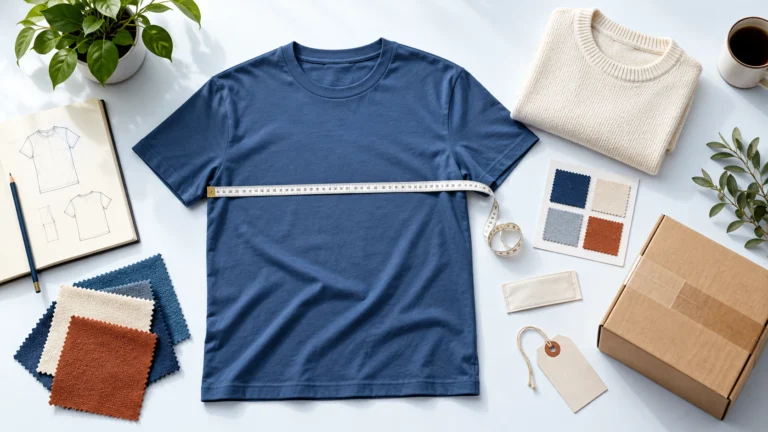
Clothing Dropshipping Suppliers: 5 Options for Different Stores
Compare Trendsi, Printful, Printify, Apliiq and BrandsGateway by clothing model, fit information, stock, shipping and return costs.
Shoe Dropshipping: Sizing Evidence, Variants and Return Exposure
A shoe listing needs model-specific fit evidence, exact size-color stock and a workable exchange route. Compare one
