
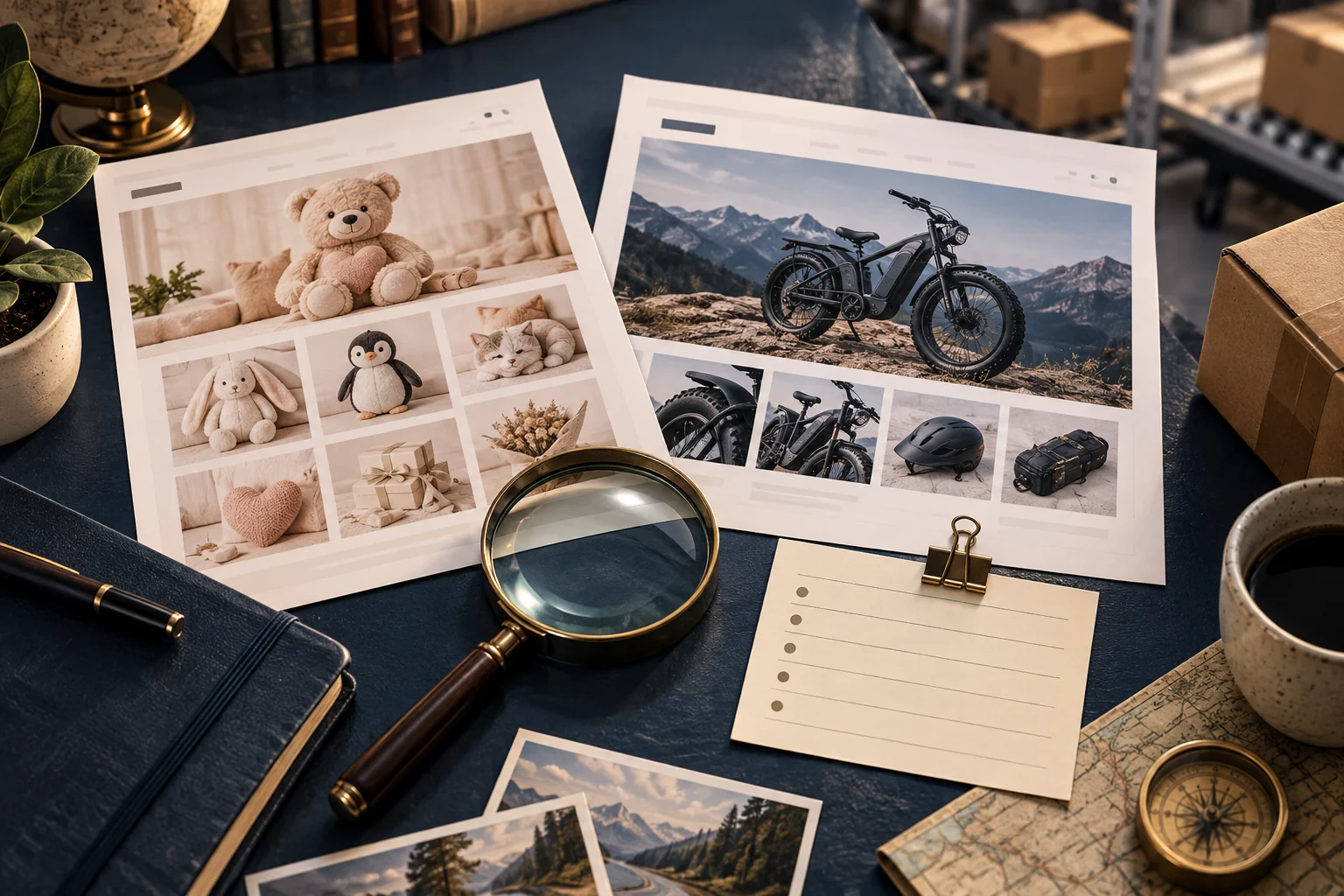
Two useful Shopify dropshipping store examples are Subtle Asian Treats and eBike Generation. One helps someone choose a boba-plush gift; the other helps a hunter compare technical e-bikes. Shopify has reported their earlier dropshipping businesses. We rechecked the public page text on October 11, 2026.
They are useful for different reasons. A gift buyer needs to recognize the idea and choose a size. A bike buyer needs to understand which model and options fit the intended use. Their pages also show why a good-looking store still needs clear, consistent product and delivery information.
01
Subtle Asian Treats: help a gift shopper choose
The current storefront opens with boba plush products and broadens into related kawaii plush toys. Product names and cards call out choices such as sizes and colors; a sold-out item is labeled. The shipping and refund links give shoppers a route to the terms.
Imagine choosing a gift for a friend who loves bubble tea. You do not need a huge technical comparison. You need to know whether the small plush will fit on a desk, how much larger the other sizes are and whether it can arrive in time.
Size choices: what the photograph cannot tell you
The Taro and Matcha Boba Plushie page makes the options concrete: Taro, Matcha or one of each, with four listed sizes—9, 14, 20 and 28 inches. Its measurement note explains that the height runs from the bottom tip to the tip of the straw. Those details help a buyer choose an actual object rather than guess from a photograph.
Three messages need one confirmed promise
The delivery wording still needs care. At the October 11 check, the product page showed 5 to 16 business days, 15 to 30 business days and a February pre-order reference. Those different messages do not establish which arrival promise the store currently honors.
The separate shipping policy says its delivery estimates start when the order ships, with 1 to 4 business days added for processing. That distinction matters to a customer trying to plan a gift. An estimate after shipment and an estimate after ordering are different promises.
For your own page, check the delivery message near the purchase button, the product description and the shipping policy together. Give them one consistent explanation based on your actual supplier arrangement, and remove expired campaign text. Do this before borrowing the layout.
Historical business model
Shopify’s merchant account describes Tze Hing Chan’s earlier bubble-tea dropshipping business and his work on edited photographs, descriptions and shipping expectations. It explains the history of the example; it does not prove that every product now listed uses the same supplier or fulfillment method.
Put the recognizable gift family first, make each size or color explicit and show the customer what will arrive. Use your own authorized pictures with a useful scale cue. If a supplier puts differently sized items under one vague title, separate the choices clearly before trying to make the whole catalog look consistent.
Start with one complete product card and page. Once the lead item answers size, included items and delivery, give related products the same information standard. That is more useful than copying the site’s colors or importing many similar products at once.
02
eBike Generation: help a buyer rule out the wrong bike
The eBike Generation storefront addresses hunters and offers routes into electric hunting bikes and electric dirt bikes. Named bike brands and explanations of e-bike classes give the customer more ways to narrow the range.
Buying an expensive bike asks more of the page than choosing a plush gift. A shopper may need to compare terrain, motor, battery and carrying needs before deciding whether the price makes sense. A row of similar photographs would leave much of that work to the buyer.
The BAKCOU Mule SD page shows choices for color, tire size and an additional battery. Its specifications identify a 52 V, 20 Ah base battery, while the selector offers extra-battery choices. The buyer needs to distinguish the battery included with the bike from an optional extra.
That gives you a useful presentation rule: say what the base purchase contains before describing upgrades. The stock-confirmation and damage wording recorded in our September 28 review was not confirmed in this refresh. We also did not test current checkout or selected-variant availability.
The separate refunds and returns page directs buyers to the relevant brand’s conditions. That is another useful question to ask on your own technical product page: does the customer know which return or warranty terms apply to this particular item?
A dated founder interview
In Shopify’s September 6, 2022 interview, founder John Murphy discusses building a dropshipping business around e-bikes for hunters. The interview explains why the audience and range fit together. It does not certify the sourcing arrangement of every bike sold today.
What this store example can teach you
For a technical range, borrow the order of the questions. First help the shopper identify the intended use. Then show the attributes that rule out the wrong product, the available choices and the delivery and support terms that apply.
Suppose two accessories look alike but fit different bike models. The product cards need the fit distinction, and the product page needs a clear compatibility answer. If the supplier has not confirmed that answer, a better category name will not make the accessory suitable.
Check product specifications against the manufacturer, and keep them separate from your own shipping and support commitments. A manufacturer describes the item; you tell the buyer how the sale, dispatch and problem resolution will work through your store.
There are limits to what a category can answer. A hunting label or an e-bike class explanation cannot establish whether a particular bike is suitable for every trail or lawful in a buyer’s location.
A brand name alone does not verify a seller’s warranty or arrival promise. Provide the facts you can substantiate and direct location-specific use questions to the applicable rules and manufacturer guidance.
The useful feature of this example is the set of buying questions a reader can inspect. It gives you a way to organize a complex range without relying on an unverified revenue claim.
03
What these examples show—and what they leave out
Both examples have a Shopify account of the earlier business and public pages you can examine separately. They show two different shopping tasks. They are not a representative sample or a benchmark for how every dropshipping store should perform.
On a phone, swipe across the table to compare the columns.
| Store | Evidence of the earlier model | Useful current page observations | Questions the public page cannot settle |
|---|---|---|---|
| Subtle Asian Treats | Shopify’s named merchant story describes the earlier dropshipping operation. | A recognizable gift range, explicit product choices and delivery wording that still needs reconciliation. | Which arrival message applies; how every current item is sourced; sales, margins and conversion today. |
| eBike Generation | Shopify’s dated founder interview describes the niche dropshipping business. | Hunting-oriented navigation, named brands and a technical product with configuration and policy information. | The order route of each current bike and the business’s financial results today. |
A storefront shows the part of the business a customer can see. The pages show the offer, choices and stated terms. They do not show private supplier agreements, inventory ownership or the costs left after an order.

Keep three kinds of notes when studying another store: what a dated source reports, what its page currently says and what remains unanswered. That lets you borrow a useful idea without turning an observation into a claim you cannot support.
The contrast also helps you choose how much detail your own shop needs. A gift shopper may need a size comparison. A shopper choosing between similar replacement parts may need model compatibility, dimensions and included components. Build around the question that could cause a wrong order, rather than the amount of navigation another store happens to have.
04
Turn one idea into a better page of your own
Choose one product from your catalog and walk through its pages on a phone. Ask three questions:
- Is it obvious who this is for? The opening should connect a recognizable product or product family with the customer’s need. A random grid of imported items gives the shopper more work.
- Can I choose the right version? Look for the size, color, fit, brand or intended use that separates the choices. A customer should not need to contact support for a basic fact you already know.
- Do I understand the order? Find delivery, returns and contact information. Check that each delivery statement agrees with the supplier arrangement you actually use.
Write down the first unanswered question. Then choose one edit that answers it: a collection label, a product card, a dimension note or a clearer policy link. That is the useful output of studying an example.
For instance, if you sell three versions of a tool, show the fit difference on the cards before borrowing a plush shop’s playful presentation. “Fits Model A” and “Fits Model B” may help more than another lifestyle image. Verify those labels with the manufacturer or supplier before publishing them.
A concrete page edit and a buyer check
Here is a fictional replacement-part edit inspired by the technical buying questions. First obtain manufacturer or supplier confirmation of the exact fit and included parts. The labels below are examples, not specifications of either featured store.
Before: fit unclear
Before: “Universal lamp clip.” The customer cannot tell which lamp it fits or whether the fixing screw comes with it.
After: fit and included part stated
After verified fit: “Replacement clip for Model A — fixing screw included. Does not fit Model B.” Show the exact item in an authorized picture and carry that fit distinction into the product card and variant name.
Check the edit on your phone: collection card → product page → selected variant → cart. Write down the expected SKU, CLIP-A, and compare it at each step.
If the card says Model A but the cart holds CLIP-B, fix the selection or mapping before selling.
Then check arrival wording and the applicable return link separately; a correct part label does not answer those questions.
If you sell one gift item, you probably do not need a bike store’s deeper category structure. Show its scale, available sizes, what is included and an arrival explanation the customer can understand. Keep the page small enough that those answers are easy to find.
These are proposed changes to test with your own products, not promises of higher conversion. For the full setup behind the pages, use the Shopify dropshipping guide.
If a China-sourced product is missing the dimensions, included parts or variant details needed for that edit, AIDrop’s product-sourcing service can help compare suppliers and coordinate sample and quality checks.
Send the product link, variants, destination market and the unanswered buyer question through contact.
The aim is to obtain usable product information for your own page; the sourcing work does not establish another store’s private arrangements or promise your sales results.
05
Check the business model before adding another example
A polished Shopify page does not tell you who owns the stock or prepares the parcel. Long delivery times and the presence of an app are clues to investigate, not proof of dropshipping.
For a third example, start with a named operator interview, direct merchant disclosure or documented case. Record the date and the model it describes. Then open the current store and record what the customer can see: product range, choices, policies and contact route.
A business can change suppliers, start holding stock, add print on demand or change ownership. It may also use more than one arrangement. A case about an earlier dropshipping business can remain useful history while no longer describing every current item.
If the current order route matters to a supplier or partnership decision, ask that business for current evidence of how it accepts, buys and fulfills orders. A page alone cannot answer that private operating question.
When you cannot establish the model, keep the store as a general design reference. You can still learn from a clear size chart or useful collection label without adding it to a list of verified current dropshipping cases.
06
Common questions about store examples
Can I tell whether a Shopify store currently dropships by looking at its site?
Usually not with confidence. Its public pages show products and stated policies. Inventory ownership and order routing happen behind those pages. Look for a dated merchant disclosure or documented case, and investigate current arrangements separately when they matter.
Should I copy a successful store’s design?
Borrow a useful question to answer, such as which size fits or when the order should arrive. Build the answer around your own products and use imagery you have permission to use. A similar theme, badge or color palette does not establish the same result for a different store.
How do I verify another example?
Find the named source and date for the business model, then examine the current storefront separately. Record the visible choices and terms, and leave current profits or all-product fulfillment claims unanswered unless you have evidence for them. An uncertain model is a reason to describe the site as a design reference, rather than claim it is a verified current dropshipper.
Shopify Dropshipping: Build a Store That Can Take and Deliver Orders
Build a Shopify dropshipping store, connect suppliers, configure payments and shipping, and test checkout, order handoff and

How to Dropship on Shopify: A Practical End-to-End Workflow
Set up Shopify dropshipping from supplier selection to checkout, shipping, test orders and launch. Verify the complete
Shopify Dropshipping Apps: Choose the Automation You Need
Compare DSers, AutoDS, Syncee, CJ and Zendrop by imports, price updates, ordering and tracking. Check plan limits
