
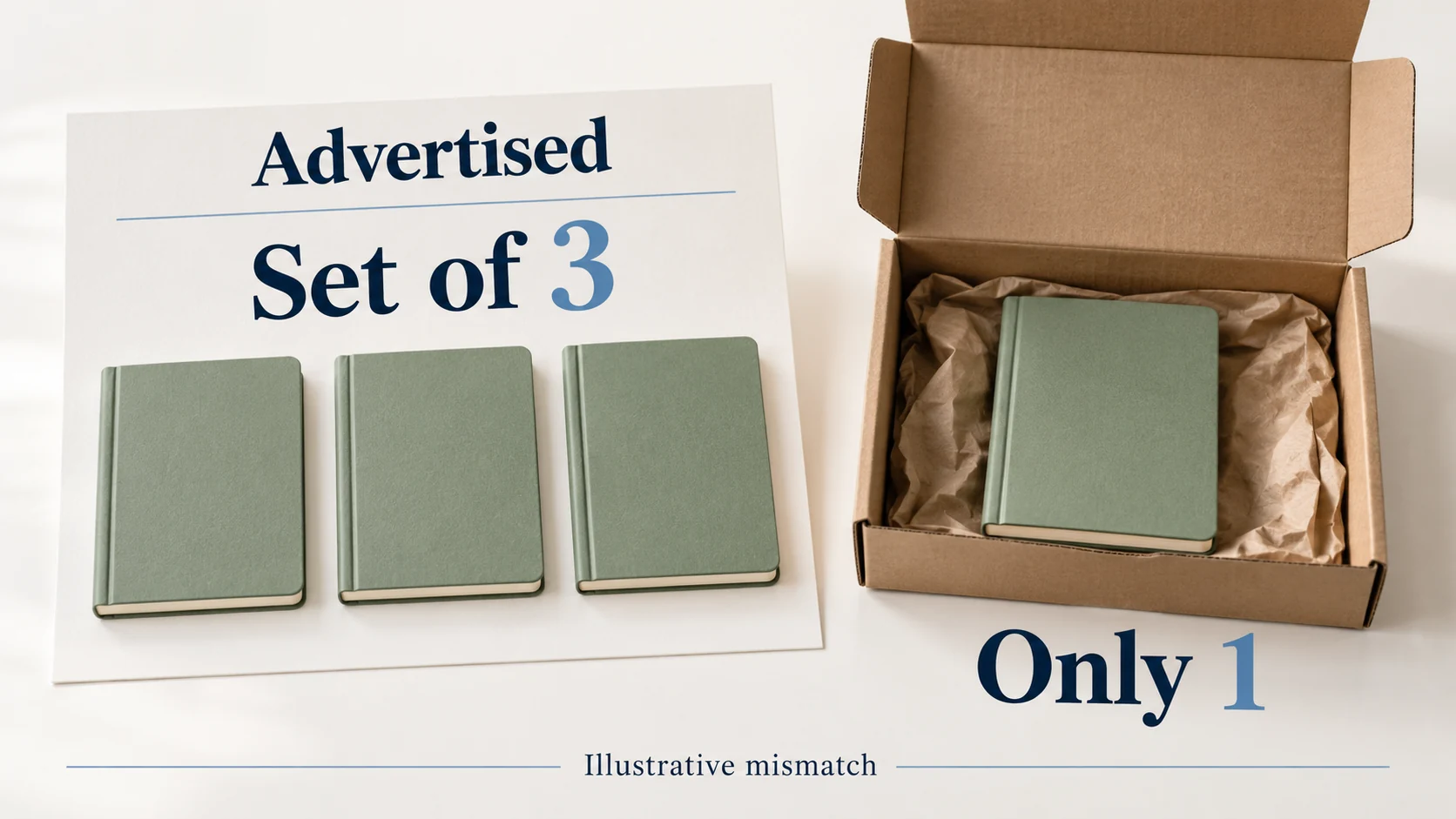
Dropshipping can be ethical when a store describes the product honestly, makes promises its supply arrangement can support, and takes responsibility when an order goes wrong. Having a supplier send the parcel does not make the sale unfair by itself. Misleading the buyer about the product, delivery or remedy does.
You might find the same item at a lower supplier price and wonder what your store is adding. Or you might be unsure whether to tell buyers that it ships from another business. Both concerns deserve an answer before you write the offer. Start with the product, service and terms the buyer will actually receive.
01
A markup is not the whole ethical question
A retailer can contribute useful work without manufacturing the goods. It might select products for a particular need, explain them accurately, arrange delivery and provide a convenient remedy. Those services have to exist in practice; a polished logo does not supply them.
Consider a hypothetical item available from one source for $12 and offered by a store for $30. The price gap alone does not tell you whether the buyer is receiving useful service or a misleading offer. Nor is the $18 automatically the store’s profit: delivery, payment processing, marketing and customer problems may still have to be paid for.
But explaining the seller’s costs does not answer the buyer’s concern. Your advertising bill is not a benefit the customer receives. If you charge more because the item is described as handmade leather, locally stocked or backed by easy returns, those claims need to be true.
Compare the complete offer
A fairer comparison asks what the $30 offer actually includes. Is it the same quantity and specification? What is the total delivered price? Is there a usable return arrangement? Can the customer find and understand those details before paying?
There is no universal markup percentage that turns all those answers into ethical conduct. A cheap product sold with a false safety claim can be a bad offer. A more expensive product with clear, supported terms can be a choice a buyer willingly makes.
02
Look at the promise through the customer's eyes
You may know things the buyer cannot see: where the goods are held, whether the supplier has confirmed stock, what the material description means and where an unwanted item would have to go. The buyer has your page, checkout and messages. That gap in information creates a responsibility to make the important parts understandable.
Compare the claim with the support behind it:
| What the buyer reads | What your business needs to know |
|---|---|
| Ships within two business days | Whether the selected item and fulfillment process can meet that dispatch promise |
| Ships from a local warehouse | The actual dispatch location for this product and destination, not just a supplier’s office address |
| Made from a named material | The exact item’s supported composition, not the appearance of a supplier photograph |
| Easy or free returns | A workable destination, clear conditions, who pays applicable costs and a process that honors the promise |
Business location and product origin are different facts
Keep business location, dispatch location and manufacturing origin separate. A business can be based in one country while shipping goods made or held in another. Trouble starts when its presentation creates a materially false impression.
The UK’s Advertising Standards Authority warning identifies misleading local-business impressions, false material claims and unusable return promises in actual dropshipping advertising. That is a UK regulator’s account of specific problems, not evidence that every overseas seller behaves that way.
Australia’s ACCC guidance similarly highlights clear stock, origin and likely-delivery information for dropshipping businesses. Its legal context is Australian; the useful reading question is broader: would your customer understand the offer differently if they knew what you already know?
If the answer is yes, repair the page before taking more orders. Hiding a crucial delivery condition in a distant policy page does not make an optimistic product-page headline helpful.
03
When the supplier cannot keep your promise
Outsourcing dispatch changes who handles the parcel. It does not make your customer’s problem disappear. The customer chose your offer and paid your store; sending them away to negotiate with a supplier leaves the original sale unresolved.
Follow one delayed order
Here is a fictional case, not an AIDrop customer result:
| Point in the order | What is known |
|---|---|
| At purchase | The buyer pays $39 in total for a gift item; the store promises dispatch within two business days |
| On Day 2 | The supplier cannot dispatch it; a new shipment date has not been confirmed |
| The buyer’s decision | Whether to accept an honestly explained delay or cancel the unshipped order |
Continuing to show “processing” hides the change. Inventing a new dispatch date replaces one unsupported promise with another. A more useful response says what failed, what remains unknown and what the buyer can do.
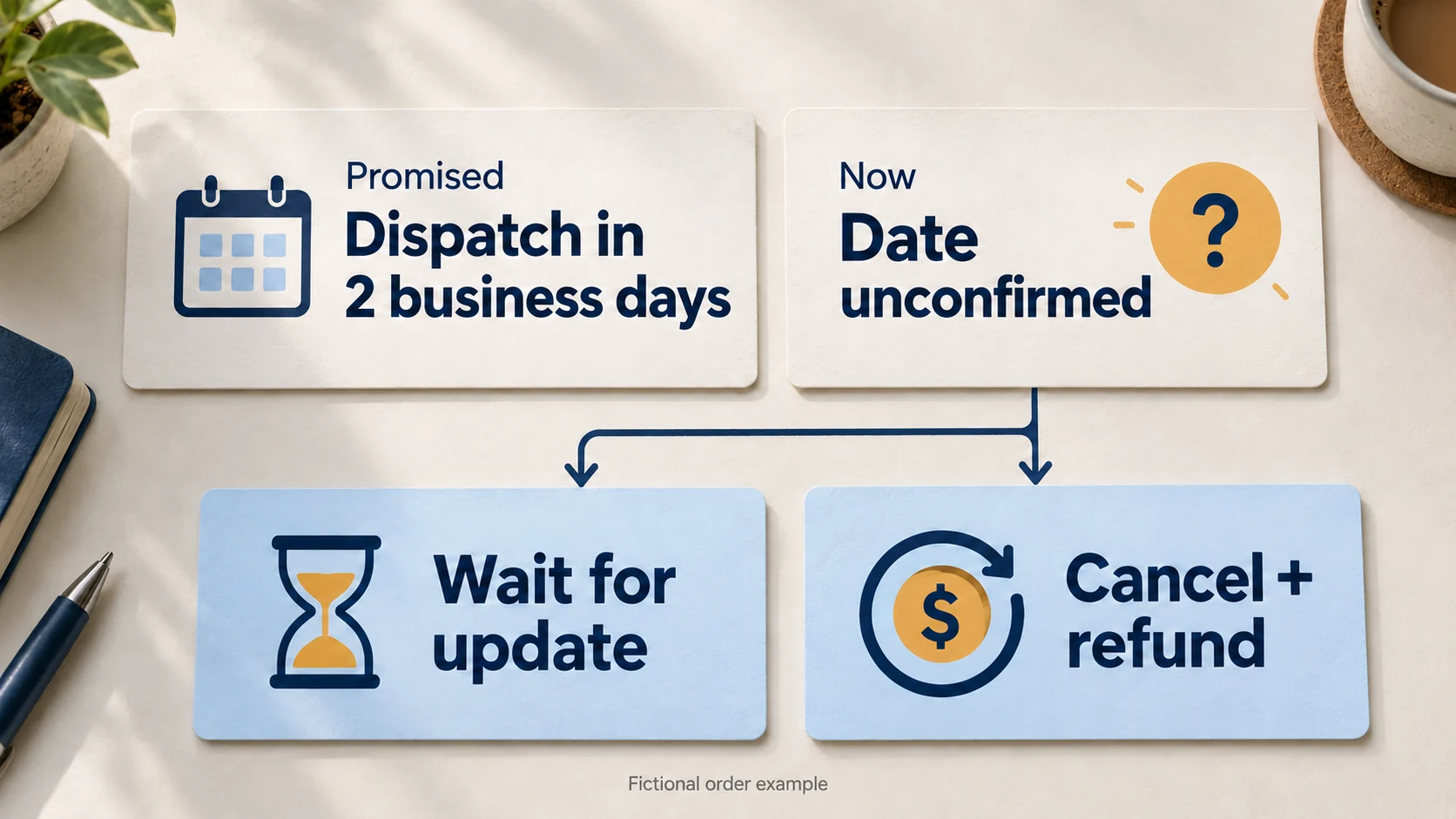
For example, a teaching message for this case could read:
We cannot dispatch your gift order within the two business days we promised. The item is unavailable from our supplier, and a new dispatch date has not been confirmed. You can choose to wait for an update or cancel the unshipped order for a full refund. If you choose to wait, you can still request cancellation before we ship. Please reply with your choice; if you cancel, we will confirm when your refund has been processed.
The point is to restore a meaningful choice, not to make the customer chase basic information. This example explains communication; it is not a complete legal delay-notice form for every situation.
For covered US orders, the FTC’s merchandise-order guidance requires a reasonable basis for shipment promises and sets rules for delay notices, consent and refunds. Dispatch is not the same as arrival. Apply the actual requirements for your sale rather than treating an estimated transit period as permission to miss a promised dispatch date.
Keep the buyer’s refund separate from your supplier claim
If the fictional buyer cancels the whole unshipped $39 order and a full refund is due, the customer outcome is a $39 refund. Your attempt to recover money from the supplier is a separate matter. The buyer did not agree to become the lender for a dispute between the two businesses.
Our dropshipping returns guide explains how customer refunds, physical returns and supplier credits can move at different speeds. Before selling, know who receives a return and how you will fund a remedy that is due. “The supplier has not replied” is an internal problem to solve, not a useful customer policy.
The same reasoning applies to a wrong or damaged product: identify what the buyer received, explain the available remedy and follow it through. A fast, friendly message that never leads to action does not repair the sale.
04
Product and sourcing claims need their own proof
Honest delivery information cannot make an unsafe, counterfeit or falsely described product acceptable. Product selection is part of the ethical decision too.
Shopify’s merchant guidance makes product safety and relevant documentation a merchant responsibility, with requirements depending on the markets served. A supplier’s willingness to ship does not establish that the item meets the requirements for your customer.
Use a sample to answer physical questions it can answer: what arrives, whether the supplied pieces match the description, how an ordinary closure works and whether the instructions are usable. A nice-looking sample cannot, by itself, establish chemical safety, legal compliance or factory working conditions.
Keep different kinds of support distinct:
- Product description: records and observations for the actual material, dimensions and included pieces.
- Safety or compliance claim: the applicable product requirements and documents tied to that item and market.
- Labor or environmental claim: specific support for the claimed sourcing practice or impact, rather than a green badge or a supplier’s general slogan.
If your supplier cannot support an important claim, remove it or hold the offer while you investigate. Do not replace “we don’t know” with “premium,” “eco-friendly” or “fully certified.” Broad reassurance makes the uncertainty harder for the buyer to see.
Supplier country is not a shortcut for this work. Domestic dispatch does not prove ethical labor or product quality; overseas dispatch does not prove wrongdoing. Look at the actual product, records, working relationship and claims.
If the unresolved part is a China-side product specification, packing arrangement or delivery route, send AIDrop Agent the item and the promise you want to make. We can discuss that sourcing and fulfillment work. It is not a substitute for product-specific legal or specialist assessment, and we do not turn an unverified product into a certified one by arranging shipment.
05
Show real people and real proof
Trust material should help buyers judge the business. A working contact route, accurate identity, useful product views and an honest explanation of delivery do more than an impressive story nobody can verify.
The ASA warning also calls out fake reviews, invented business histories and generated images of supposed owners. The issue is the fact being represented. A teaching illustration can explain a process; presenting it as a photograph of your warehouse, a real founder or a completed test creates a different claim.
Use images for what they actually show
Use supplier photographs only with appropriate permission and when they accurately represent the selected product. Use your own sample photographs for observations you actually made. Label conceptual or generated illustrations where they could otherwise be mistaken for real evidence.
The same distinction applies to reviews. Do not write buyer testimonials yourself, transform a hypothetical scenario into a customer success story, or suggest that buying from the store guarantees a result you have not established. An empty review section is more honest than fabricated praise.
Finally, test the ordinary path a dissatisfied buyer would use. Can they find the contact details, understand the return instructions and reach someone who can act? If the page says easy returns but the process leads nowhere, improve the process and the wording together.
06
Frequently asked questions
Is dropshipping a scam by definition?
No. A supplier shipping a store’s order is a fulfillment arrangement. False claims, taking money without a defensible supply plan and refusing a remedy are conduct to examine. Our legal guide separates that wider legal question from the ethical judgment discussed here.
Is charging much more than the supplier price always wrong?
The difference alone does not settle it. Examine the actual product, total price, service and claims the buyer accepts. Seller costs can explain a price but do not excuse misleading information or an unusable remedy. There is no ethical percentage test that replaces those questions.
Must I publish the supplier’s purchase price?
The ethical test here is whether the buyer can make an informed choice about your actual offer. That does not require publishing your whole purchasing spreadsheet. It does require avoiding false claims used to justify the price. Any specific legal, platform or disclosure requirements still need to be checked for the arrangement you use.
Can a store be ethical if delivery is relatively slow?
A buyer may accept a longer, accurately explained delivery expectation. Do not invent a faster promise to win the sale, conceal a material condition or ignore a delay after payment. The real route, customer need and applicable rules determine whether the offer is workable.
What should stop me from launching?
Hold an offer if an important product claim is unsupported, the stated shipment promise has no defensible basis, or you cannot provide the remedy your customer is entitled to receive. Fix the specific gap or choose a different product or arrangement. You do not have to abandon every form of dropshipping to reject one unfair offer.
Sources and scope
Sources checked October 26, 2026: the linked FTC, ASA, ACCC and Shopify primary guidance, with each source’s jurisdiction or platform context retained. Ethical assessments are reasoned editorial judgments, not a certification. The prices, order and proposed message are teaching examples; no client outcome, factory audit or product test was performed for this article.
Is Dropshipping Legal? What Your Store Is Responsible For
Learn the US responsibilities behind dropshipping: product safety, licenses, taxes, shipping promises, intellectual property, imports and customer

Dropshipping Taxes: The Records and Questions to Prepare
Income tax, sales tax and import charges follow different rules. Use a US operating baseline to separate

Dropshipping Copyright and Trademarks: Check Products, Images and Store Claims
Check dropshipping products, images and store claims separately. Review supplier permissions, intended uses, launch decisions and infringement
