
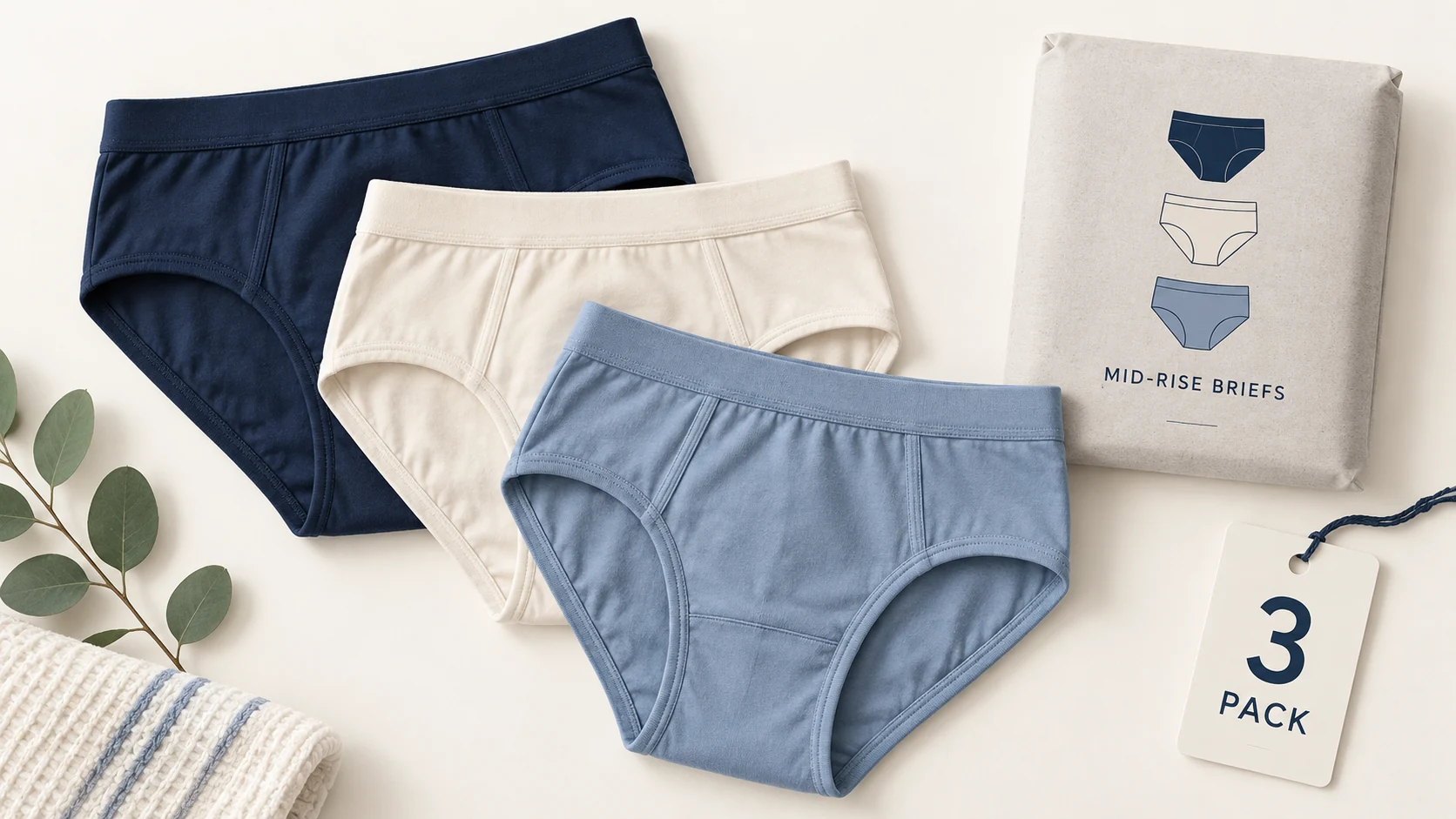
You can dropship everyday underwear from a stocked catalog or sell original printed underwear through print on demand. Doba lists panties and multipacks; Printify offers customizable underwear. Choose the cut and fabric for your buyer, check the exact size chart and pack count, then agree on the supplier’s defect and return process before launching.
The difficult part is describing a small garment precisely. A buyer wants to know how it covers, stretches and feels—not simply whether the supplier calls it “comfortable.” The price also needs to cover the complete pack you promise.
This guide uses supplier and official labeling sources checked on October 12, 2026. Sample checks and numerical examples are proposed merchant work, not independently tested supplier ratings. The scope is ordinary adult underwear, not medical or period-protection products.
01
Choose everyday panties or an original printed design
Start with one buying reason. An everyday multipack depends on dependable fit, fabric and value. A printed design depends on artwork as well as those basics. A privately developed garment adds decisions about materials and construction.
For a first everyday offer, specify the cut, intended coverage, size range, fabric information and number of pieces. “Three mid-rise briefs in the selected size” is a clearer product than “luxury seamless underwear.”
For a printed offer, choose a design that works on the actual garment panels. A picture shown on the front may not describe the gusset, lining or reverse. Examine the specific product template before designing.
The existing clothing dropshipping guide covers the wider apparel model. Underwear adds particular needs around fit, component descriptions, hygiene condition and the way a multipack is sold.
02
Compare the supplier's product, not just its name
The following are documented starting points, not an independent ranking of quality or delivery reliability.
| Starting point | Route to investigate | What still needs confirmation |
|---|---|---|
| Doba panties catalog | Stocked styles and multipacks | Exact SKU, stock, pack composition, order terms and destination freight |
| Printify custom underwear | Original printed designs through a selected product/provider | Cut, material, template, size chart and production route |
| Hongyi manufacturer range | Existing or customized panties | Quantity, sample terms and whether individual fulfillment is available |
| Printful underwear range | Other underwear categories, including boxers | Whether the current product category actually matches your offer |
Doba’s panties page includes several pack quantities. Printify’s underwear page covers customizable products. Compare the product you will list rather than treating the platform’s entire catalog as one interchangeable supplier.
For a more specific garment requirement, Hongyi’s women’s panties page is a manufacturer lead. A low minimum quantity or customization claim does not prove one-pack dropshipping. Ask who holds stock, handles orders and pays for unsold material.
Printful’s underwear page is another category starting point, but do not assume it offers the exact women’s cut you need because the page says underwear. Confirm a current product first.
Send competing suppliers the same specification and destination. Ask for actual item photographs, label information, allowed sales channels and written order terms. A quote for one pair cannot be compared directly with a quote for a three-pack.
For an everyday three-pack, a usable inquiry could read:
Please quote three mid-rise briefs, all in the selected size, as one customer pack. Identify the main-panel and gusset compositions separately. Confirm whether black/grey/navy is a fixed pack or whether colors may be substituted. Send the body-size chart, real pack photographs, contents label, destination freight and terms for wrong size sent, missing pieces and construction faults.
The supplier may offer three black pieces at one price and an assorted-color pack at another. Those are two offers. If assortment is variable, either explain the permitted variation before purchase or choose a fixed assortment that matches your photographs.
For a POD design, replace the fixed-color request with the product/provider, artwork version and supported size. You are then comparing a made-to-order design, not asking a stocked supplier to copy another maker’s print. Settle that route before importing hundreds of variants.
03
Make the fabric and cut understandable
Brief, bikini, boyshort and thong describe different shapes and coverage. “Seamless” describes a construction characteristic; it does not identify the fibers or promise that every edge feels the same.
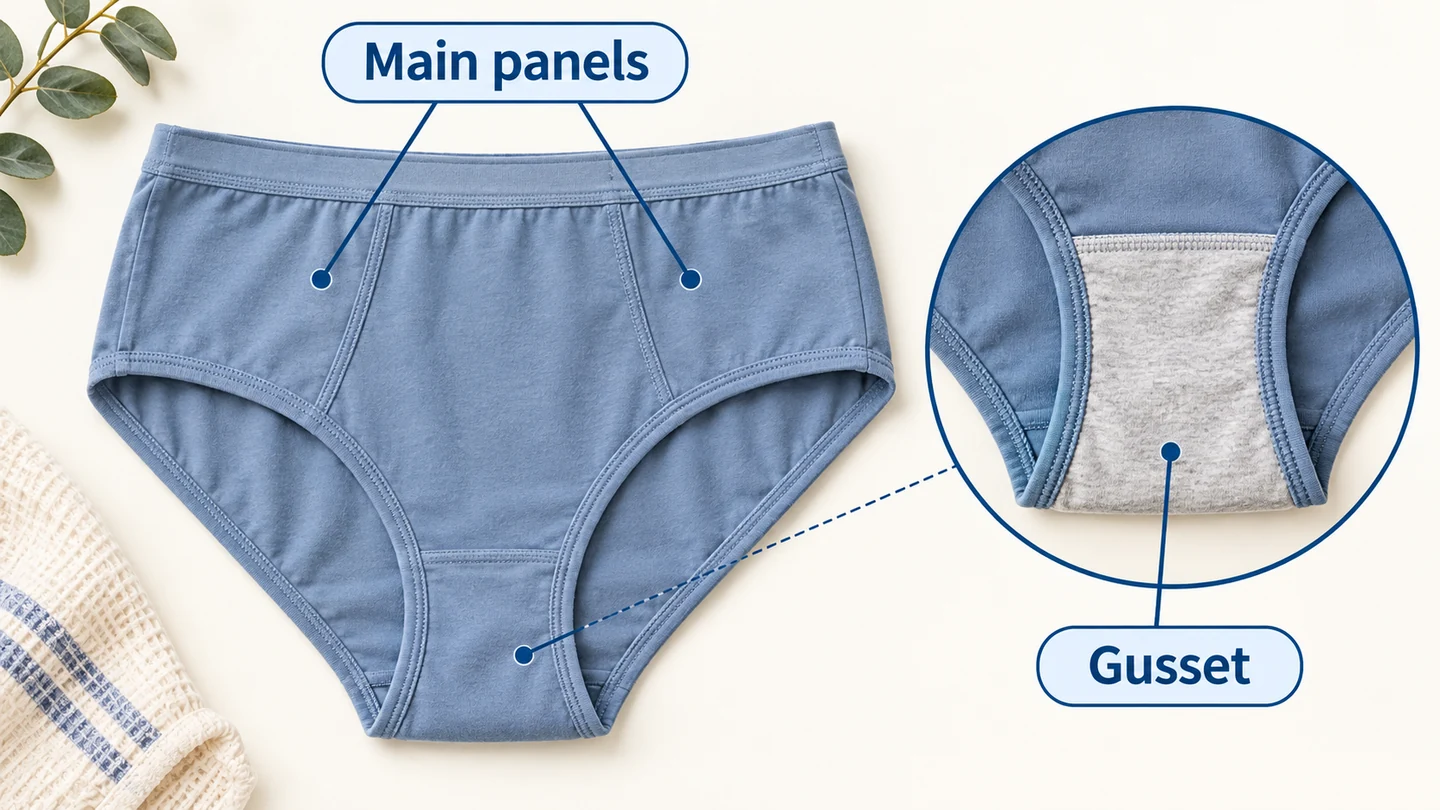
The main body fabric and the gusset can also differ. A cotton gusset does not make the whole garment cotton. Keep those components separate when obtaining information and writing the description.
| Attribute | Information to obtain | How to describe it usefully |
|---|---|---|
| Main panels | Actual fiber percentages | State the verified blend, rather than a vague fabric nickname |
| Gusset | Its own material and construction | Identify it separately when different from the main panels |
| Cut and rise | Shape and finished measurements | Explain coverage and where the waistband sits |
| Edges and seams | Elastic, bonding or stitching details | Show close photographs of the actual construction |
| Care | Instructions for the chosen garment | Give the buyer the real washing and drying guidance |
Names such as “ice silk” are insufficient for a fiber-percentage description. Ask what the material actually contains. Likewise, do not add antimicrobial, allergy-prevention or medical claims from an attractive catalog phrase.
For US apparel, the FTC’s labeling information explains the requirements for many textile products, including fiber content, country of origin and business identification, along with care labeling. Verify what applies to the actual product and keep the label consistent with the storefront.
This is a useful listing sentence when the facts are confirmed: “Mid-rise brief; the main fabric and gusset compositions are listed separately; three pieces in the selected size.” Add the real percentages and measurements instead of using invented specifications.
04
Help the buyer choose a size without guessing
A size label, a body measurement and a flat garment measurement answer different questions. A supplier’s medium is not a universal body size.
Suppose a fictional buyer measures 94 cm around the hips and a sample waistband measures 34 cm across while laid flat. Doubling the flat width gives a relaxed garment circumference, not a supported 68 cm body recommendation. Stretch, cut and how the garment is meant to fit still matter.
Ask whether the supplier’s chart uses body measurements or garment measurements. If it uses body measurements, show that clearly with the recommended measurement location. If it uses flat garment measurements, label the method and ask for usable fit guidance instead of inventing a conversion.
For your sample record, note the measurement method: laid flat, without pulling, at the specified waistband or hip position. Measure a second piece the same way where possible. Consistent methods make a difference easier to investigate.
If offering adjacent sizes, inspect more than one size when practical. A single sample cannot establish that every size has the same proportions. Do not tell all buyers to size up or down unless the actual evidence supports that advice for this garment.
Work from a chart that actually measures the buyer
Here is a fictional chart for explaining the choice. It is not a supplier’s size recommendation and must not be copied onto a live product:
| Fictional size | Recommended body waist | Recommended body hip |
|---|---|---|
| Small | 64–70 cm | 88–94 cm |
| Medium | 70–76 cm | 94–100 cm |
A buyer with a 72 cm waist and 97 cm hip falls inside both medium ranges in this example. “Medium” is supported because the two measurements fit this chart, not because medium usually means the same thing everywhere.
A buyer with a 68 cm waist and 98 cm hip crosses the two rows. The chart alone has not settled the fit. Ask which measurement governs this cut and whether the selected size’s waistband and leg openings suit that combination. If you cannot obtain usable guidance, do not invent a confident recommendation.
In the listing, explain that the chart uses body measurements and where to take them. Keep a separate flat-garment measurement record for checking received goods. Mixing the two records is how a neat-looking size table becomes unusable.
05
Inspect the sample and keep personal products separate
Order the entire offer: the chosen cut, size, colors and pack quantity. Photograph the unopened pack and labels before inspecting the pieces. That creates a record if the supplier sends the wrong quantity or variant.
Check the seams and gusset attachment, elastic recovery, sharp or loose details and consistency between pieces. If a fit sample is used, keep it separate from stock intended for customers. Do not treat a worn sample as an unopened saleable item.
Follow the actual care instructions for a wash check. Observe color transfer, changes in shape, loose seams and print appearance where relevant. Printify’s custom-underwear guidance also encourages evaluating samples; your conclusions should come from your own observations.
| Proposed check | Record to keep | Decision it informs |
|---|---|---|
| Pack contents | Count, colors and selected size | Whether the offer and supplier SKU agree |
| Construction | Whole item and close seam/gusset photographs | Whether changes or another product are needed |
| Fit information | The chart and consistently taken measurements | Whether the listing gives useful sizing help |
| Care | Before-and-after observations under the stated instructions | Whether to revise the care description or reject the sample |
One sample does not establish a long-term defect rate or a health benefit. Approve the actual configuration, retain its reference and revisit it if the supplier changes materials or construction.
Make the care comparison specific. If a fictional sample measures 34 cm across the relaxed waistband before washing and 32 cm afterward under the same method, the observed decrease is about 5.9%. That arithmetic describes this sample; it is neither an acceptable-shrinkage standard nor a prediction for every piece.
First check that you followed the stated care instructions and measured at the same location without pulling. Then ask whether the change is consistent with the product specification. If it materially changes the fit you intended to sell, resolve the material or care issue before approving the offer. Replacing “soft and durable” with another adjective would not fix it.
06
Price and label a multipack as a multipack
The number in the product picture, title, selector, SKU and supplier bill must agree. A photo of three pieces beside a one-piece supplier SKU can create both a customer complaint and a losing order.
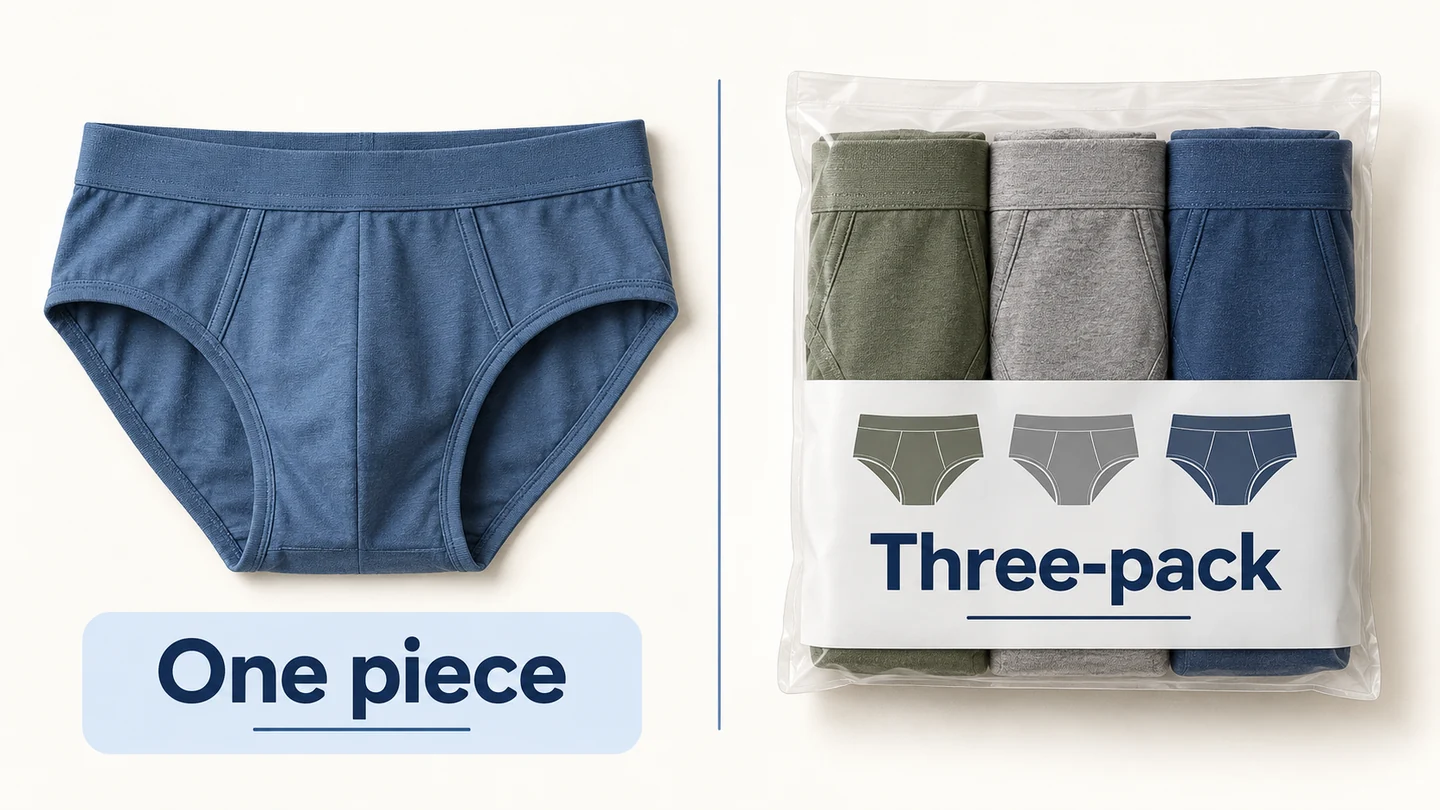
Consider a fictional three-pack sold for $24:
| Cost for the complete pack | Example amount |
|---|---|
| All three pieces | $6.00 |
| Shipping | $5.00 |
| Packing | $0.80 |
| Payment fee | $1.00 |
| Planned remedy allowance | $2.00 |
| Total before advertising, tax and overhead | $14.80 |
| Remaining | $9.20 |
After $6 in advertising, $3.20 remains. This is an illustration, not a supplier quotation, and the remedy allowance is not a measured return rate.
Now suppose the supplier’s $6 price was for one piece rather than the whole pack. Product cost becomes $18, adding $12 to the bill. The same $24 offer would leave −$8.80 after the assumed advertising cost. Confirming the unit of sale matters more than finding a slightly cheaper shipping option.
Submit the pack your customer actually ordered
Prepare one pack SKU with the exact count, colors and size. Order it once through the intended route, then compare the charged amount and received contents. If the supplier allows mixed sizes or colors, verify how each combination is submitted rather than assuming a free-text note is sufficient.
For a fixed-color medium pack, your own record might be BRIEF-3-M-BGN: three pieces, medium, black/grey/navy. It is a merchant SKU example, not a provider’s required format. Link it to the supplier’s exact pack identifier and verify the three delivered pieces, rather than matching only the word “medium.”
If the supplier fulfills three singles, obtain a supported way to submit all three items and quote their combined parcel. If it fulfills one prepacked SKU, use that pack’s actual stock and contents. One customer checkout does not prove either arrangement or eliminate the costs of assembling it.
07
Write a return policy the supplier can actually support
Separate the customer-facing remedy from supplier reimbursement. Hygiene condition, faulty construction, wrong size and missing pieces are also different cases.
For one provider example, Printful’s return policy describes reporting faults within its stated 30-day window and excludes automatic coverage for wrong size or buyer remorse. That policy belongs to Printful; it does not govern every panties supplier.
Agree on each case with the actual supplier before listing:
| Buyer situation | Question the policy must answer |
|---|---|
| Unopened return | Permitted condition, authorization, return address and freight responsibility? |
| Worn item | What remedy, if any, is supported for this condition? |
| Construction fault | What photographs and order details establish the problem? |
| Supplier sends the wrong size | Who corrects the shipment and funds it? |
| Correct selected size does not fit | What can your store offer, and what must it pay for? |
| Two pieces arrive instead of three | Compare packaging and contents photographs with the pack record; ask for the missing-piece remedy. |
Keep the evidence and approved remedy tied to the particular order rather than treating every complaint as a size exchange.
Make relevant hygiene and return conditions visible before purchase and consistent with applicable consumer rules. Do not publish “all underwear is nonreturnable” as a universal legal rule. The dropshipping returns guide covers the wider separation between customer service and supplier recovery.
08
Underwear dropshipping questions
Can I put my brand on an existing garment?
Ask whether the supplier supports labels or packaging for the exact item and quantity. Branding does not automatically change the garment’s fabric or fit, and materials may require an upfront purchase.
Can I use the supplier’s product pictures?
Obtain permission and confirm they show the current SKU and pack. Real sample pictures are useful for details the generic catalog misses, especially coverage, labels and pack contents.
Is the cheapest pair the best starting point?
Compare the complete offer. A cheap piece with unclear sizing, expensive shipping or unsupported pack handling can cost more to sell successfully.
Can I source a specific fabric and cut from China?
You can ask AIDrop for a sourcing and sample proposal using the cut, component compositions, size chart, pack quantity and destination. Confirm production quantities and individual fulfillment separately; a custom manufacturing quote is not automatically a no-inventory dropshipping arrangement.

Clothing Dropshipping: Sizes, Variants, Samples and Returns
Verify apparel sizes, variants, samples, labels and returns before launch. Build a clothing dropshipping offer around accurate
Clothing Dropshipping Suppliers: 5 Options for Different Stores
Compare Trendsi, Printful, Printify, Apliiq and BrandsGateway by clothing model, fit information, stock, shipping and return costs.
Shoe Dropshipping: Sizing Evidence, Variants and Return Exposure
A shoe listing needs model-specific fit evidence, exact size-color stock and a workable exchange route. Compare one
