
You can get dropshipping sales without buying ads through useful product demonstrations, search-focused pages, eligible free product listings, community participation and follow-up with interested customers. Start with one channel that introduces people to your products and one way to bring interested visitors back. Trying to maintain every platform at once usually makes a small store’s content harder to sustain.
The tradeoff is time. Samples, photography, editing, store software and customer support still cost money or labor. A campaign with no media spend can be expensive if it takes many hours to attract a few unsuitable visitors.
The practical question is where your particular customer already looks for help. Someone trying to fit a pouch into a travel bag may search for dimensions. Someone who has never considered a cable organizer may need to see it used before wanting one. Those are different content jobs.
01
Choose an organic channel you can keep supplying
Pick a channel based on the product and the work you can do consistently. A demonstrable product suits video; a product with repeated fit questions can support search content. Neither removes the need for a credible product page.
| Channel | Best starting task | Work you need to allow for | Main limitation |
|---|---|---|---|
| Short product videos | Show one useful action or answer one buying question | Samples, filming, editing, comments and page updates | Views may come from people with no buying intent |
| Search content | Answer a specific comparison, fit or use question | Research, original detail, writing and maintenance | Visibility can take time and is not guaranteed |
| Free product listings | Supply accurate product data and resolve eligibility issues | Feed setup, shipping details and ongoing data checks | Eligibility does not guarantee impressions |
| Relevant communities | Help with a real problem within the group’s rules | Reading, participation and individual replies | Promotional links may be restricted or unwelcome |
| Email to interested people | Follow up on an explicit interest with useful information | Permission handling, messages and unsubscribe management | It needs an audience and applicable legal compliance |
For a new store, one discovery channel plus a modest email program is a reasonable starting scope. If you already participate in a relevant community, that relationship may be more useful than opening an unfamiliar social account from zero.
Choose a routine you can maintain before choosing a posting frequency. Three useful pieces that answer different customer questions can teach you more than repeatedly publishing the same supplier clip.
02
Make product demonstrations that answer buying questions
Use a sample of the exact variant being sold. Show its ordinary use, dimensions and contents. If the product needs assembly, show that process rather than editing directly to a finished result. Obtain permission for any footage, music or customer material you use.
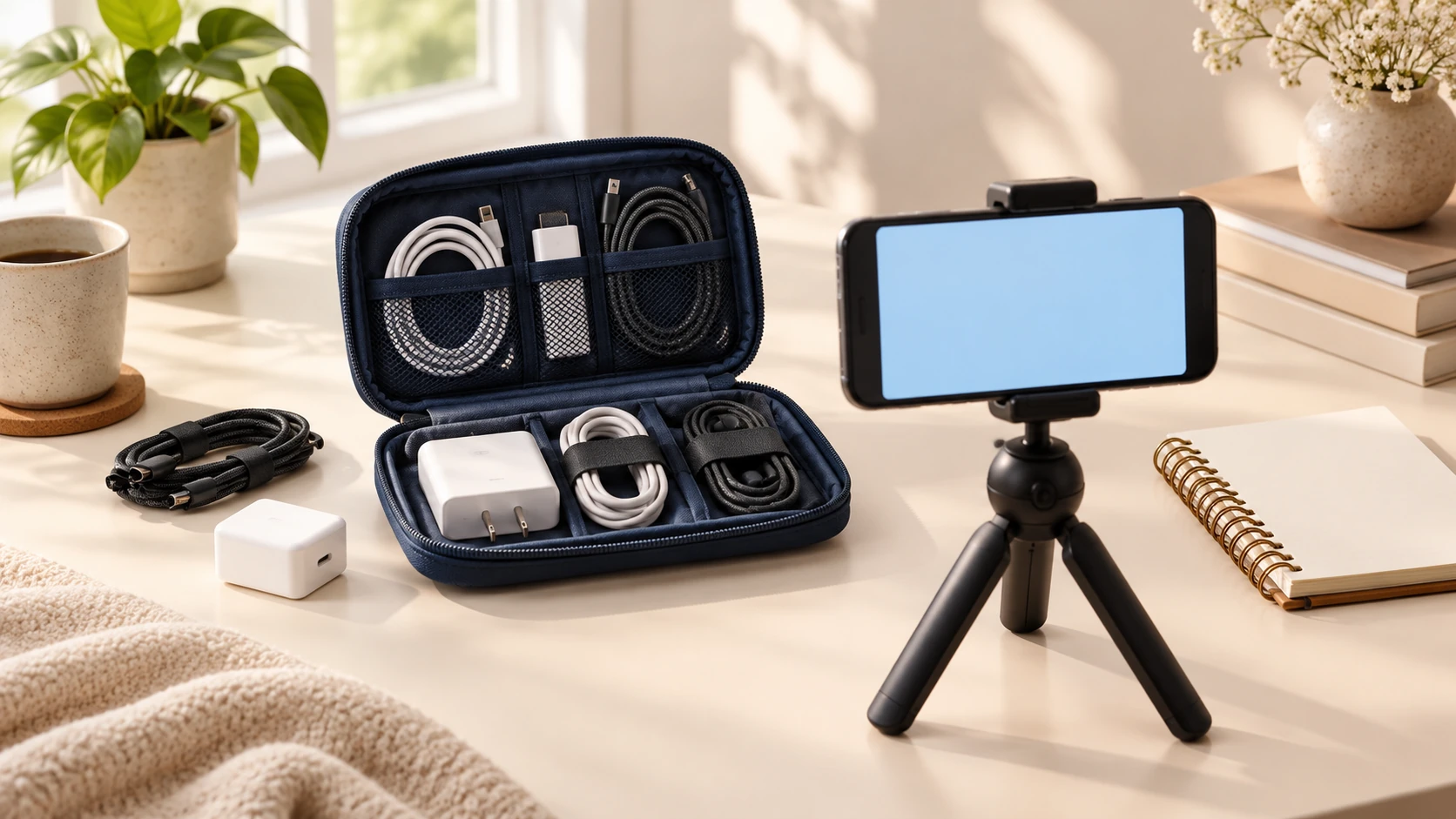
For a cable pouch, useful videos could show what fits inside, how a thick charger changes the available space and how the pouch opens in a small bag. Those are three distinct reasons someone might hesitate before buying. A slow rotation of the product against a blank wall answers fewer questions.

A simple demonstration can follow this sequence:
- Show the specific problem, such as cables tangled inside a travel bag.
- Demonstrate how the product is used, without hiding setup or limitations.
- Show the result and the actual contents or dimensions.
- Direct interested viewers to the matching product page using the link options available to that account.
Avoid turning every video into a claim about how much time or money the product saves. Show what you can substantiate. If it fits a particular charger and cable set, name or measure the set; do not imply universal compatibility.
Use comments as editorial feedback. A repeated question about size deserves a size demonstration and clearer product-page copy. A question about delivery deserves an accurate destination-specific answer, not another product montage.
Keep a record of the topic, publication date, link destination, relevant visits and orders. A video with fewer views but more useful product questions may be a better starting point for the next piece than a broadly entertaining clip. Treat that as a hypothesis to investigate, especially when order counts are small.
03
Build search pages and eligible free product listings
Search content works best when the page resolves a question the customer actually has. “Travel accessories” is broad. “Will this cable pouch fit a large laptop charger?” is specific enough to answer with measurements, photographs and a clear limitation.
Start with the product page. Include the exact contents, material information you can verify, dimensions, delivery information and return conditions. Then add a genuinely useful supporting page when the question needs more room: a packing comparison, an organizer size guide or instructions for choosing among variants.
Link the supporting explanation to the relevant product where the reader needs it. Do not send every link to the homepage or repeat a generic sales paragraph after each section. Search pages should remain useful even when the visitor is not ready to buy.
Google’s ecommerce product-data guidance describes using structured data and Merchant Center to help Google understand products. These are ways to improve the information available to Google; they are not promises of ranking or traffic. Your store platform or SEO integration should produce accurate markup without duplicate or conflicting product information.
For Google free listings, add eligible product data, complete the applicable shipping and return information, and review products needing attention in Merchant Center. Keep prices, availability, variant details and landing pages consistent. The official guidance explicitly distinguishes permission to appear from a guarantee that products will be shown.
Do this as catalog maintenance, not a one-time traffic trick. A supplier’s stock or price change can make an otherwise attractive listing inaccurate. Check the feed and store together when changing the offer.
04
Earn attention in communities and partnerships
Join a community because you can contribute to its subject. Read the rules and recent discussions before posting. If links or commercial promotion are prohibited, respect that boundary. Do not disguise a store recommendation as an independent customer’s experience.
A seller who understands embroidery storage might answer a question about organizing thread by explaining several workable methods. If the group permits relevant commercial links, the seller can identify their connection and share the specific product or guide. Repeating a link under unrelated discussions is unlikely to build a useful relationship.
Small creators and complementary businesses can also introduce your offer to relevant people. A travel organizer store might explore a packing tutorial with a creator whose audience asks detailed luggage questions. Agree on what is being supplied, whether posting is required, what usage rights you receive and how the relationship will be disclosed.
A gifted product or affiliate commission is still a marketing cost. It may avoid buying ad impressions, but it is not the same as unpaid independent attention. Include the sample, delivery, commission and any production fee in your records.
For U.S.-facing endorsements, the FTC’s guidance explains that material relationships, including relevant gifts or payments, need clear disclosure. Do not assume a platform label alone resolves every disclosure question. Other markets have their own requirements.
Partnerships are most useful when the product solves a problem the audience recognizes. A large follower count cannot tell you whether those followers can buy in your delivery area, understand the product or trust the recommendation.
05
Give interested visitors a reason to return
Some visitors need more information before buying. Offer something related to the decision: a packing checklist, a size comparison or a notification when the exact product is available. Make the signup promise clear and collect only the information you need.
A short sequence can follow that promise. First deliver the requested resource. Then answer a common buying question. Later, show a relevant product in context. Each message should have a reason to exist beyond reminding people that the store is open.
Keep order updates separate from promotional messages in your planning. A customer waiting for a delayed parcel needs an accurate update, not a cross-sell campaign. Suppress inappropriate promotions when an unresolved service problem makes them poorly timed.
Use appropriate permission and unsubscribe handling for the recipient’s jurisdiction. The FTC’s CAN-SPAM guide describes U.S. commercial-email obligations, including accurate sender information and honoring opt-outs. It is not a worldwide permission standard; other jurisdictions can impose additional consent requirements. Buying or scraping a list is a poor substitute for people who have actually expressed interest.
For existing customers, useful follow-up depends on the product. Care advice may suit a durable organizer. A complementary pouch may be relevant after a successful purchase, but there is no reason to invent a replenishment cycle for an item that does not wear out quickly.
06
A workable first month without an ad budget
The following is an illustrative workload, not a forecast of when sales will arrive. Adapt it to your products and available time. Sample delivery and store preparation may need to happen before the first week starts.
Week one: make one offer ready
Choose a product you can show accurately. Finish its page, check the mobile checkout, state the included pieces and confirm the delivery information. Prepare one destination link for the campaign. If you plan to use free listings, start the product-data setup and resolve obvious mismatches.
Write down five buying questions. Use real customer language from relevant discussions or questions you receive, without copying private material. Choose the three questions that a sample can answer most clearly.
Week two: publish and listen
Film those three demonstrations together if that saves setup time. Publish them at a pace that leaves time to read replies. Send viewers to the matching offer and answer questions accurately. Record whether people reach the page, not just whether the platform distributes the video.
Week three: improve the explanation
Use the questions and visit behavior to revise the page. Add a measurement photograph if fit is unclear. Clarify the number of pieces if viewers assume a larger set. Produce the next demonstration around the strongest unresolved question rather than copying the most-viewed clip mechanically.
Week four: decide what deserves another month
Review the work and the evidence together. Did the channel reach plausible buyers? Did the page answer their questions? Were any orders delivered as promised? Continue the parts that show useful signals and change the part that is failing.
For a six-hour weekly allowance, you might reserve two hours for making content, one for publishing and replies, one for improving product information, one for community participation and one for reviewing results. This is a scheduling example, not a required formula. If support consumes those hours, reduce output rather than ignoring customers.
07
Find the step where visitors stop
If content receives little relevant reach, work on the topic, opening demonstration and distribution. If it gets attention but few store visits, check whether the audience understands the offer and can reach the page. If visitors arrive but do not buy, examine product fit, total cost, delivery terms and checkout behavior.
Suppose a campaign produces 100 measured product-page visits and no orders. That observation alone cannot identify the cause or prove that the niche is unviable. Inspect whether visitors came from a relevant country, whether checkout works and whether the content promised the same product the page sells. Small samples can be noisy.
When orders do arrive, include their outcomes. A channel that generates purchases followed by avoidable refunds needs a different response from one that brings satisfied customers. Keep labor, samples and commissions alongside the order contribution. The profit-margin guide helps distinguish sales from money available to support the business.
Organic work becomes more useful when each piece improves your understanding of the buyer. A good demonstration can answer a support question, improve a product page and give a returning visitor confidence to buy. Use the commercial planning resources as the store grows beyond its first channel.