
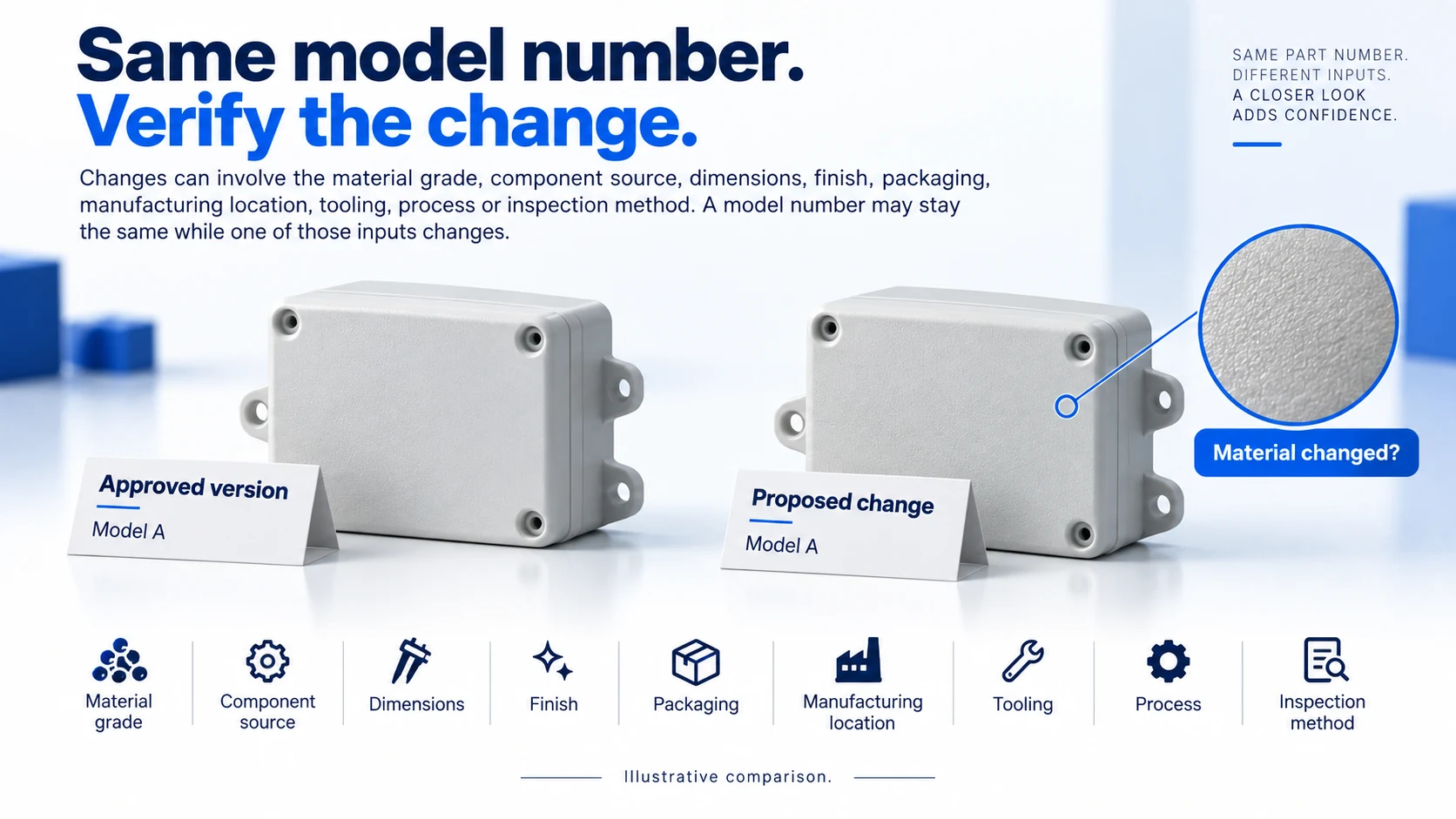
A supplier’s substitution needs a new review, even if you already approved the original sample. Identify what changed and which goods are affected, hold the unapproved stock, and compare the new version with the agreed reference. Record the checks required and the scope of any new approval before shipment.
A corrected carton typo may need a quick artwork check. A different coating or a redesigned load-bearing part raises questions about performance and potentially safety. The response should follow those consequences, while traceably unaffected stock is handled separately.
The steps below cover proposed changes and substitutions discovered after dispatch. The operating examples are illustrative, rather than accounts of a particular supplier or customer.
01
Find out exactly what changed
A reply of “same quality” gives the buyer little to assess. Ask for the old and new specification or arrangement so the difference can be reviewed.
The model number may remain unchanged even when the material, component source, dimensions, finish, packaging, factory, tooling, process or inspection method changes.
Request a written explanation of:
- What changed, including the old and proposed specification or source.
- Why the supplier wants the change and whether it is temporary or permanent.
- When the change started or is proposed to start.
- Which SKUs, variants, batches and orders are affected.
- Which checks, test reports, labels or listing claims may be affected.
- Whether any changed goods have already been made, packed or shipped.
Supporting records matter here. A similar-looking coating can have a different composition or performance. A replacement carton can alter both parcel charges and the way the product is supported, even if it appears stronger in a photo.
Industrial buyers often formalize this distinction. CommScope’s supplier manual requires advance communication for certain changes from qualification samples and controls deviations within its own supplier relationships. That is evidence of a buyer-control practice, not a law that automatically governs every dropshipping order. CommScope supplier quality manual.
Without an agreed notification requirement, the contractual position may be limited. Work from the existing agreement and evidence rather than asserting a right you never established. Your team still needs to decide which goods it is prepared to buy or ship next.
02
Contain the affected stock and orders
Send a written hold instruction for the relevant unapproved stock and fulfillment requests. Name the products and batch so both supplier and warehouse can identify the goods.
“Hold the blue variant from production batch B pending review.”
That instruction works only if batch B is identifiable. If the supplier mixed versions without traceability, a broader group of goods remains uncertain until the team can establish which is which.
Track the quantities by location:
- At the supplier: identify the stock and stop release.
- At the fulfillment location: block picking of the affected goods.
- With the carrier: identify the dispatched orders for assessment.
Assign a contact to each location so instructions and status updates have a clear destination.
In an illustrative 300-unit order, 180 units were made under the approved arrangement and 120 under the changed one. If those groups remain physically and digitally traceable, the review can focus on the 120 changed units. Once the groups are mixed beyond identification, picking any 180 units does not recover the approved stock.
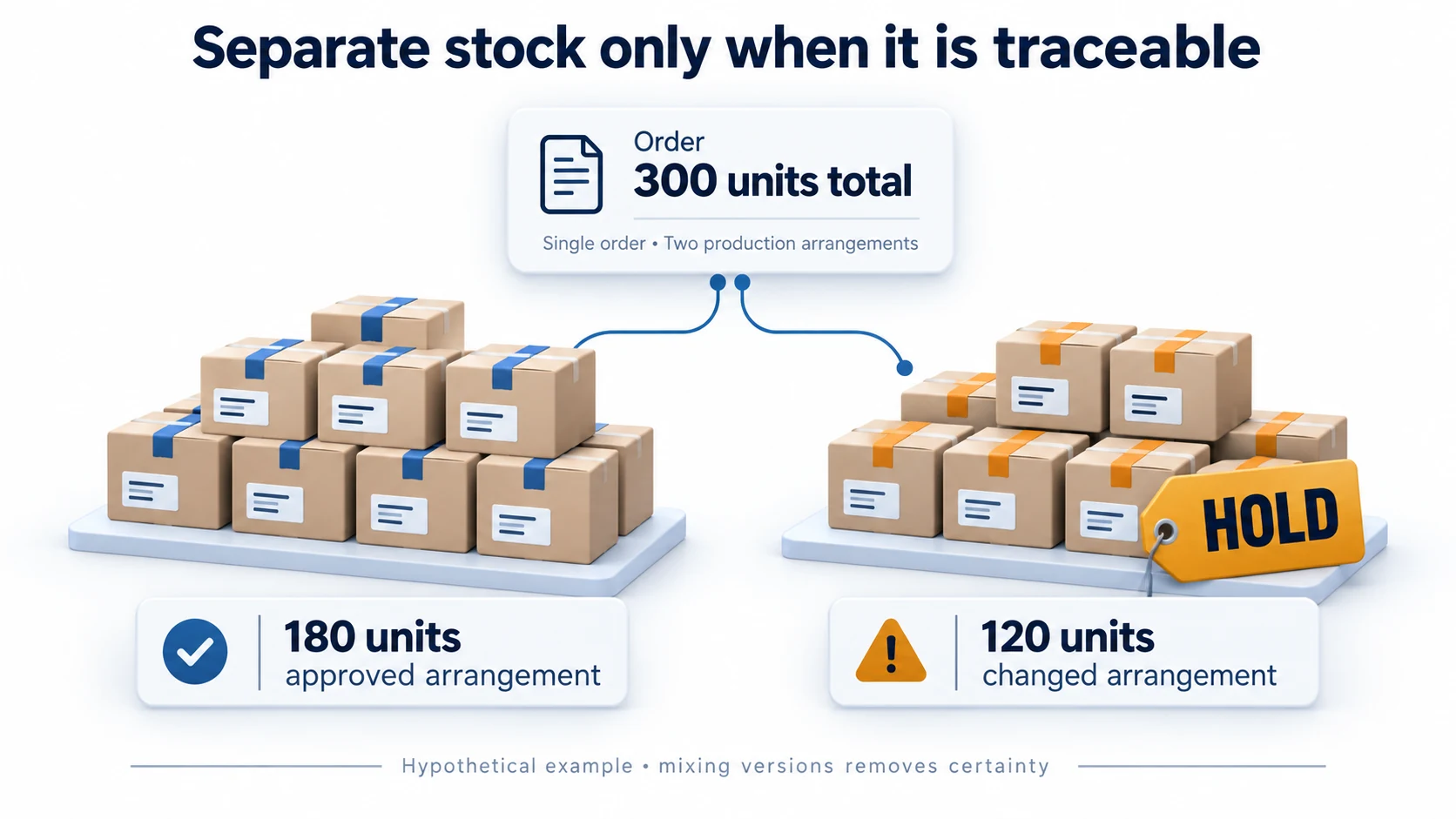
Traceability determines whether unaffected orders can continue; the percentage changed cannot answer that question.
Reflect the hold in stock availability and dispatch estimates. Otherwise, new orders accumulate against a date the warehouse can no longer meet.
03
Compare the change with the approved reference
Use the approved sample, specification revision, artwork, relevant reports and listing claims as the baseline. Follow the change through any characteristics it could affect:
Product and use: fit, function, durability, appearance, handling and intended conditions of use.
Documents and claims: reports, certificates, labels and listing details tied to the actual item and manufacturing arrangement.
Delivery and cost: packing, parcel size, accessories, lead time, transport eligibility and agreed price.
A different plastic, for example, may alter stiffness enough to affect how two parts fit. An unchanged outline in a photograph would not resolve that concern; the comparison needs to include the fit.
In the review record, distinguish a supplier assertion from a verified finding. “Supplier says equivalent” records what the supplier told you. “Dimensions within the agreed tolerance” records a measurement result, with its method and scope. Open questions should remain visible beside those findings.
If the old specification is unavailable, use the retained sample and other records to reconstruct the baseline. Note the missing information and the extra evidence needed before a decision.
04
Match the recheck to the change
The type of change determines the evidence needed. A photo may resolve artwork positioning; fit may need a physical sample and fixture; hidden material properties may require testing.
Appearance or artwork changes
Compare the revised artwork and a representative physical item where print position, finish or color matters. Confirm required text remains correct and readable. Distinguish a deliberate approved update from a production defect.
If a label contains required warnings or regulated information, involve the person responsible for those requirements. Commercial approval of a design does not establish legal adequacy.
Fit or functional changes
Recheck the dimensions and functions that may be affected using defined methods and acceptance criteria. For an item intended to fit another product, use the appropriate reference or fixture rather than a casual hand comparison.
An accepted revised sample establishes a design reference. Production consistency still needs checking against that reference, so agree the stock inspection before release.
Material, component or manufacturing changes
Determine whether existing test evidence still covers the changed product. Ask the qualified testing or compliance party to define the necessary scope where safety or regulatory requirements are involved.
For covered US children’s products, CPSC explains that material changes affecting compliance can require retesting and a new Children’s Product Certificate. Its examples distinguish some isolated component changes from changes that can affect other parts or the finished product. For those children’s products, its guidance says that changing the manufacturer requires retesting and recertification of the entire product. CPSC material-change testing.
These CPSC requirements concern the covered children’s products. For another category, the responsible testing or compliance party needs to establish whether the old report covers the revised item.
CPSC also distinguishes material-change testing from periodic testing of continued production. A scheduled periodic test is not a reason to ignore a relevant change today. CPSC periodic-testing explanation.
Process or supplier-location changes
For a changed factory or process, request evidence from production under the new conditions. Review how it compares with the approved result and whether the change affects documentation or product requirements.
Schaeffler’s supplier approval material identifies production-process, subcontractor and tooling changes among its sampling triggers. Its requirements apply in that industrial supplier context; a small merchant can use the underlying question without claiming every store must run the same approval program: what changed in production, and what evidence shows that the relevant result remains acceptable? Schaeffler product and process approval guidance.
The dropshipping quality-control guide provides the wider context for assigning sample review, production checks and shipment release to the appropriate people.
05
Give a written decision with a defined scope
The written response should leave the supplier with a clear decision: rejection, a request for more information, a limited temporary deviation or approval of a revised arrangement. Include the decision-maker’s name.
An approval should identify:
- The SKU and variant, revised specification and sample reference.
- The specific change accepted and any limitations.
- The batches or future production to which approval applies.
- Required inspection or testing before shipment.
- The date the revision takes effect and how stock is distinguished.
- Any change to price, timing, packaging or customer-facing information.
Limit a temporary deviation to a named order, quantity or other explicit end point. Say when the original requirement resumes and how the next order will be checked. This prevents a one-off concession from quietly becoming the production standard.
A rejection also needs a next step under the applicable agreement: production to the original specification, a different proposal or cancellation of the affected purchase. Set out the cost and timing implications so the warehouse knows what it is waiting for.
Approval and shipment release can be separate decisions. You may approve a revised design while still waiting for evidence from the production stock. NIST’s explanation of acceptance sampling is relevant here: inspection supports a bounded lot decision, not an assurance that every future unit will be identical.
06
Recover when changed goods have already shipped
Use batch, picking and shipment records to identify the orders that received the changed version. Keep customer communication specific to what is known. An unverified change does not establish that every item is defective, but a credible safety concern needs prompt attention while the scope is investigated.
A cosmetic difference needs comparison with the description and promise made at sale. A fit or function problem needs precise details for support: the affected characteristic, affected orders and approved remedy.
For a potential safety or regulatory issue, escalate promptly to the appropriate qualified people and applicable reporting or corrective-action process. A normal replacement campaign is not automatically an adequate response to every unsafe-product situation.
Record customer remedies separately from the claim against the supplier. The supplier may dispute responsibility or offer only credit while the store still owes the customer a remedy. Retain the original approval, changed-product evidence and communications for the commercial claim.
Where records are incomplete, list the order groups still uncertain and the evidence needed to narrow them. A cutoff date is useful only when it matches actual production or dispatch records.
07
Prevent the next silent substitution
Add product-specific examples to the change-notification clause in the supplier arrangement. It should name the contact, the information needed to compare versions and the written decision required before changed goods ship.
Check that the supplier can maintain the promised records. If it cannot identify batches today, agree usable labels or revision identifiers and verify them in a trial order; a contractual demand for traceability alone will not create it.
Retain the approved reference and revision history in a place the buyer, inspector and fulfillment contact can access. Remove obsolete instructions from active use without destroying the historical record of what was approved for earlier orders.
On repeat orders, confirm whether materials, sources, processes and packing have changed, then compare the answer with inspection findings and customer feedback.
08
Frequently asked questions
Should I stop every order when a supplier proposes a change?
Hold the relevant unapproved scope and establish which stock is affected. Demonstrably unaffected stock may be handled separately. If versions are mixed without traceability, investigate the broader uncertain stock before release.
Is a new sample enough to approve the changed batch?
It may support design or appearance approval, but the production lot still needs the agreed verification. Hidden material properties and compliance questions may require different evidence.
Can I accept a cheaper substitute?
Only after confirming that it meets the relevant product requirements, customer promise and applicable rules. Update the specification and commercial terms explicitly; a lower price does not resolve an unsupported performance claim.
What if the supplier changed the product without telling me?
Contain the affected stock, preserve the evidence, determine what has shipped and assess the consequences. Resolve customer obligations and the supplier claim separately, then decide whether the supplier can support a reliable notification and verification process.