
Etsy generally prohibits selling ready-made goods that another business ships straight to your customer. Its limited dropshipping exception covers qualifying craft and party supplies. A separate route allows a production partner to make and ship your original designs or items personalized by the buyer.
That distinction comes before supplier selection. A company that can deliver a product quickly does not necessarily supply something you can sell on Etsy. Start with the item, your contribution to it and the listing category. This guide reflects the official policies checked on September 18, 2026.
01
Choose an eligible product before choosing a supplier
Etsy’s dropshipping and reselling guidance separates ordinary resale from permitted creative activity. Buying an unchanged finished accessory from a wholesaler and forwarding orders is not made acceptable by adding a thank-you card. Nor does the existence of similar listings prove that Etsy permits the arrangement.
Use the product itself to make the first decision:
| Proposed item | What you need to establish | Practical decision |
|---|---|---|
| Unchanged finished pouch from a catalog | No original design or buyer personalization | Do not build an Etsy dropshipping offer around it |
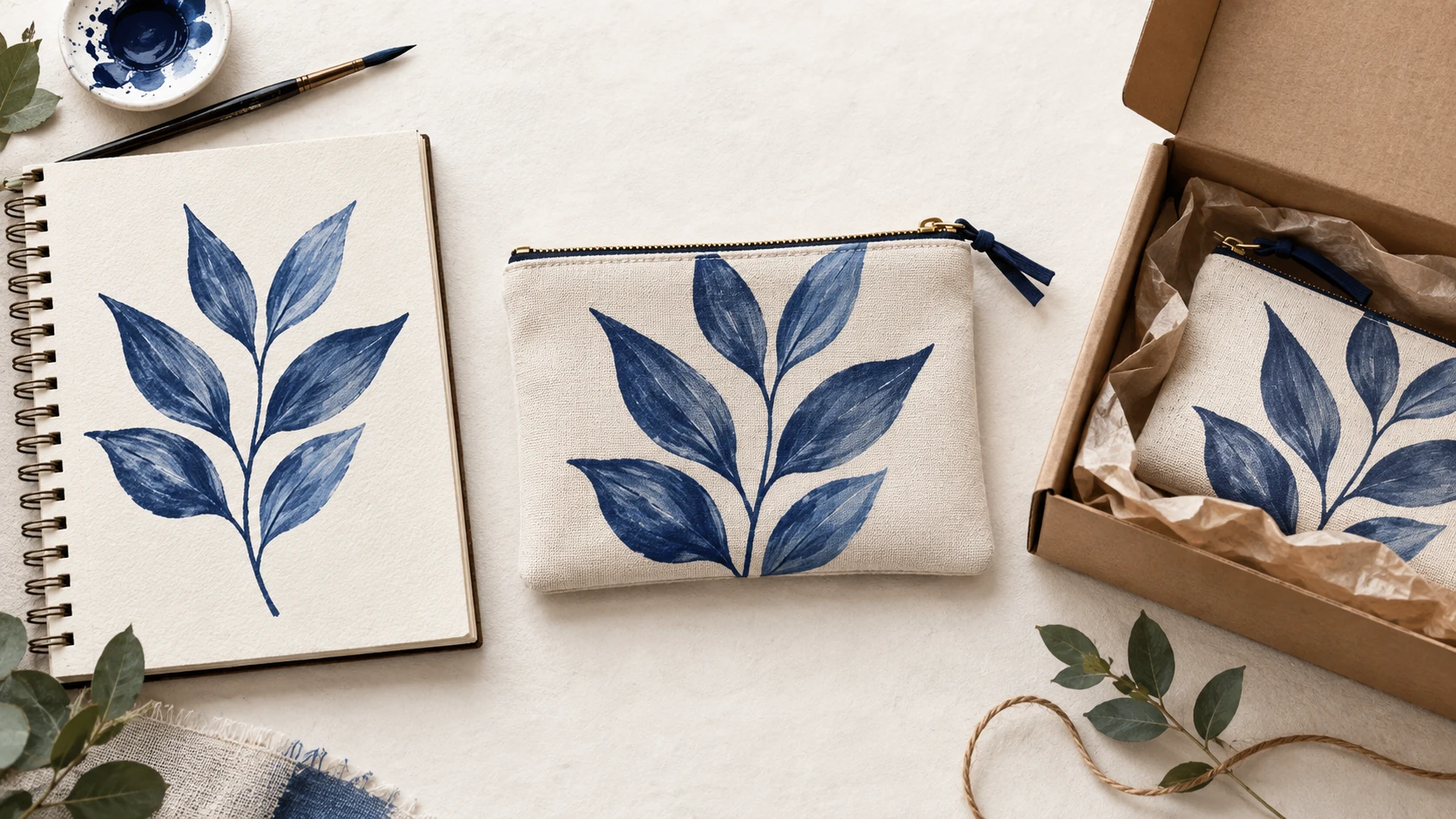
| Pouch printed with your original illustration | You created the design; a suitable partner produces it | Review production-partner disclosure and the finished listing |
| Pouch made with the buyer’s supplied name or image | The actual product is personalized to the buyer’s input | Confirm the personalization process and partner requirements |
| Beads intended for jewelry making | The product qualifies as a craft supply | Check the relevant supply rules before sourcing and listing |
These are illustrative decisions, not Etsy approval of particular products. A seller-designed print still needs permission for any third-party material it contains. A buyer asking for a famous character does not establish that you have a license to reproduce it.
Choose the permitted product first. A shipping app cannot change an ineligible item into an eligible one.
The distinction between dropshipping and resale also matters. Etsy permits certain vintage resale, but that does not make vintage a general dropshipping exception. A newly manufactured item described as “vintage style” is not a vintage item merely because it looks old.
Craft supplies have a specific purpose
Under Etsy’s Creativity Standards, craft supplies primarily enable someone to make a new item by hand. Ready-to-use blank clothing and drinkware do not automatically qualify as craft blanks. Party supplies likewise have a defined decorative purpose; a generic everyday product does not qualify merely because someone could use it at a party.
For a proposed kit, write down what the buyer will make and what each component contributes. That exercise helps you describe the product honestly and reveals missing materials. It is an operating check, not a substitute for Etsy’s category rules. Read the current examples for the exact item rather than relying on a supplier’s “Etsy suitable” label.
02
Where a production partner fits
A production partner helps turn your design or the buyer’s customization into the physical item. It is not simply a name for any supplier who sends parcels. Etsy’s production-partner guidance requires disclosure on applicable listings and accurate shipping origins. Its examples distinguish genuine production assistance from ready-made wholesale and white-label sourcing.
For an original illustrated pouch, retain the artwork file and identify who prints, sews and ships it. For a personalized pouch, determine how the buyer’s spelling reaches the production file. Decide who resolves an incomplete name, an unsupported character or a request that exceeds the printable area before production begins.
A useful partner discussion starts with one finished product rather than a large catalog. Ask for the printable dimensions, base material, color options, production location and the exact process used to apply the design. Request a sample made through the process you expect to use for customer orders. A generic promotional sample may not reveal whether your thin lines or small lettering reproduce well.
Compare the sample with the listing you intend to publish. Check the physical dimensions, closure, material description and image placement. Record the version you approved so a later change in fabric or printing does not quietly change the customer offer.
Supplies and vintage items do not use the same production-partner disclosure mechanism. Do not add a wholesaler as a production partner simply to make those listings appear more legitimate. Represent each item through the category and information that actually apply.
03
Build a listing you can actually fulfill
The listing should describe the object the buyer will receive, including the options the supplier can reliably produce. A long variant menu creates little value if several combinations are unavailable or the supplier interprets their names differently.
For each sellable variation, keep a mapping between the Etsy option, the supplier’s product code and any design file. “Blue, small” is not enough when the supplier offers navy, royal blue and two size conventions. Include a reference image or explicit dimensions in the supplier instructions.
Photographs deserve the same care. Follow Etsy’s current listing image requirements, including the rules for personalized products and permitted production-partner images. A visual mockup can misrepresent color, print size or texture even when its use is allowed. Inspect it against the physical item rather than treating attractive software output as proof.
Separate production time from transport time. A partner’s “three-day delivery” claim might start after a personalized item leaves the workshop. Ask when production starts, what information can delay it and which days the workshop operates. Set the listing’s processing and shipping details from the complete arrangement.
A personalization order needs a clear point at which the approved details are released to production.
For example, if a buyer changes a name after the supplier has printed the fabric, the next step may involve a paid remake. Explain the available change process accurately, while preserving any consumer rights that apply. Keep the customer’s final instruction and the supplier’s acknowledgment together so the dispute is not reduced to two conflicting screenshots.
For the wider order flow, the store platforms and operating data guides connect product information, stock and fulfillment decisions across channels.
04
Price the complete order
An eligible item can still be a poor business proposition. Calculate the amount left after production, shipping, platform charges, advertising and likely exception costs. The difference between the selling price and the supplier’s product price is only an early subtotal.
Etsy’s Fees & Payments Policy lists a US$0.20 listing fee and a 6.5% transaction fee, with the latter applying to the relevant item, shipping and gift-wrapping amounts. Payment processing is separate; other charges can depend on location, currency, advertising and account circumstances. Use the terms applicable to your shop rather than a single worldwide fee percentage.
Consider a hypothetical personalized order sold for $30, with $12 production and $5 shipping. That leaves $13 before Etsy fees, advertising, refunds, remakes, taxes and overhead. If one remake costs another $17 to produce and send, a single error can consume the contribution from several otherwise successful orders. These are assumed figures, not supplier quotes or an AIDrop price list.
Ask the partner which mistakes it will remake at its expense and what evidence it needs. A partner may cover a misprint while treating an incorrect buyer-supplied spelling differently. Include that distinction in your operating plan instead of assuming every replacement is free.
05
Run a small launch with a clear exception process
Launch only the variations whose eligibility, product details and fulfillment path you have checked. A small initial range makes it easier to observe whether the supplier receives the correct personalization and whether the parcel matches the promised item.
Before increasing volume, work through three ordinary failures:
- The base item runs out. Establish who tells you, how quickly the listing is adjusted and whether an approved replacement exists. Do not silently substitute another material or size.
- Production cannot meet the promised date. Obtain a realistic revised date and handle the buyer’s options through the shop’s applicable policies and legal obligations.
- The buyer receives the wrong or damaged item. Collect proportionate photos and order details, decide the remedy and resolve the supplier reimbursement separately.
Keep customer communication with your shop. Sending the buyer to an unknown factory to argue about a print defect makes the service harder to use and leaves you without a reliable record of the resolution.
If Etsy removes a listing, read the specific reason before editing and relisting it. Gather the relevant design history, product evidence or category explanation and use Etsy’s available review process. Changing the supplier’s name or rewriting “wholesale” as “production partner” does not resolve an underlying eligibility problem.
06
Questions about Etsy dropshipping
Can I use AliExpress products on Etsy?
The marketplace where you found the supplier does not decide eligibility. An unchanged finished consumer product remains subject to Etsy’s resale restrictions. Qualifying supplies or a legitimate production arrangement require their own checks; an AliExpress listing is not evidence that Etsy approved the item.
Is print on demand allowed?
It can be, when it produces your original design or the buyer’s customization and the applicable production-partner, image and listing requirements are met. Printing a ready-made design you have no right to use creates a separate rights problem.
Do I have to hold all the stock myself?
No. Eligible production partners can ship orders, and the limited supply exception allows certain dropshipping. You still need a reliable way to fulfill the listing and handle buyer problems. Physical stock ownership does not replace the product-eligibility test.