

eBay permits dropshipping from wholesale suppliers. It does not permit listing an item and then buying it from another retailer or marketplace to ship directly to your buyer. You remain responsible for the order even when another business performs the fulfillment.
That is the central distinction in eBay’s dropshipping and product-sourcing policy. The source relationship comes first; delivery speed, unbranded packaging and automation do not change it.
For the wider business model, see the eBay dropshipping overview. This article focuses on how to evaluate an arrangement and what to check when circumstances change.
01
Evaluate the source before the shipping method
Ask who supplies the product to your business and on what terms. A genuine wholesale arrangement should be distinguishable from placing ordinary retail orders after customers buy your listings.
Keep the product range, commercial relationship and fulfillment scope clear. A directory membership introduces sources; it does not establish every supplier relationship on your behalf. Similarly, software that can import a listing does not determine whether the underlying sourcing method is permitted.
If a provider cannot explain the source arrangement for a selected SKU, resolve that uncertainty before listing. A broad statement that its service “works with eBay” is not a substitute for the answer.
02
Apply the rule to common scenarios
The following are illustrative decision cases, not account approvals or predictions about enforcement.
A wholesaler dispatches under an agreed arrangement
You establish a relationship with a wholesale supplier for selected products and arrange individual-order fulfillment. Check the product, listing and service details for that specific arrangement.
The useful next step is to document the actual products and order process. A wholesaler’s general willingness to work with sellers does not show which location or service will fulfill your orders.
You purchase from a retailer after the eBay sale
You list a product, receive the buyer’s order, and then buy it from another retailer or marketplace for direct delivery to that buyer. This fails the source test described above.
Do not treat reports that other sellers use it as permission. An anecdote about an account still operating does not amend the published rule.
Software chooses a source automatically
The software is a separate layer. Investigate which business receives the purchase and supplies the goods. If the system switches between sources, review the rules that govern that switch before allowing it to fulfill orders.
A low-price setting can be operationally dangerous if it silently replaces a qualified wholesaler with an unsuitable retail source. Control the eligible sources, not just the maximum price.
You already own stock held by a fulfillment provider
This is a different arrangement from buying a retail item after a sale. Keep records of your stock and the provider’s fulfillment responsibilities, and check the listing and applicable policies for the actual arrangement. Do not describe all third-party warehousing as retail dropshipping.
The important evidence is what you own or have agreed to source and how the order will be fulfilled—not whether the product physically passes through your office.
03
Keep the agreement tied to the actual products
Record the supplier’s identity, the products covered and the work it will perform. Include order acceptance, dispatch, substitutions, stock updates and the response to incorrect goods. These are practical controls for operating the relationship, not a promise that a particular document guarantees account acceptance.
Preserve genuine purchase and transaction records. If eBay requests information, respond to the actual request with accurate material. Do not alter an invoice, invent a supplier letter or borrow another merchant’s agreement.
Ask what happens when a product becomes unavailable. The supplier should not replace it with another version or source without an appropriate decision. A change in source can affect both policy fit and what the buyer receives.
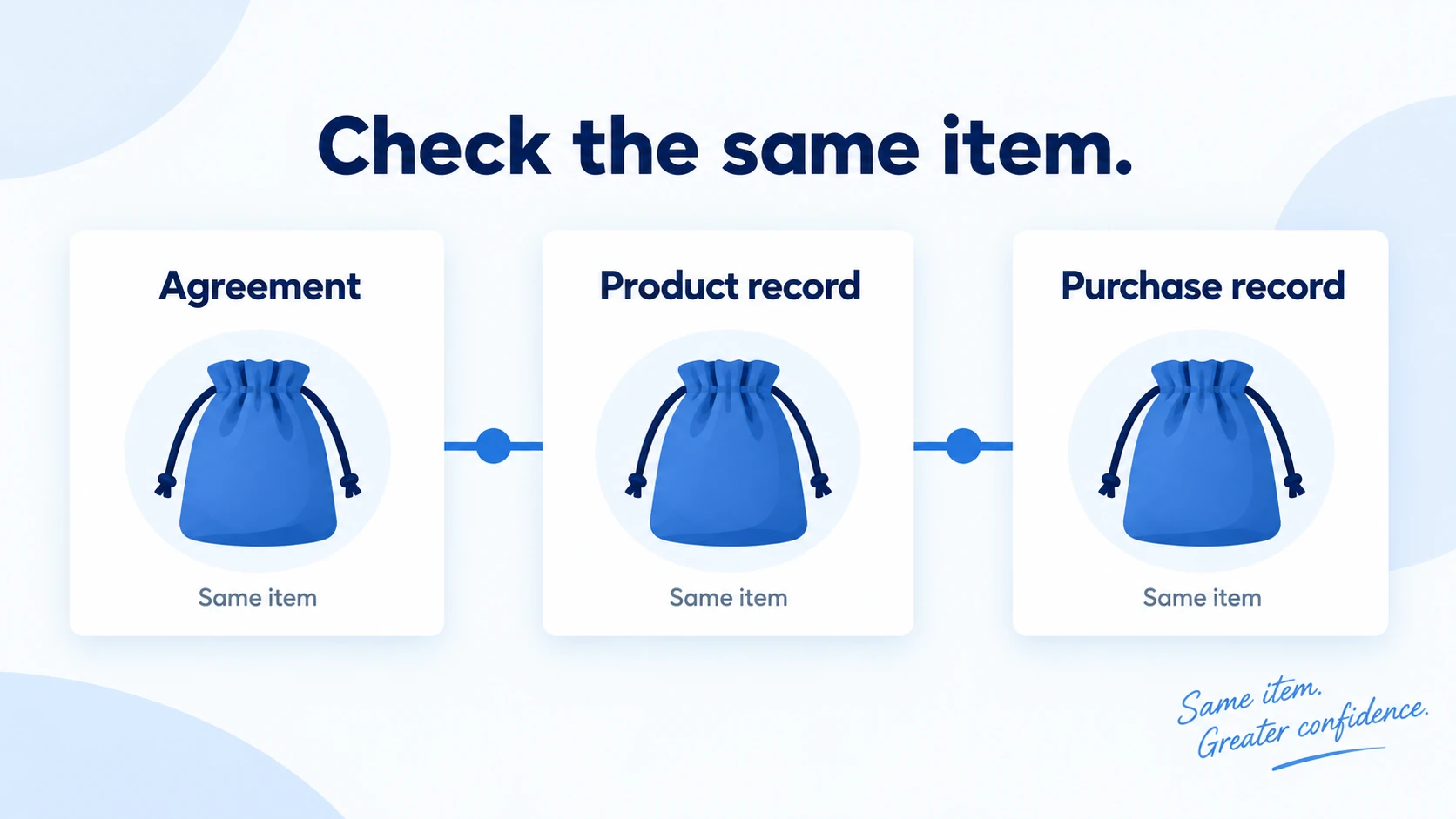
An illustrative source review keeps three items together: the supplier agreement, the selected product record and the order’s purchase record. They should describe the same business relationship and item. A mismatch is a reason to investigate before assuming the order is covered.
04
Describe where the item really ships from
eBay’s item-location policy requires accurate location information. The relevant location is the item’s dispatch origin, which may differ from your office or the supplier’s headquarters.
Confirm origin for the selected SKU. A provider’s domestic warehouse does not establish that every catalog product is stocked there. Ask how you will be notified if the supplier changes the dispatch location or service.
Review the affected listing before accepting orders on an outdated basis. A warehouse change can alter the handling, delivery and return arrangement. Changing only the carrier name may leave the rest of the customer promise inaccurate.
Keep the product and shipping information consistent across the listing. Clear information helps the buyer evaluate the offer and gives your team a definite standard when investigating an order.
05
Separate supplier work from your buyer responsibility
Your buyer purchased through your listing. Arrange how your team will handle a delayed parcel, wrong variant or damaged item rather than directing the customer into an unclear dispute with your supplier.
The supplier can investigate the physical cause, provide shipment evidence or reimburse an agreed amount. Those actions may take a different amount of time from the customer resolution required through eBay.
For a missing shipment, find the last confirmed event. Was the order accepted? Was the parcel handed to a carrier? Is the tracking record for this order? An automatically generated number cannot answer all three questions.
For a wrong product, compare the listing, purchased SKU and received item. This identifies whether the error began in the offer, the order mapping or picking. Fix the affected process as well as resolving the individual buyer’s issue.
06
Understand the limits of a no-returns setting
A seller’s preferred return policy does not remove every buyer remedy. eBay’s guidance for returns, missing items and refunds explains the treatment of damaged, faulty or misdescribed goods, including situations where the seller does not offer discretionary returns.
Set up a usable return address and a process for inspecting goods before launching. Confirm whether the supplier accepts returns at the dispatch location and what evidence it requires for a commercial claim.
Keep two decisions distinct:
- Buyer resolution: what action the applicable order and eBay process require.
- Supplier settlement: what reimbursement, replacement or other remedy your agreement provides.
Do not delay the first indefinitely while waiting for the second. Budget for the timing difference and keep the records connected so that the same loss is not counted twice when a supplier credit later arrives.
07
Recheck the arrangement when it changes
A review made at onboarding applies to the arrangement reviewed. Revisit the affected details when a product, source, warehouse or automation rule changes.
Before approving a change, ask:
- Is the source relationship still suitable?
- Does the item still match the listing’s variant, quantity and claims?
- Is the location and delivery information still accurate?
- Can you obtain the actual purchase and dispatch records?
- Does the return process still work for this route?
If the answer to a material question is unknown, pause the affected offer or route while you resolve it. Expanding the catalog should not quietly expand your assumptions about the supplier.
08
Respond to an actual notice with actual evidence
If eBay sends a warning, restriction or information request, read the specific reason and instructions in your account. Identify the affected listings and orders, preserve their original records and stop any continuing defect.
Explain what happened accurately. A new supplier agreement may support a future correction, but it does not rewrite the source of an earlier transaction. Keep the original event and the correction distinguishable.
Do not rely on a generic appeal template or a claim that one document guarantees reinstatement. The policy describes possible actions, but it does not provide a universal outcome for every case. Respond through the applicable account process and address the issue that was actually raised.
09
Frequently asked questions
Can I use stock in another country?
Assess the actual arrangement and applicable product, marketplace and shipping requirements. State the true origin and support the delivery promise. Overseas location alone does not answer those questions.