
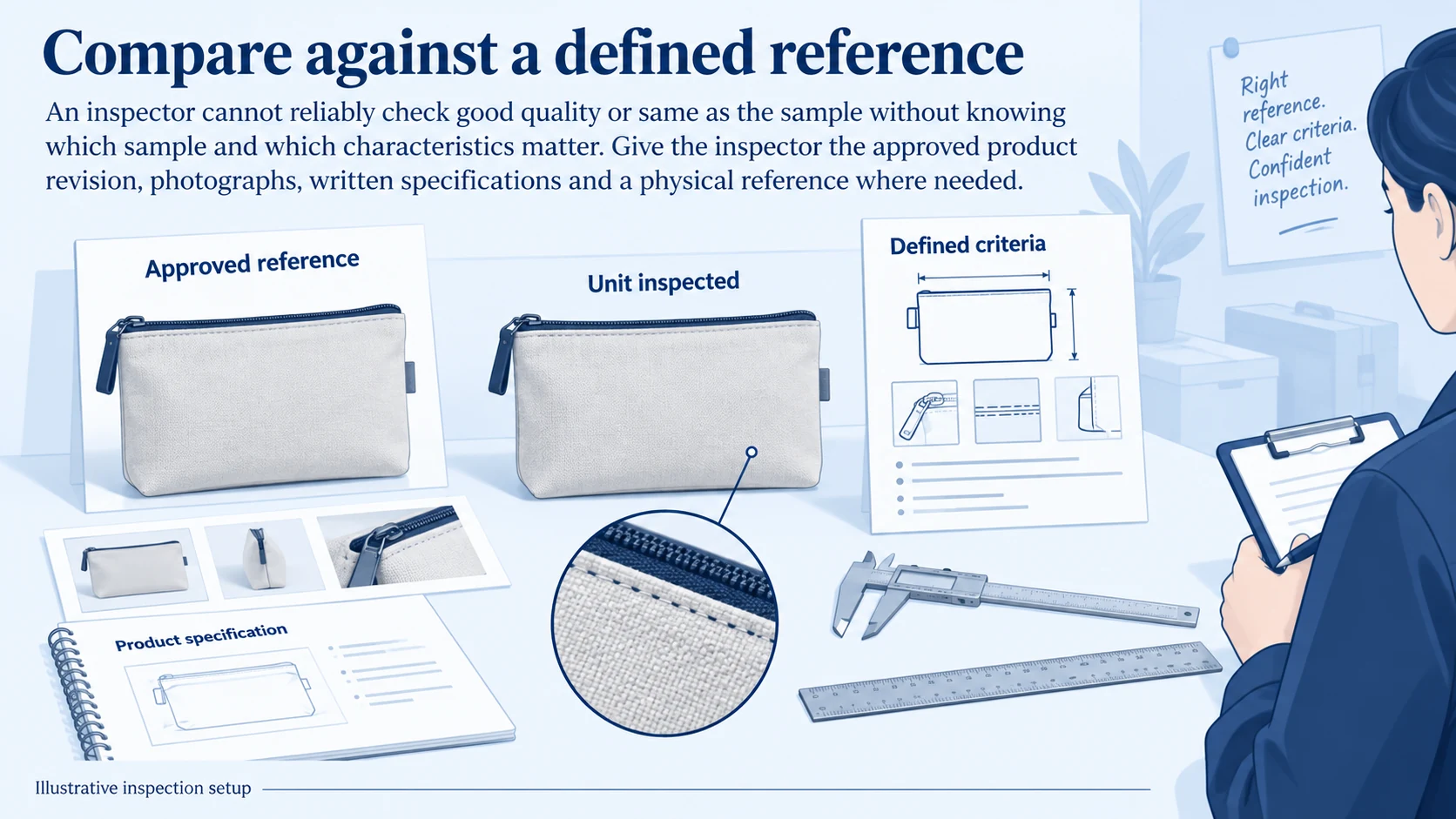
A dropshipping inspection checklist should let someone compare the goods with an approved reference, record what they find and send the result to the person authorized to release or hold the stock. Write down the requirement and the result beside each check. A tick alone gives the buyer little to review.
The scope depends on the job. A parcel check may cover the SKU, condition, accessories and packing before dispatch. A stock purchase may need sampling across an identified lot. Applicable product-safety testing remains a separate requirement from either kind of inspection.
Use the groups below to build a checklist with your supplier or inspection provider. Agree the product-specific tests and acceptance criteria before booking the work.
01
Start with a reference the inspector can use
“Good quality” leaves the inspector to supply their own standard. Send the approved revision, photographs, written specifications and, where needed, the physical reference sample so they know what you accepted.
Dimensions, tolerances, material grade, accessory count, compatibility and function belong in the written specification. Photos help with appearance, but they cannot establish a polymer’s composition or an electrical rating.
Create a short inspection header containing:
- Product name, SKU, variant and revision.
- Supplier, order number, lot or batch identifier and available quantity.
- Reference sample identifier and approval date.
- Destination market and intended use.
- Inspection location, date, inspector and equipment needed.
- Sampling plan or exact per-order checks, including any exclusions.
- Person authorized to decide release and how to contact them.
Resolve conflicting references before the work starts. If the sample is blue and the order says black, the buyer needs to settle the color; the inspector should record the conflict rather than choose.
The broader dropshipping quality-control guide explains how sample approval, production checks and fulfillment checks fit together. This article focuses on what the inspection record should contain and how to use its result.
02
A practical inspection checklist
For each applicable check, provide a method and acceptance criterion, then leave space for the quantity inspected and actual finding. Use “not performed” for work outside the agreed scope.
Product identity and quantity
Match the actual model, size, color and variant to the order and packaging. Where counting is part of the scope, include both units and accessories.
Open the packaging where the inspection scope calls for it: the right barcode can still conceal the wrong item. A bundle checklist should name every component, including small cables or fittings that are easy to miss.
Record the available lot quantity separately from the quantity opened or inspected. If only part of the order is ready, the report should make that limitation visible.
Dimensions, fit and materials
Record dimensions as measured values against stated tolerances. Specifying the measurement points lets another inspector repeat the check and gives the buyer something more useful than “size OK.”
A compatibility check needs a named reference item or fixture. If a phone stand was tested with one device, record that device; broader listing claims require broader supporting evidence.
Hidden properties such as composition need the appropriate document or test. Keep that finding separate from an appearance comparison with the sample.
Function and workmanship
Describe the function and test conditions. A zipper-pouch check might cover full closure travel and visible stitching gaps. Claims about endurance or performance need testing that goes beyond briefly opening and closing it.
Inspect the surfaces, seams, attachments and edges that matter in use. A finding such as “scratch on the front panel,” with its size, effect and a photograph, is easier to assess than “bad finish.”
Do not operate an apparently unsafe product to complete a checklist. Escalate a safety concern using the appropriate procedure and qualified advice.
Labels, instructions and accessories
Compare the labels and instructions against the approved artwork and the requirements established for the destination. Check model numbers, language, warnings and required identifiers within the agreed scope.
The report can confirm that a label is present and matches the reference. A qualified technical or legal reviewer still needs to establish whether that reference contains the required information.
Include the spare parts, fasteners and manuals promised to the customer. One missing installation part can make an otherwise sound product unusable.
Packaging and dispatch preparation
Check the approved inner protection, parcel dimensions, carton condition and label placement. Confirm that items cannot easily move into an unprotected position inside the pack under the agreed packing method.
Record a packing review separately from a specified transit-performance test. A cushion visible inside the box shows the packing arrangement; evidence of a drop or vibration test needs its own result.
SGS describes pre-shipment inspection as covering areas such as quality, quantity, marking and packing against relevant requirements. That scope is a useful reminder to include both the product and its shipment preparation. SGS pre-shipment inspection.
03
Choose what and how much to inspect
An outgoing-parcel check and a stock-lot inspection answer different questions:
Per-order checking: what was checked in this customer’s parcel? Record the identity, contents and other agreed characteristics actually verified before dispatch.
Lot sampling: does this identified lot meet the agreed sampling plan’s decision rule? Record the sample and findings; individual units outside it have not been checked.
NIST describes acceptance sampling as a basis for deciding the disposition of a lot, rather than estimating its exact quality. A sample pass therefore should not become a claim that a shipment contains zero defects. NIST on acceptance sampling.
For an AQL-based plan, agree the lot definition, inspection level, applicable standard, defect classifications, sample size and acceptance/rejection criteria with the inspection provider. QIMA’s explanation shows how lot size and inspection level feed into the sampling tables. It is not a reason to copy one AQL value into every product’s checklist. QIMA’s AQL explanation.
Sample selection also belongs in the report. Units selected across the stock by an inspector provide different evidence from a few units chosen by the supplier. Access to only one carton should be recorded as a limitation.
For safety-critical characteristics or a regulated category, obtain the appropriate test and compliance plan. CPSC’s third-party testing guidance describes specific requirements for covered children’s products in the United States. Those requirements are not satisfied by a general visual checklist, and they should not be generalized to every product category.
04
Record findings that another person can verify
A buyer reading the report later needs to understand what the inspector saw. Use these fields for each material finding:
- Requirement and reference revision.
- Method and conditions used.
- Quantity checked and affected units observed.
- Measurement or description of the result.
- Photograph, video or document reference where appropriate.
- Defect classification under the agreed definitions.
- Status and proposed next action.
For a cracked handle, pair an overview identifying the product with a close-up of the crack. Add a measurement reference when size matters. Use photographs from the inspected goods so the evidence stays tied to the current lot.
Keep failed observations in the report. Ten attractive product photos cannot explain a decision if three failed function checks are missing.
QIMA’s container-loading description illustrates a related scope issue: loading checks can verify selected products, carton contents, labels and loading conditions. They are a defined activity, not a substitute for every earlier product test. QIMA’s loading-check scope.
For a small dropshipping parcel, the record can be brief, provided it identifies the goods and the checks actually completed.
05
Decide release, hold or reinspection
Name the decision-maker before inspection. The inspector records findings against the criteria; the buyer or responsible team reviews them and authorizes the next step, subject to mandatory requirements.
Release: name the accepted stock and revision, with the report and its limits. A later variant or supplier change requires its own review.
Hold: block the affected stock from normal fulfillment. Record the location, quantity and person responsible for resolving it.
Correct and reinspect: specify the correction and quantity, then record the recheck of the corrected goods.
Separate failures against agreed commercial preferences from safety or compliance concerns. A buyer may be able to accept a disclosed cosmetic deviation within a defined commercial agreement; an internal approval cannot waive a legal product requirement.
A missing reference or incomplete test leaves an unresolved condition. Keep that status visible even when shipment is urgent.
06
Test the checklist with a worked example
Suppose a storage insert must fit an existing tray. The approved width is 200 mm ±1 mm, measured at the specified outer edges. An inspected unit measures 202 mm. These are illustrative dimensions, not a recommended product tolerance.
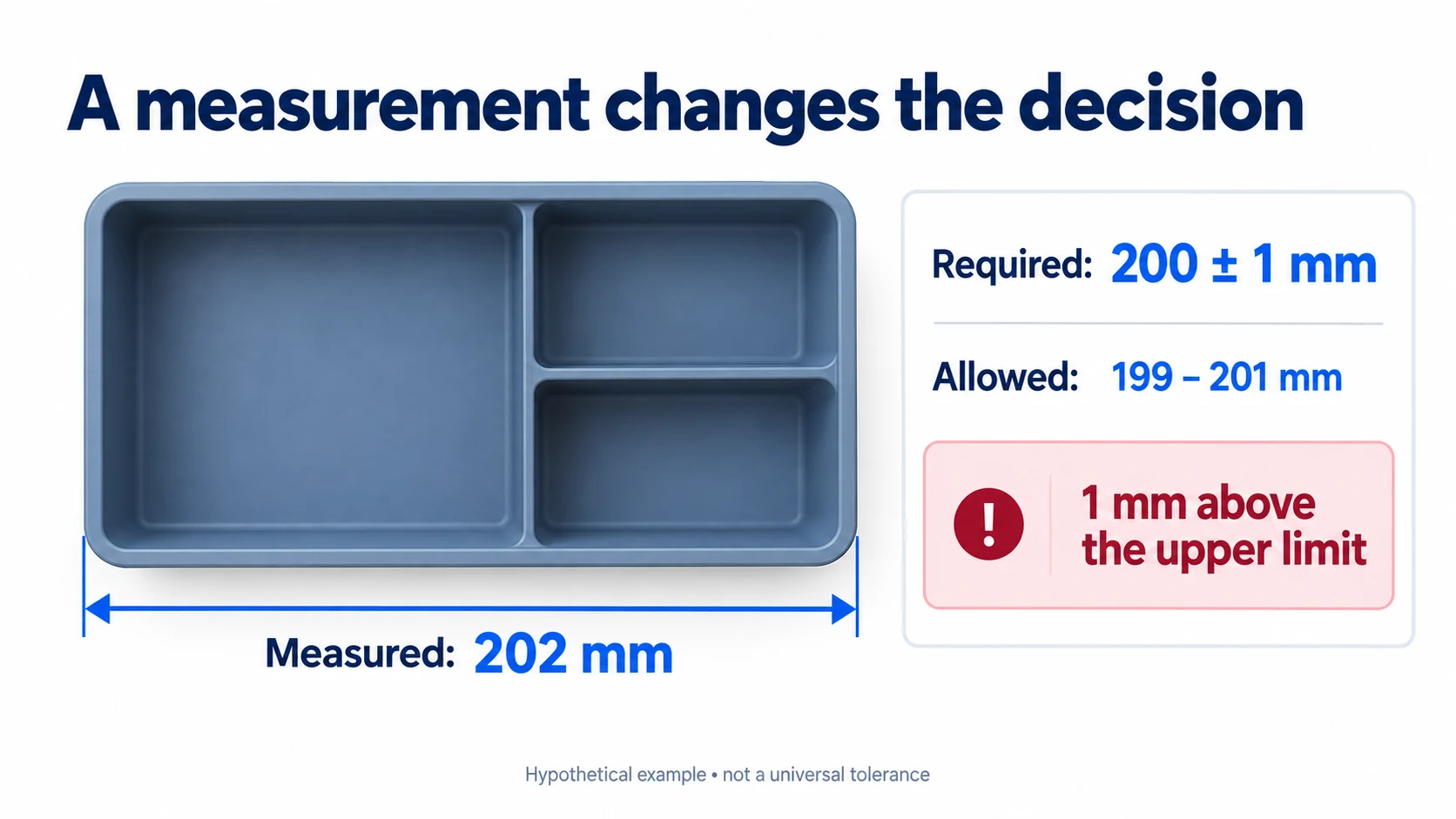
The permitted upper limit is 201 mm, so the unit is 1 mm over tolerance and 2 mm above nominal width. Record the 202 mm result and measurement method. “Looks close to sample” would miss a difference that could prevent the insert from fitting.
If ten units were checked in this illustrative screening exercise and three measured 202 mm, the report should state exactly that. A lot-wide defect estimate or formal AQL rejection would need support from the agreed sampling plan.
The merchant should hold the stock within the affected scope, ask the supplier to determine the extent and cause, and agree correction and verification. If the requirement itself was wrong, change it through an explicit approval process rather than editing the old report to make the units pass.
The example shows how a defined measurement changes the release decision; it does not describe an AIDrop Agent inspection.
07
Connect the result to the orders being fulfilled
The accepted lot must be the lot picked for customer orders. Link its revision and release record to the picking location, and block held goods both physically and in the fulfillment system.
For split deliveries, record which quantity was accepted and which is still waiting. When a replacement lot arrives, do not inherit the previous lot’s release automatically. When the supplier changes a material or production arrangement, review whether the existing reference and tests still apply.
After delivery, compare customer complaints with the checks performed. A defect missed by the checklist may require a new check or a clearer criterion. A defect that occurred despite an adequate check may point to sampling limits, inconsistent execution or damage later in the route.
Use the complaint evidence to choose the next correction. A missing check, an inconsistently performed check and damage after dispatch each need a different response.
08
Frequently asked questions
Is a supplier’s photo enough for an inspection?
It may answer a narrow visual question. It does not establish which stock was sampled, how a function was tested or whether hidden properties comply. Match the evidence to the claim.
Should every dropshipping order receive a full inspection?
Define the risk and scope first. Per-order identity and packing checks, lot sampling and specialized testing serve different purposes and have different costs. Choose the controls appropriate to the product and promise.
What AQL should I use?
Agree the plan with a qualified inspection provider based on the product, defect consequences, lot and requirements. A commonly quoted value is not a universal recommendation.
Who should approve shipment after a failed check?
The named responsible decision-maker should review the findings, required correction and reinspection evidence. Safety and legal requirements cannot be waived by a routine commercial approval.