
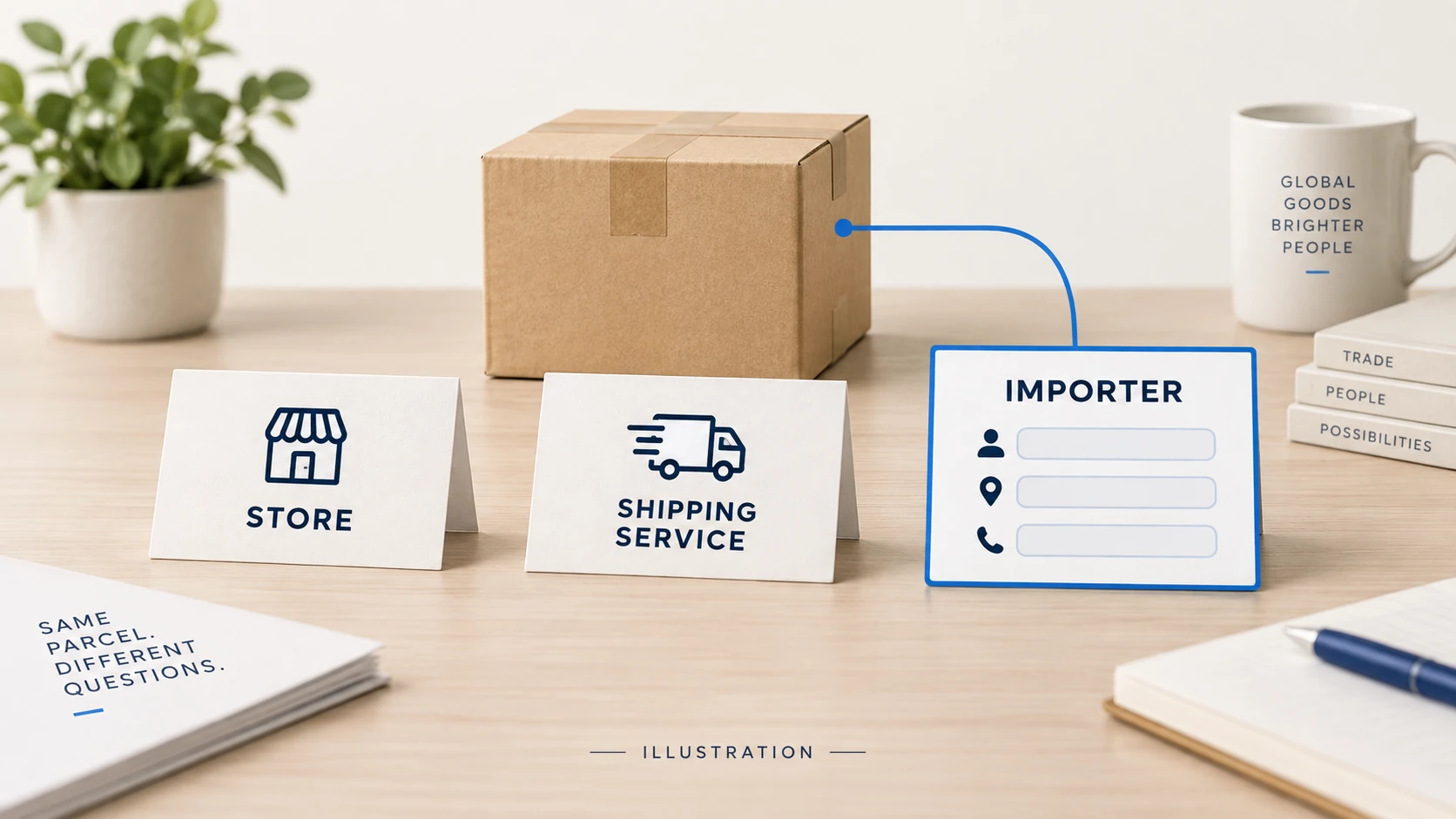
U.S. Customs and Border Protection starts enhanced importer identity enforcement on September 18, 2026. For merchants shipping to the United States, the immediate task is to identify who imports the goods under each shipping arrangement, then have that party check its filed information with the broker.
An all-inclusive shipping quote is a poor place to stop that investigation. Ask for the legal entity behind the customs entry and the person responsible for resolving a mismatch. That gives your operations team a useful answer before the next group of orders leaves the supplier.
01
What starts on September 18
CBP announced the measure on August 19. It covers new and existing importers of record, or IORs. If CBP finds incomplete or inaccurate Form 5106 information, it will immediately void the associated importer number, making it unusable for entry. This is an identity-enforcement measure, not a new tariff rate.
The notice requires the importer’s own accurate identification and contact details. Its physical location cannot be a broker’s, forwarder’s, registered agent’s or another entity’s address, a P.O. box, or a business service center. Physical location and mailing address are distinct fields. Email and phone must belong to the importer. Read CBP’s August 19 notice.
For a store, the practical question is whether the party used for an upcoming shipment can be identified and reached. Start there rather than assuming that every seller needs the same correction. A delivery service, a supplier invoice and a customs entry can describe different participants in one order.
02
Find the importer behind each shipping service
Pick one recent shipment and one pending shipment for every U.S. delivery service you use. Ask the provider to identify the importer and the broker for those specific movements. Record the answer beside the route and order references so it can be checked when a service changes.
Treat “DDP,” “tax included” or “we handle customs” as the beginning of the conversation. Request the underlying arrangement and the named party. A price description alone does not tell your support team whom to contact about an importer-data problem.
| Your provider’s answer | Useful follow-up | What your store should record |
|---|---|---|
| Your business is named as importer | Ask the broker to review your filed record and confirm who can authorize changes | Broker contact, review owner and unresolved items |
| A separate, named business is importer | Ask that party or its authorized representative to confirm responsibility and current clearance readiness | Entity name, responsible contact and route covered |
| The answer remains “all included” | Request the entity and filing contact before treating the route as verified | The unanswered question and affected pending orders |
These are suggested operating checks, not an additional government reporting form. Avoid collecting another party’s full tax identifier or personal documents in a general supplier spreadsheet. Request confirmation through the appropriate authorized contact and keep sensitive records in the agreed secure channel.
Consider a hypothetical store using one service for individual parcels and another for warehouse replenishment. Confirmation about the replenishment importer does not answer the question for the parcel service. Check each arrangement on its own facts. The distinction between an agent, supplier and 3PL is useful here: the business booking transport may coordinate the answer without being the importer itself.
03
Check the filed record, not just the supplier profile
If your business is the importer, ask the broker for a review of what is actually on file. Compare that record with the business’s current information. An updated billing address in a shipping app should not be treated as confirmation that the customs record was updated too.
Make discrepancies concrete. Instead of sending “please check our account,” identify the old location, the changed contact or the legal-name discrepancy you want reviewed. Ask who will submit any necessary correction and what confirmation your team should retain. Let the broker specify the supporting material needed for your situation.
An accessible inbox also needs an owner. Decide who checks it, who covers absences and how a customs message reaches the person coordinating shipments. A shared internal escalation process can help without substituting a logistics provider’s identity for your own.
When a separate business is the importer, request the relevant confirmation from that business. Your store’s customer-service profile is not a replacement for its records. Keep the request focused on the shipments you rely on and the point of contact who can resolve an exception.
04
Keep broker authorization separate from freight booking
Direct authorization is an existing requirement. CBP’s December 2022 broker guidance explains that the importer must execute the broker’s power of attorney directly. A third party can help with translation or document delivery, but cannot sign or negotiate it in the importer’s place.
For your own importer account, ask which broker holds the authorization and whether the authorized entity matches the business used for the shipment. A freight booking confirmation or supplier agreement answers a different question. Keep those records together for operational reference while checking each one’s purpose separately.
If a provider proposes a new broker or a different importer, bring the change back to the responsible business before releasing affected orders. Ask for the proposed arrangement in writing. Do not assume that an earlier confirmation covers a new party simply because the parcel service has the same marketing name.
05
Prepare an exception plan for affected orders
CBP says it will email the reason for voiding to the importer and, where applicable, copy the last filing broker. The notice provides instructions for requesting reestablishment. It does not promise a turnaround time. CBP notice, recovery procedure.
Our operational recommendation is to assign one owner to connect the customs response with the order list. Separate goods awaiting dispatch, goods already handed over and orders using other verified arrangements. Ask the broker or provider what can proceed for each group; a tracking label by itself is not that confirmation.
For customer communication, use the next confirmed shipment milestone. Avoid replacing an uncertain clearance date with an invented delivery date. Our guide to dropshipping shipping times explains why processing, carrier movement and delivery need separate expectations.
Keep a dated record of the issue, the requested correction and the response. Before resuming an affected arrangement, ask the responsible party to confirm its status and the next action for the specific goods. That is more useful to the warehouse than forwarding a long email chain with no dispatch instruction.
06
What to request from your shipping partner today
Send the provider a short request tied to actual order references:
Please identify the importer and customs broker used for these U.S. shipments. Confirm who owns the importer-record review, whether any issue remains unresolved, and who will tell us when affected orders can proceed. If different services use different arrangements, please separate the answers by service.
For your own importer account, follow up directly with the broker about the filed details and authorization. For a third-party arrangement, obtain the responsible entity’s confirmation through its authorized contact. Keep the answer with the route record and revisit it when the provider changes the arrangement.
The useful result is a named importer, a reachable responsible person and a clear instruction for pending orders. That makes the September 18 change something your fulfillment team can act on, rather than another customs headline sitting in an inbox.