
Home / About AIDrop Agent
A China-side dropshipping agent behind every order.
AIDrop Agent is the service brand operated by Changsha Yuhua District Jinlintian Trading Firm (长沙市雨花区锦临添贸易商行), a business registered in Changsha, Hunan, China.
Our warehouse: Building 50, Beixiazhu, Yiwu, Zhejiang, China. We coordinate the agreed sourcing, quality checks, packaging and order handoffs from China.
Contact: [email protected]
Dropshipping lets a store sell without buying and warehousing every finished item in advance. It does not remove the work between an order and a successful delivery. AIDropAgent coordinates agreed sourcing, samples, quality evidence, packing, order handoffs, inventory choices, routes, and exceptions close to Chinese suppliers—so the store can keep commercial control without building a fixed China team too early.
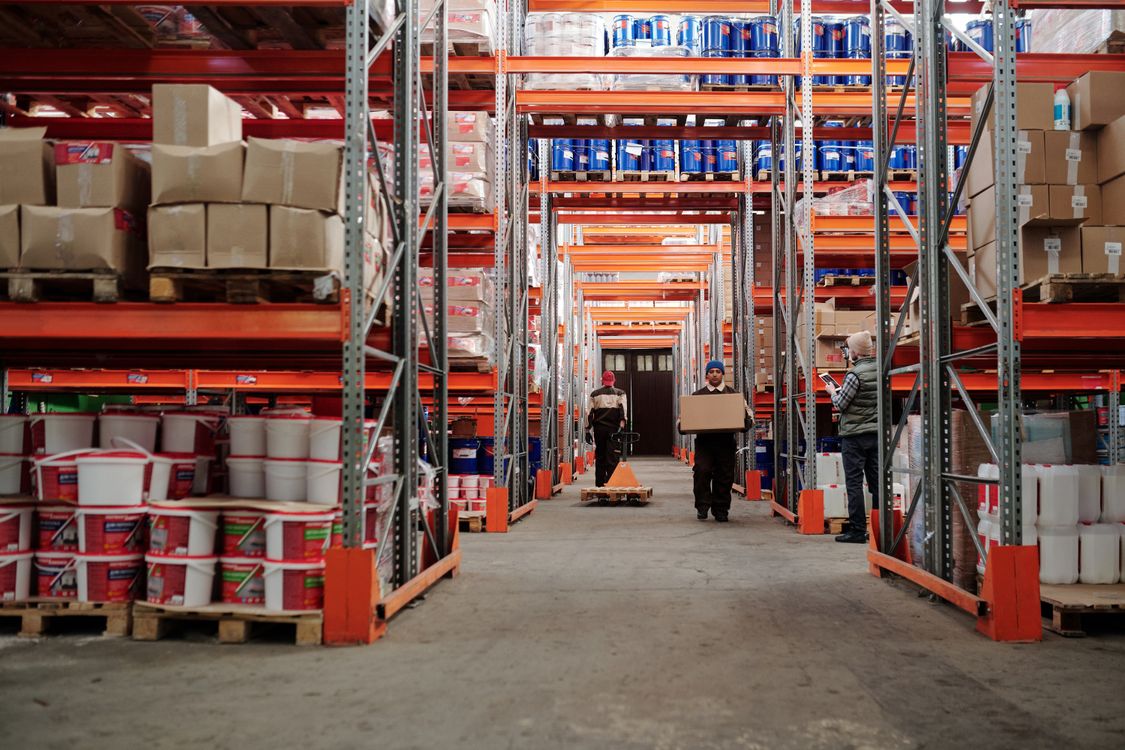
The hero image is a generic warehouse-coordination scene—not an AIDrop facility, employee, customer, or performance proof.

Dropshipping avoids the first stock commitment—not the operating work.
A customer promise still depends on a reproducible product, supplier follow-up, sample or QC release, packing, order data, route choice, tracking, and recovery. When those jobs sit with disconnected vendors, the store owner becomes the unpaid integrator. AIDrop takes on the agreed China-side coordination layer while the store retains the offer, margin, stock commitment, and customer-facing policy.
A closer look at storage and packing
These stock photographs illustrate storage and packing activities involved in fulfillment. They do not show AIDrop Agent’s Yiwu warehouse or team.
Keeping stock identifiable
Clear SKU and location records help distinguish available stock from items waiting for inspection or correction.

Packing against an agreed reference
The packing reference connects the product, protective materials and outer carton so the order can be prepared consistently.
Keep approval, coordination, and execution separate.
The working scope should state who approves the commercial consequence, who coordinates the handoff, and which party produces the source evidence or physical result.
Store approves
Approves the offer, target market, product requirement, quality tolerance, contribution goal, inventory commitment, delivery promise, refund or reship policy, and any trade-off that changes customer or cash exposure.
AIDrop coordinates
Turns the commercial requirement into supplier comparisons, sample and QC gates, packing rules, order and stock states, route options, tracking handoffs, exception records, deadlines, and the next approval inside the agreed scope.
Partners execute
Suppliers, inspectors, warehouses, carriers, platforms, and destination 3PLs perform their physical or system-specific work and return the source record. Their capability and service limits are not replaced by an agent label.
Judge the relationship by work and commitment the store no longer has to carry.
No universal saving is promised. The operating value depends on product, volume, service level, route, inventory policy, and how much coordination the current setup leaves with the store.
Management time
Reduce separate supplier, inspector, warehouse, carrier, tracking, and exception follow-ups by keeping the current state, owner, deadline, and next action in one operating path.
Fixed overhead
Delay building a destination warehouse team, facility footprint, scheduling layer, and fragmented carrier administration until demand and service requirements justify them.
Working capital
Start with direct fulfillment where practical, add a small China-side buffer when preparation or dispatch benefits justify it, and move stock to destination only when service economics support the cash exposure.
Error exposure
Connect the approved reference, QC evidence, packing version, order state, route assumption, exception owner, fallback, and verification step before the next handoff or larger commitment.
Use the model when coordination is the bottleneck.
The operating layer is useful when it removes real follow-up, fixed infrastructure, premature inventory, or unmanaged handoffs while keeping commercial approval visible.
A good fit
You need supplier comparison, repeatable QC, packing or branding preparation, cross-channel order handling, route coordination, staged inventory, or exception recovery across several parties.
Not a good fit
You want an unmanaged autonomous system, guaranteed lowest price or delivery time, hidden approvals, fabricated proof, or a partner to own commercial choices without clear store authority.

Show the work. Never manufacture the proof.
AIDrop Agent should be judged by inspectable briefs, comparisons, evidence, approvals, exception records, and clearly stated limits. Until a customer authorizes a documented case, the site will not invent customer identities, order volumes, savings figures, facilities, logistics partnerships, or operating outcomes.
Generic or illustrative visuals can explain a workflow, but they are not presented as AIDrop Agent warehouse, team, client, or shipment evidence.
Before money moves: confirm the product brief, reference, quote basis, payment terms, owner, and open questions.
While work moves: keep approvals, QC evidence, order status, carrier handoffs, and exceptions connected.
Before more stock is held: compare demand and service evidence with working-capital, storage, replenishment, and unsold-stock exposure.
Questions about AIDrop Agent
Is AIDrop Agent software or an operating service?
AIDrop Agent is an operating service supported by AI-assisted analysis and workflow tools. The technology helps structure product requirements, compare supplier responses, organize evidence, and surface missing information; it does not silently approve a supplier, product, payment, or shipping decision.
The working scope may include sourcing, sampling, QC, packaging, fulfillment, or carrier coordination. Your store keeps ownership of the offer, customer promise, and final commercial approvals.
What should I send for a useful first review?
Send the product or store link, target market, expected order range, current supplier or quote, customer-facing delivery promise, and the bottleneck you want to solve. If there is already a failed order, QC issue, packaging problem, or shipping exception, include the evidence.
The first review should return the missing assumptions, the smallest useful test, the evidence needed, and the owner of the next decision—not a generic sales pitch.
Can AIDrop work with my existing supplier?
Yes. Supplier discovery is only one possible scope. If the supplier is acceptable but inspection, packaging, order release, consolidation, shipping, or exception ownership is weak, AIDrop can review those handoffs without automatically replacing the supplier.
We first confirm cooperation, data availability, lead time, packaging responsibility, evidence requirements, and the supplier’s ability to support the agreed workflow.
Do I need to buy inventory in advance?
Not by default. A new product may begin with direct fulfillment; more stable demand may justify a small China-side reserve; destination inventory should be considered only when delivery promise and order density justify the cash and fixed overhead.
The decision compares demand stability, replenishment time, stockout cost, storage and handling fees, shipping economics, and the capital tied up in unsold units.
How are product, service, and shipping costs compared?
A useful comparison normalizes specification, MOQ, packaging, labor, sample policy, payment terms, lead time, fulfillment scope, and post-sale exposure. Shipping is then compared by chargeable weight, dimensions, destination, service level, customs treatment, tracking quality, delivery window, and surcharge risk.
The goal is a comparable landed-cost decision, not a headline unit price or a single route presented as universally cheapest.
What happens when an order or shipment fails?
The exception record should show the failed condition, affected order or shipment, current status, evidence, named owner, next action, deadline, and fallback. Depending on the cause, the response may be hold, correct, reroute, reship, refund, or escalate.
The value is not claiming that failures disappear. It is preventing an unresolved handoff from becoming invisible while the store chases several vendors for an answer.
Show us the handoff that keeps pulling you back into operations.
Share one product or order path, the customer promise, and the repeated problem. We will use that context to identify what can be coordinated, what still needs your approval, and which outside-party risks remain.