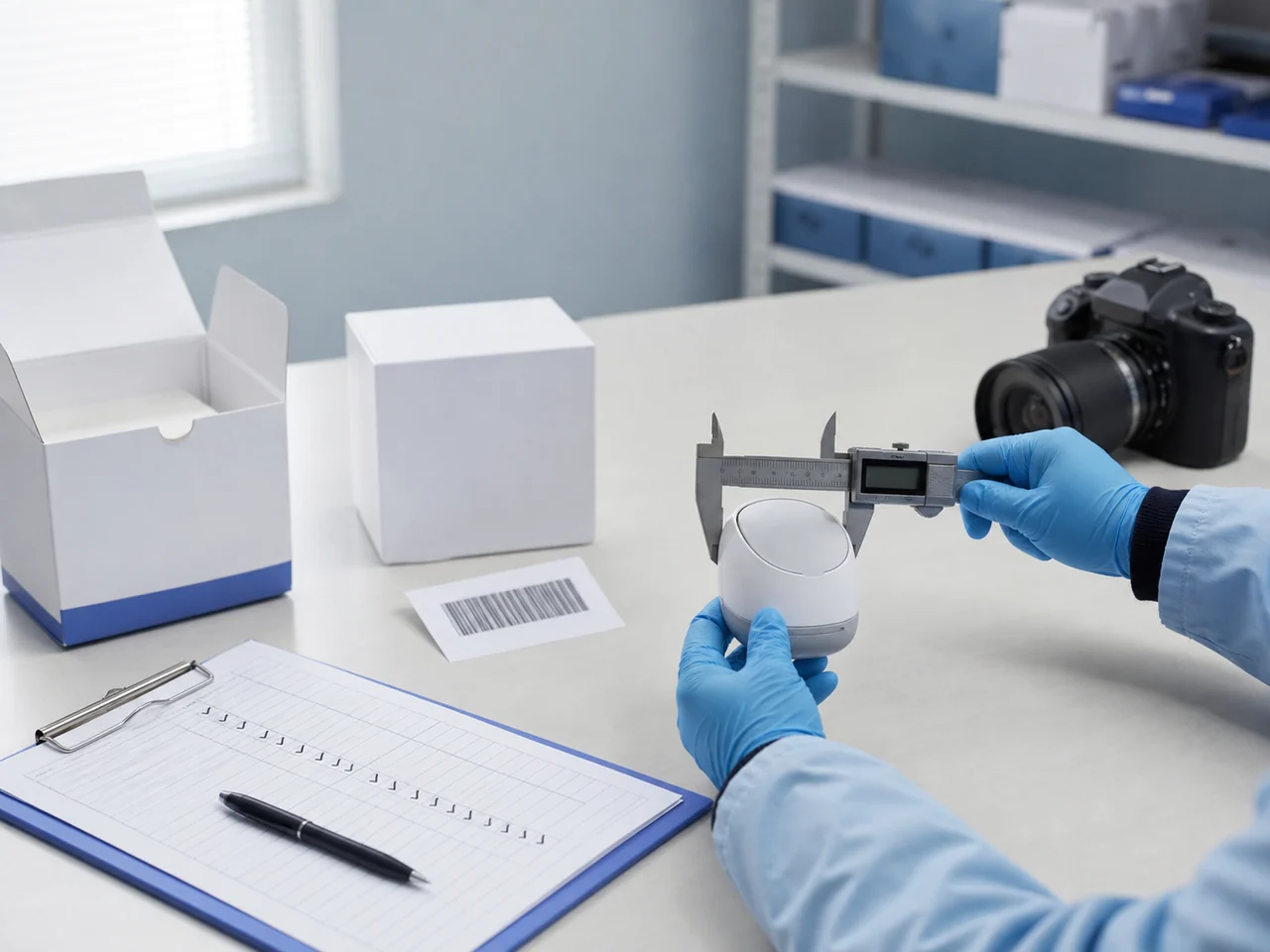
Catch product and packing defects before customers do.
Quality control for dropshipping compares samples or production batches with an approved reference, records the affected quantity, and connects every finding to a release, rework, replace, resample, sort, or hold decision.
The inspection standard should reflect the approved sample, product specification, customer-facing promise, packaging requirement, and known failure modes.
01
Product checks
Appearance, function, dimensions, material, variant, compatibility, accessories, and completeness where relevant.
02
Packing checks
Unit protection, label, insert, carton condition, quantity, and brand presentation where agreed.
03
Risk checks
Known defects, previous drift, destination or channel requirements, and product-specific handling concerns.
CHOOSE THE MOMENT
Different risks appear at different points in the flow.
Quality control is not one final inspection. It is a sequence of decision gates that keeps a weak reference, a drifting production batch, or an incomplete shipment from becoming customer refunds and replacement costs.
01
Sample approval
Compare the supplier sample with the approved reference: dimensions, material, finish, packaging, and expected failure points. A pass authorizes only the next defined step—not every future batch.
02
Inbound batch check
Check production goods against the same reference before stock or customer orders absorb the risk. Record defect type, quantity, photos, and the owner of any rework or replacement decision.
03
Release gate
Verify SKU, quantity, labeling, inserts, carton condition, and release status before carrier handoff. Anything unresolved stays on hold with a named next action.
Decision rule: approval is evidence for a defined batch and checkpoint. If the material, supplier, packaging, or production condition changes, the relevant gate reopens.
FROM CHECK TO ACTION
Approve, rework, or hold from one QC record.
What was checked? What changed against the approved reference? Which units can move, and what happens to the rest?
01
Identify product + batch
Record the SKU or variant, supplier, production stage, quantity in scope, review date, and the approved sample or specification.
02
Compare result to standard
Check dimensions, function, appearance, material, packaging, labeling, and known risk points against the same approved reference.
03
Set disposition + owner
Release, rework, replace, resample, sort, or hold the affected quantity; name the owner and the next checkpoint before goods move.
HOLD / FIX / RELEASE
Stop failed stock before the next handoff.
The store sees the affected quantity and customer impact; the responsible party coordinates rework, replacement, resampling, sorting, or release.
01
Hold
Pause the affected stock or order while the evidence and scope are reviewed.
02
Fix
Rework, replace, repack, relabel, or recheck according to the agreed resolution.
03
Release
Proceed when the reviewed evidence meets the agreed requirement or an accepted exception is recorded.
RELEASE DOSSIER
What the customer should be able to verify before a batch moves.
A QC result is useful only when it connects the approved reference, the production batch, the observed variance, and the release decision. The dossier below makes that chain inspectable.
01
Approved reference
The accepted sample, measurement points, finish, packaging method, and known tolerances define what the batch is compared against.
02
Batch evidence
Inspection date, batch or purchase-order reference, sample size, defect type, quantity, photos, and notes keep the result tied to real goods.
03
Disposition
Pass, rework, replace, sort, or hold must include the affected quantity, owner, and next checkpoint rather than a vague “QC completed” status.
04
Release decision
Only the named release criteria authorize stock or orders to move. Unresolved differences stay visible with an owner and next action.
No inspection removes all risk. A defined standard, appropriate inspection moment, evidence, and release decision can reduce uncertainty and make issues easier to manage.
Yes. The useful checklist should reflect the product, approved reference, customer promise, packaging, known defects, and the practical inspection scope.
The affected product or order can be held while the evidence, scope, customer impact, and supplier or fulfillment response are reviewed. The next action may be fix, replace, recheck, accept, or release.
SEND ONE SKU + APPROVED REFERENCE
See whether the next batch can move.
Share the product requirement, current supplier, sample or batch, and the failure you need to prevent. The first review will identify the inspection point, missing reference, and next action.